

Why Home Composting Matters
Home composting reduces kitchen waste, improves soil health, and saves money on fertilizers. For beginners, it is an accessible step toward a more sustainable household.
This guide gives straightforward steps, common pitfalls, and a short case study so you can start composting today.
Choose a Composting Method

Decide which method fits your space and lifestyle. Each method has trade-offs in time, effort, and odor control.
- Cold bin — Low effort, slower decomposition, good for small households.
- Hot compost — Faster results, needs regular turning and balanced ingredients.
- Worm composting (vermicompost) — Ideal for small kitchens and apartments, requires a bin and red worms.
- Trench composting — Bury scraps directly in garden beds, simple but slow.
How to Pick the Right Bin
Choose a bin size that fits your household waste. A 3×3 foot bin suits most families. Use a sealed container indoors for worm composting or a ventilated bin outdoors for aerobic composting.
Material choices: wooden bins blend into gardens, plastic bins are low maintenance, and tumblers make turning easy.
What to Compost: Browns and Greens

Compost needs a balance of carbon-rich (browns) and nitrogen-rich (greens) materials. Aim for about a 25–30:1 carbon-to-nitrogen ratio by weight.
- Greens (nitrogen): vegetable scraps, fruit peels, coffee grounds, fresh grass clippings.
- Browns (carbon): dry leaves, straw, shredded paper, cardboard, wood chips.
Chop or shred larger items to speed decomposition. Avoid meat, dairy, oils, and diseased plants to reduce pests and odors.
Layering Technique for Beginners
Layering helps maintain balance and airflow. Start with coarse browns at the bottom, then add a mix of greens and browns in alternating layers.
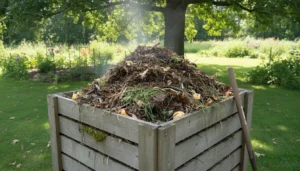
Finish each addition with a thin layer of browns to control smell and flies.
Maintaining Your Compost Pile
Maintenance is simple: monitor moisture, turn the pile occasionally, and maintain the green-to-brown balance.
- Moisture: Compost should feel like a damp sponge. Add water if dry; add browns if too wet.
- Turning: Aerate with a pitchfork or tumbler once every 1–2 weeks for hot compost, less often for cold bins.
- Pest control: Keep a closed lid and avoid animal-attracting foods.
Troubleshooting Common Issues
Bad smells usually mean too much nitrogen or poor aeration. Add browns and turn the pile.
Slow decomposition can be from large pieces, low moisture, or cold temperatures. Chop materials, add water, and consider a smaller bin to retain heat.
Harvesting and Using Finished Compost
Finished compost looks dark, crumbly, and earthy-smelling. It typically takes 2–12 months depending on method and conditions.
Use finished compost to enrich potting mixes, topdress lawns, or mix into garden beds at a ratio of about 1:4 (compost:soil) for general use.
Case Study: A Small Urban Household
Emma lives in a city apartment with a small balcony. She started worm composting in a 20-liter plastic bin with red worms.
Within three months she collected rich vermicompost from food scraps and used it to feed potted herbs and tomatoes. Her kitchen waste dropped by 40% and plant health noticeably improved.
Key wins: low odor, compact setup, continuous output of nutrient-rich castings.
Starter Checklist for Composting Beginners
- Choose method: cold bin, hot pile, tumbler, or worm bin.
- Gather materials: kitchen scraps, dry leaves, a bin, and a pitchfork or tumbler.
- Set up in a shaded, accessible spot and begin layering browns and greens.
- Monitor moisture and turn periodically.
- Harvest when compost is dark and crumbly.
Quick Tips for Faster Results
- Chop materials into small pieces to increase surface area.
- Keep the pile moist but not waterlogged.
- Turn more often for hot composting to speed up the process.
- Add finished compost regularly to keep garden soil healthy.
Final Thoughts on Home Composting for Beginners
Home composting is practical, affordable, and effective for reducing waste and improving garden soil. Start with a simple system and refine your approach as you learn.
With a little attention to balance and moisture, even beginners can produce high-quality compost within months.