
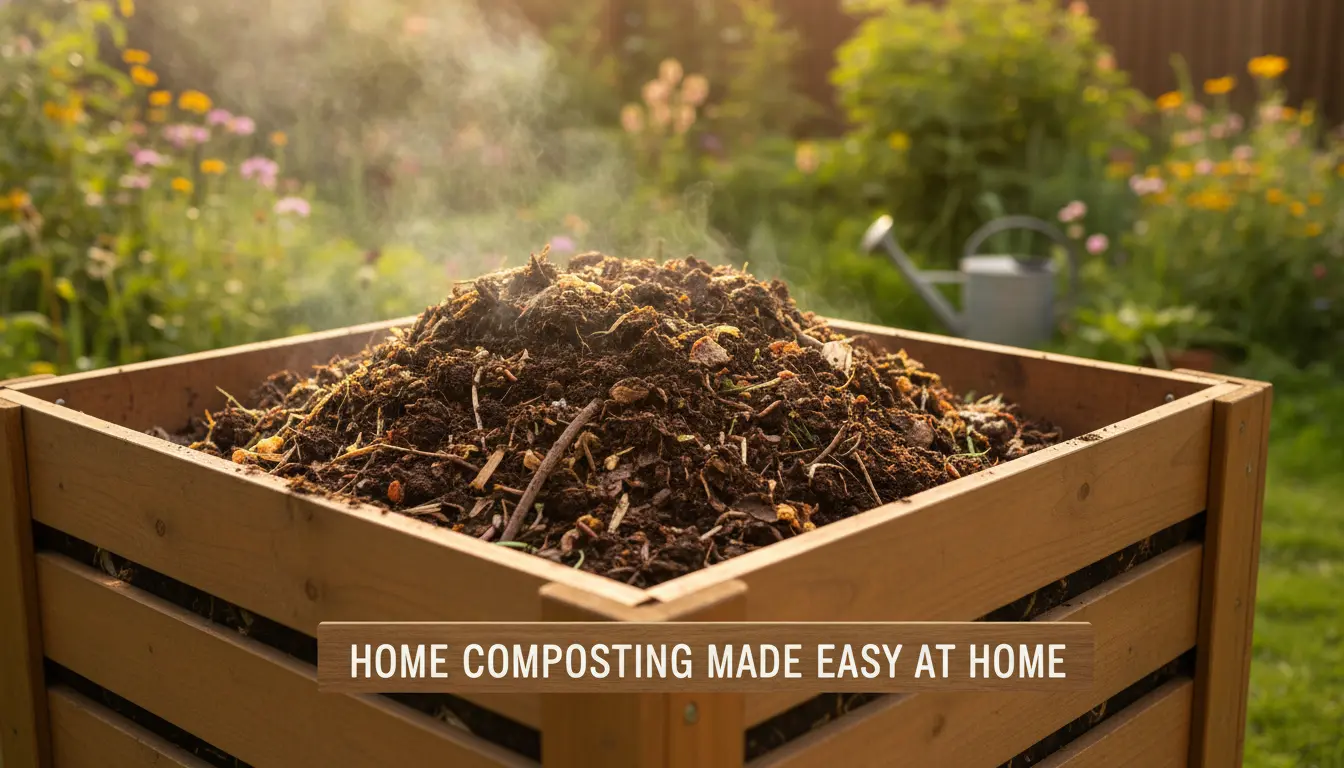
Start Home Composting Today
Home composting turns kitchen scraps and yard waste into rich soil amendment. This guide gives clear, practical steps to set up and maintain a compost system that fits small yards or balconies.
Why Home Composting Matters
Composting reduces household waste and returns nutrients to the soil. It helps reduce methane emissions from landfills and lowers the need for chemical fertilizers.
For gardeners, compost improves soil structure, water retention, and plant resilience. Even small-scale composting can make a meaningful environmental difference.
How To Start Home Composting
Choose a method that matches your space and time. Common options include backyard bins, tumblers, and indoor bokashi or worm bins for apartments.
Basic steps to begin home composting
- Pick a bin or system: Choose a closed bin, open pile, tumbler, worm bin, or bokashi bucket based on space and odor tolerance.
- Select a location: Put the bin on soil or a stable surface with partial shade and easy access.
- Layer materials: Alternate green and brown materials to balance moisture and carbon.
- Maintain moisture and aeration: Keep the pile like a wrung-out sponge and turn or aerate regularly.
What to add and what to avoid
Knowing what belongs in the compost is essential for success. Use the lists below as a reference.
- Compostable greens: fruit and vegetable scraps, coffee grounds, tea bags, fresh grass clippings.
- Compostable browns: dry leaves, straw, shredded paper, cardboard pieces, wood chips.
- Avoid: meat, dairy, oily foods, pet waste, diseased plants, and synthetic materials.
Maintaining Your Home Compost
Good maintenance keeps the pile active and odor-free. Follow a simple schedule to check moisture, aeration, and temperature.
Routine checklist
- Weekly: Add new kitchen scraps and balance with browns if needed.
- Every 1–2 weeks: Turn the pile or rotate the tumbler to introduce oxygen.
- Monthly: Check temperature; active piles warm to 120–160°F, indicating decomposition.
Balancing moisture and airflow
If the compost smells sour, it is too wet and anaerobic. Add dry browns and turn the pile to aerate. If it is dry and slow, add water and fresh greens.
Compost can reduce household waste by up to 30 percent when food scraps are diverted. Finished compost can increase soil organic matter and support beneficial microbes.
Troubleshooting and Tips for Home Composting
Common problems are usually easy to fix with small adjustments. Use these quick diagnostics to keep your system healthy.
Common issues and fixes
- Bad odors: Add dry browns, increase turning, and check for noncompostable items.
- Pests: Use a closed bin, bury food scraps beneath browns, and avoid attracting animals with meat or oily foods.
- Slow decomposition: Chop materials smaller, increase greens for nitrogen, and ensure adequate moisture and warmth.
Case Study: Small Apartment Composting
Maria lives in a two-bedroom apartment and started composting with a small worm bin. She collected food scraps in a countertop pail with a lid and added them daily to the worm bin.
After three months she harvested dark, crumbly castings and used them to feed potted herbs. Her household reduced trash by roughly 25 percent and her herbs thrived.
Key takeaways from the case
- Choose a method that suits your space; worm bins work well indoors.
- Consistency matters: daily additions and occasional harvesting gave steady results.
- Even small outputs of compost improve plant health and reduce waste.
Simple Tools and Supplies
You do not need expensive equipment to start home composting. Basic items help keep the process tidy and efficient.
- Compost bin or tumbler
- Garden fork or turning tool
- Kitchen pail with lid for scraps
- Moisture meter or simple touch test
Final Steps to Start Today
Decide on a system, assemble basic tools, and collect browns before adding lots of greens. Start small and scale up as you learn what works for your home.
Composting is a practical habit that pays off with better soil, less waste, and more sustainable living. Try a simple worm bin or backyard tumbler and adapt based on results.