
Why Home Composting for Beginners Matters
Home composting reduces kitchen and yard waste while creating nutrient-rich soil for plants. It lowers garbage volume and helps close the loop on organic waste.
For beginners, composting can seem technical, but simple methods work well for most households. This guide focuses on practical steps you can start using today.
Choose the Right Method for Home Composting for Beginners
Pick a composting method that fits your space, schedule, and tolerance for maintenance. The three common approaches are backyard pile, bin, and indoor/vermcomposting.
- Backyard pile: Low cost, good for large yards, needs turning.
- Compost bin: Contained, neater, and can accelerate decomposition with aeration.
- Indoor or worm composting (vermicomposting): Best for small spaces and kitchen scraps; requires a bit more attention.
Materials and Ratios for Home Composting for Beginners
Compost needs a balance of carbon (browns) and nitrogen (greens). Aim for a rough mix of three parts browns to one part greens by volume.
- Greens: vegetable scraps, coffee grounds, fresh grass clippings.
- Browns: dried leaves, shredded paper, cardboard, straw.
- Avoid: meat, dairy, oils, diseased plants, and pet waste.
Step-by-Step Setup for Home Composting for Beginners
Starting a compost system is simple if you follow a few steps. These steps apply whether you use a bin or a pile.
- Choose a shady, level spot near a water source or your kitchen for convenience.
- Assemble a bin or mark an area for your pile. Good drainage and airflow help decomposition.
- Add a 3–4 inch base layer of coarse browns like small twigs to promote air flow.
- Create alternating layers of greens and browns, keeping the pile moist but not soggy.
- Turn the pile every 1–2 weeks to introduce oxygen and speed up breakdown.
How to Manage Moisture and Temperature
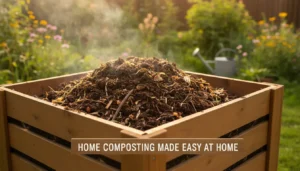
Compost should feel like a wrung-out sponge: damp but not dripping. Too dry and decomposition stalls; too wet and it becomes anaerobic and smelly.
Temperature indicates activity. A hot pile (110–160°F or 43–71°C) breaks down material quickly, but slow cold composting still works fine for beginners.
Troubleshooting Common Issues for Home Composting for Beginners
Beginners face predictable problems. Use these quick fixes to keep the process smooth and odor-free.
- Bad smell: Add more browns and turn the pile to add oxygen.
- Pests: Avoid meat and fatty foods; use a closed bin or add a wire mesh around the base.
- Slow decomposition: Chop materials smaller, maintain moisture, and add more greens for nitrogen.
- Too dry: Spray water while turning. Too wet: Add dry browns and improve drainage.
Timing and When Compost Is Ready
Compost can be ready anywhere from two months to a year depending on method and maintenance. Finished compost is dark, crumbly, and earthy-smelling.
Use mature compost to improve garden soil, top-dress potted plants, or mix into potting mixes at a 10–30% ratio.
Practical Tips and Small-Scale Examples
Start small and scale up. A single 5-gallon kitchen pail for scraps and a modest backyard bin is enough for most households.
- Collect scraps in a sealed bucket and empty into the bin every few days.
- Shred or chop items before adding to speed decomposition.
- Use a garden fork or compost aerator tool for easy turning.
Small Real-World Case Study
Case: Anna, an apartment dweller, started vermicomposting in a two-bin worm box on her balcony. She collected kitchen scraps in a sealed container and fed the worms twice a week.
Within three months she produced rich worm castings for her balcony herbs. Her trash volume dropped significantly and her plants needed less fertilizer.
Benefits and Environmental Impact
Home composting reduces landfill waste and lowers methane emissions from organic materials in anaerobic landfills. It also returns nutrients to soil and improves water retention.
For beginners, the positive impact compounds: less waste, healthier plants, and lower grocery and garden costs over time.
Final Checklist for Home Composting for Beginners
- Choose a method that fits your space and lifestyle.
- Balance browns and greens and maintain moisture.
- Turn or aerate regularly to avoid odors.
- Small changes, like chopping scraps and adding finished compost as an inoculant, speed results.
Home composting is an accessible, low-cost way to manage organic waste and improve soil health. Start with small steps, monitor the system weekly, and adjust materials and airflow until you find the right rhythm for your household.