
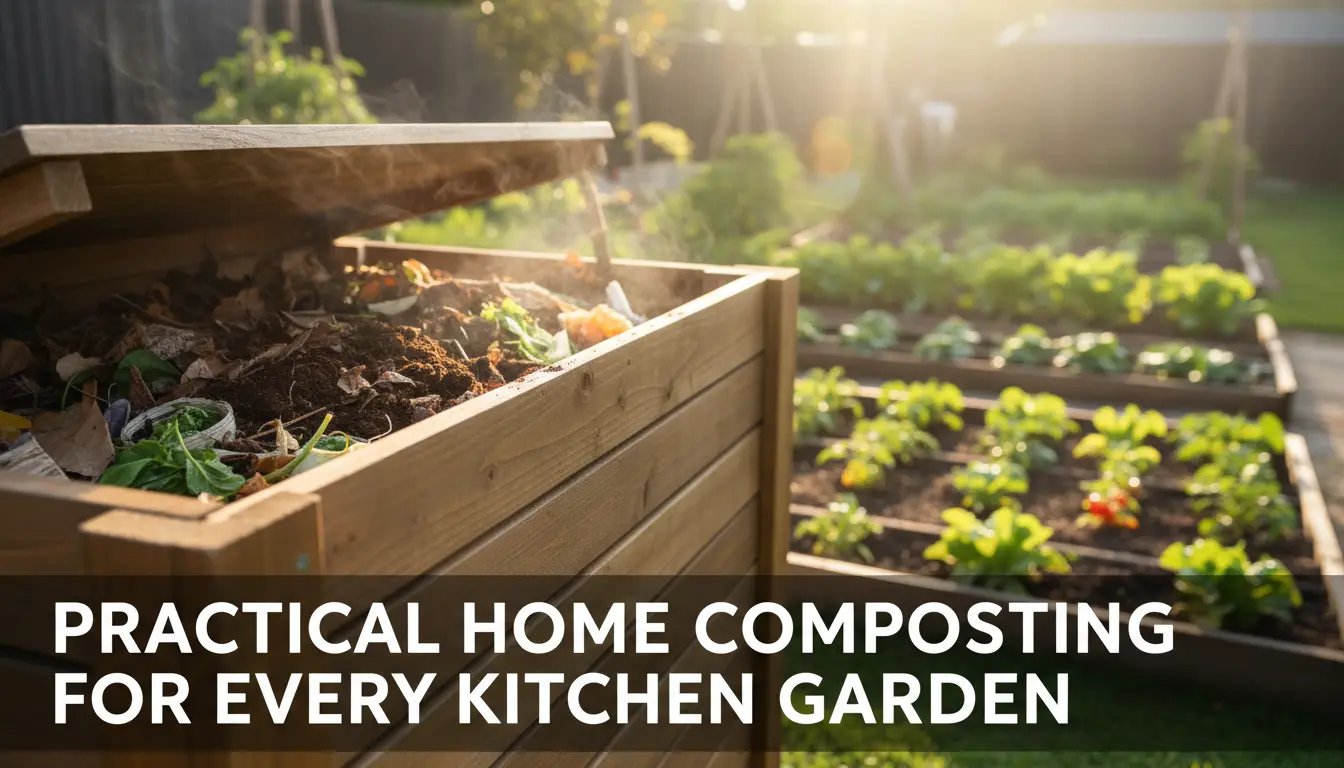
Home composting turns kitchen scraps and yard waste into a soil-building resource. This guide explains practical steps for beginners to start composting at home with minimal equipment and common sense.
Why Home Composting Matters
Composting reduces household waste, lowers methane emissions from landfills, and improves garden soil structure. For beginners, it’s a low-cost way to recycle nutrients back into plants.
Even small-scale composting on a balcony or in a backyard can make a measurable difference to waste volume and plant health.
Getting Started with Home Composting
Before you begin, decide on space, budget, and how much organic waste you produce. These factors will determine the best home composting method for you.
Choose the Right Composting Method
Match a method to your situation. Beginners often prefer simple options that require little maintenance.
- Open pile: Best for larger yards, low cost, but slower and less tidy.
- Compost bin: Enclosed, attracts fewer pests, works well in small yards.
- Tumbler: Faster breakdown, easy turning, higher upfront cost.
- Vermicomposting: Uses worms, ideal for apartments and small quantities of food scraps.
Each method needs the same basic inputs: a mix of green and brown materials, moisture, and airflow.
What Materials to Add and Avoid
Proper material balance prevents odor and speeds decomposition. Aim for a mix of carbon-rich browns and nitrogen-rich greens.
- Greens (nitrogen): Vegetable peels, fruit scraps, fresh grass clippings, coffee grounds.
- Browns (carbon): Dry leaves, shredded paper, cardboard, straw.
- Avoid: Meat, dairy, oily foods, diseased plants, and pet waste to reduce pests and pathogens.
A practical ratio is roughly 2–3 parts brown to 1 part green by volume. If the pile smells, add more browns and turn it.
How to Maintain Your Home Compost

Maintenance is straightforward: monitor moisture, aerate occasionally, and layer materials to keep balance.
- Keep compost moist like a wrung-out sponge. Water dry piles or cover exposed piles during heavy rain.
- Turn or stir the pile every 1–3 weeks for faster decomposition and to introduce oxygen.
- Chop or shred large items so microbes can break them down more quickly.
In colder climates, decomposition slows in winter. Insulate the bin with straw or move smaller bins indoors if needed.
Compost can reduce household waste by up to 30 percent. Finished compost improves soil water retention and can reduce the need for chemical fertilizers.
Troubleshooting Common Compost Problems
Beginner composters often face the same issues. Simple fixes are usually effective.
Problem: Bad Odor
Cause: Too many greens or poor airflow. Fix: Add brown material, turn the pile, and check moisture.
Problem: Slow Decomposition
Cause: Pile too dry, too cold, or lacking nitrogen. Fix: Moisten the pile, add more greens, or chop materials smaller.
Problem: Fruit Flies or Pests
Cause: Exposed food scraps or meat. Fix: Bury food under browns, use closed bins, and avoid meat or oily foods.
Small Case Study: Apartment Vermicomposting
Jane, a city dweller with limited space, started vermicomposting in a plastic bin on her balcony. She used red wiggler worms and added fruit and vegetable scraps along with shredded newspaper.
Within three months, Jane harvested rich worm castings and reduced her household waste by about 20 percent. The system required weekly feeding and occasional moisture checks.
This example shows beginners can compost effectively even without a yard by choosing an appropriate method and staying consistent.
Practical Tips and Examples
Use these simple practices to improve results quickly.
- Layer: Start with coarse brown materials at the bottom to aid airflow.
- Chop: Cut vegetable scraps into smaller pieces to speed breakdown.
- Collect efficiency: Keep a small countertop container to store scraps and empty it daily.
- Test: Finished compost is dark, crumbly, and smells earthy — not like food.
Composting is forgiving. Small consistent steps beat sporadic perfectionism.
Final Checklist for Home Composting Beginners
- Choose a method that fits your space and lifestyle.
- Balance greens and browns; monitor moisture.
- Turn the pile regularly and troubleshoot odors promptly.
- Harvest finished compost and use it in garden beds, pots, or as a top dressing.
Start small, learn by doing, and scale your system as you become comfortable. Home composting converts waste into a valuable resource while supporting healthier soil and plants.