
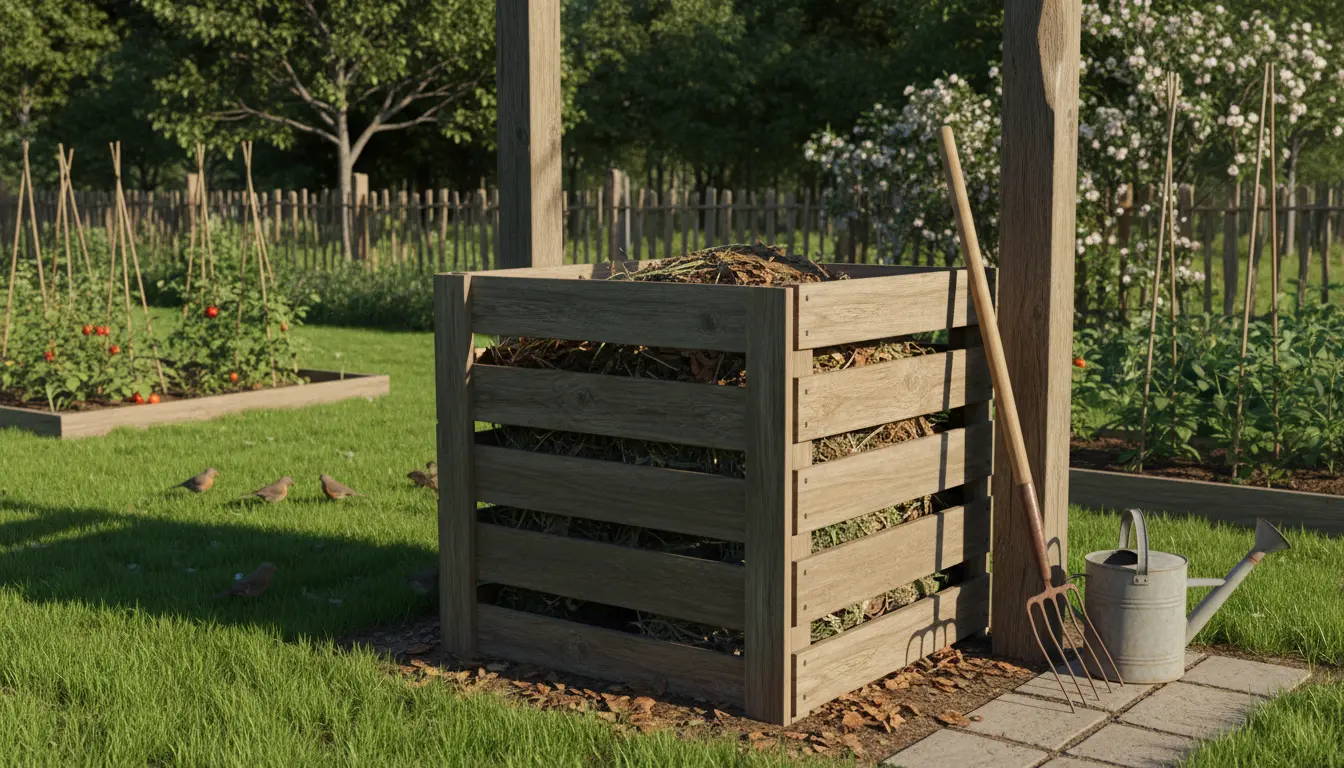
Composting at home turns kitchen scraps and yard waste into rich soil. This guide gives clear, practical steps for home composting for beginners so you can start quickly and avoid common mistakes.
Home Composting for Beginners: Getting Started
Begin by choosing a compost method that fits your space and time. Options include a simple pile, a bin, or a tumbler; each has different upkeep needs.
Decide where to place your compost. Pick a level, well-drained spot with partial shade to keep the pile from drying out or getting waterlogged.
Choosing a Compost Bin for Home Composting for Beginners
Selecting the right container improves results and convenience. Tumblers speed up mixing, while stationary bins are low-cost and low-maintenance.
Consider airflow, volume, and ease of turning when buying or building a bin. A 3x3x3 foot pile is a good target size for efficient heating and breakdown.
Materials: What to Add and What to Avoid
Compost needs a balance of carbon-rich “browns” and nitrogen-rich “greens.” Aim for a rough 30:1 carbon-to-nitrogen ratio by weight.
Common browns: dry leaves, straw, shredded paper, cardboard. Common greens: vegetable scraps, coffee grounds, grass clippings.
- Do add: fruit and vegetable scraps, coffee grounds, eggshells, yard trimmings.
- Avoid: meat, dairy, oily foods, diseased plants, and pet waste.
- Chop or shred large items to speed decomposition.
Layering and Turning Your Pile
Start with a coarse layer for airflow, then alternate greens and browns in 4–6 inch layers. Keep the pile slightly damp, like a wrung-out sponge.
Turning the pile every 1–2 weeks adds oxygen and helps it heat up, reducing pathogens and weed seeds. Use a pitchfork or compost aerator for small to medium piles.
Speeding Up Decomposition
If you want finished compost faster, aim for smaller pieces, correct moisture, and adequate aeration. A thermophilic pile (130–160°F) breaks down materials quickly.
You can add a shovelful of finished compost or garden soil to introduce microbes. Avoid overwatering, which causes anaerobic odor and slows decomposition.
Troubleshooting Common Problems
Bad smell: usually from too much wet green material or poor airflow. Fix by adding dry browns, turning the pile, and checking drainage.
Pile not heating: may be too small, too dry, or lacking nitrogen. Increase size, add water, or mix in more greens.
Pests: avoid adding meat and bones. Use a closed bin or bury fresh food in the pile to deter rodents.
Harvesting and Using Finished Compost
Compost is ready when it is dark, crumbly, and earthy-smelling. Time to finish varies from 2 months to a year depending on method and conditions.
Use finished compost as a soil amendment, top-dressing, or in potting mixes. It improves soil structure, water retention, and nutrient availability.
Adding coffee grounds can slightly lower pH and increase nitrogen levels in compost. Grounds are best mixed with dry browns to avoid clumping.
Small Case Study: Apartment Balcony Composting
Maria lives in a city apartment and wanted to reduce food waste. She bought a small bokashi kit and a compact tumbler for balcony use.
After 6 months she turned kitchen scraps into usable soil for herbs. She combined bokashi pre-compost with garden soil and finished it in a small container. Her herbs grew faster with regular compost tea.
Practical Tips for Limited Space
- Use bokashi or worm bins for indoor-friendly composting.
- Freeze food scraps if you cannot compost daily to prevent odors.
- Keep a closed container under the sink and empty into the bin weekly.
Safety and Environmental Benefits
Compost reduces landfill waste and returns nutrients to soil. Proper composting also minimizes methane emissions compared with anaerobic landfill decomposition.
Wear gloves when handling raw compost and wash tools. Avoid composting materials treated with persistent pesticides if you plan to use compost on food crops.
Quick Start Checklist for Home Composting for Beginners
- Choose a bin: tumbler, stationary, or worm bin.
- Gather browns and greens: balance dry and wet materials.
- Build layers and keep moisture like a wrung-out sponge.
- Turn regularly or use a tumbler for easier aeration.
- Harvest when dark and crumbly; use in garden beds and pots.
Home composting is a simple habit that yields big rewards for garden health and waste reduction. Start small, observe your pile, and tweak the balance of materials until you find a routine that fits your schedule and space.