
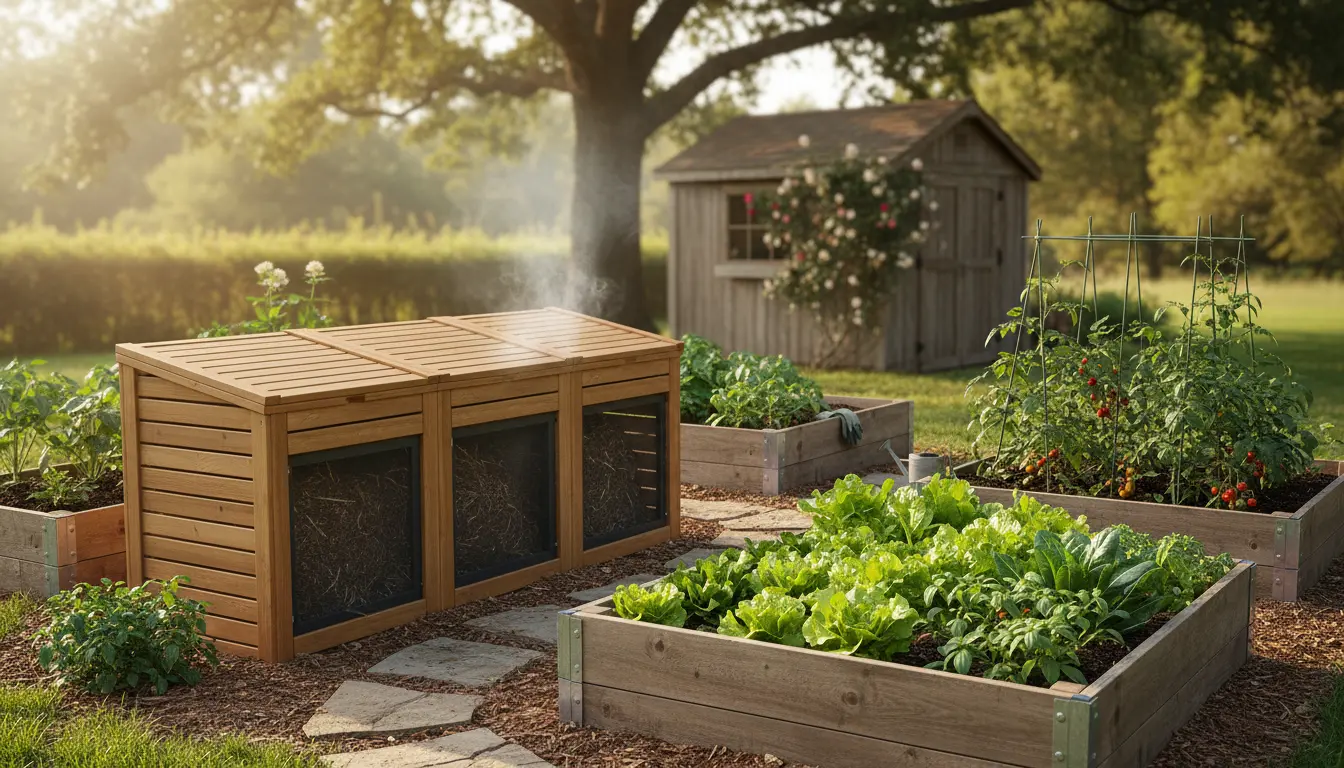
Composting at home turns food scraps and yard waste into nutrient-rich soil. This guide explains clear, practical steps you can use to start composting today. It focuses on easy methods that work for small yards and apartment balconies.
Why Home Composting Works
Composting is a natural process where microbes break down organic matter into stable soil. This process recycles nutrients, reduces landfill waste, and improves garden soil structure.
For beginners, the main benefits are lower trash volume, healthier plants, and a simple way to close the food cycle at home.
Basic Principles of Home Composting
A good compost mix balances carbon and nitrogen, moisture, and air. Carbon-rich “browns” and nitrogen-rich “greens” feed the microbes that do the work.
- Greens: vegetable scraps, coffee grounds, fresh grass clippings.
- Browns: dry leaves, shredded paper, straw.
- Aim for a roughly 25–30:1 carbon to nitrogen ratio by weight, but practical mixes work fine with approximate equal volumes of browns and greens.
How to Start Home Composting
Follow these simple steps to set up a basic compost system. These methods suit most beginners with small outdoor spaces or balconies.
Choose a Container
Select a bin or pile method that suits your space. Options include a simple heap, a plastic bin with holes, or a tumbling composter for faster mixing.
Choose a size you can manage: a 3x3x3 foot pile is ideal for heat generation, but smaller bins still compost more slowly and effectively.
Build Your Pile
Start with a layer of coarse material like twigs to help drainage. Alternate layers of greens and browns to keep the pile balanced.
Moisten each layer so it feels like a wrung-out sponge. Too dry and microbes slow down; too wet and the pile smells.
Maintain Heat, Air, and Moisture
Heat indicates active decomposition. Turn the pile every 1–2 weeks to add air and speed up composting. Turning helps prevent odors and compaction.
If the pile smells sour, add more browns and turn it. If it is dry and slow, add water and more greens.
What to Add and What to Avoid
Most kitchen scraps and yard waste are fine, but some items need caution. Following these guidelines keeps pests and problems away.
- Safe: fruit and vegetable peels, coffee grounds, eggshells, grass clippings, leaves, shredded paper.
- Avoid or limit: meat, dairy, fats, pet waste, diseased plants, and large woody branches.
- Chop larger items to speed breakdown and mix materials to prevent layers that exclude air.
Troubleshooting Common Problems
Beginner composters often encounter slow decomposition, bad smells, or pests. These issues usually have easy fixes.
- Smell: Add dry browns and turn the pile to introduce air.
- Slow breakdown: Check moisture and add nitrogen-rich greens or smaller pieces.
- Pests: Bury food scraps under a browns layer and avoid meat and dairy.
Compost can reach temperatures above 130°F when managed properly. This heat helps kill weed seeds and pathogens, producing safer, richer compost for your garden.
Compost Use and Timing
Finished compost is dark, crumbly, and earthy-smelling. You can use it as a top dressing, mix it into potting soil, or work it into garden beds.
Home composting timelines vary: a well-managed hot pile can finish in 2–3 months, while passive piles may take a year.
Practical Tips for Small Spaces
- Use a sealed kitchen caddy to collect scraps and empty it regularly into an outdoor bin.
- Try vermicomposting (worm bins) for indoor or balcony composting. Red wigglers eat food waste quickly and produce valuable castings.
- Freeze meatless scraps until collection day if you worry about pests before adding them to the pile.
Case Study: Small Backyard Compost Success
Sarah, a homeowner with a small yard, started a 3x3x3-foot bin in spring. She layered shredded leaves and kitchen greens and turned the pile every two weeks.
After three months, the pile produced dark crumbly compost. Sarah used two wheelbarrows of compost to top-dress her vegetable beds, improving water retention and plant growth the following season.
The effort required 10–15 minutes every two weeks and reduced her weekly trash by nearly 30 percent.
Summary: Simple Steps to Start Composting
- Choose a container that fits your space.
- Balance greens and browns and keep the pile moist but not wet.
- Turn the pile occasionally and troubleshoot odors or pests by adjusting materials.
- Use finished compost to enrich soil and reduce the need for fertilizers.
Home composting for beginners is practical and rewarding. Start small, learn by doing, and refine your routine over time. With basic care, your kitchen scraps will become valuable soil for plants and gardens.