
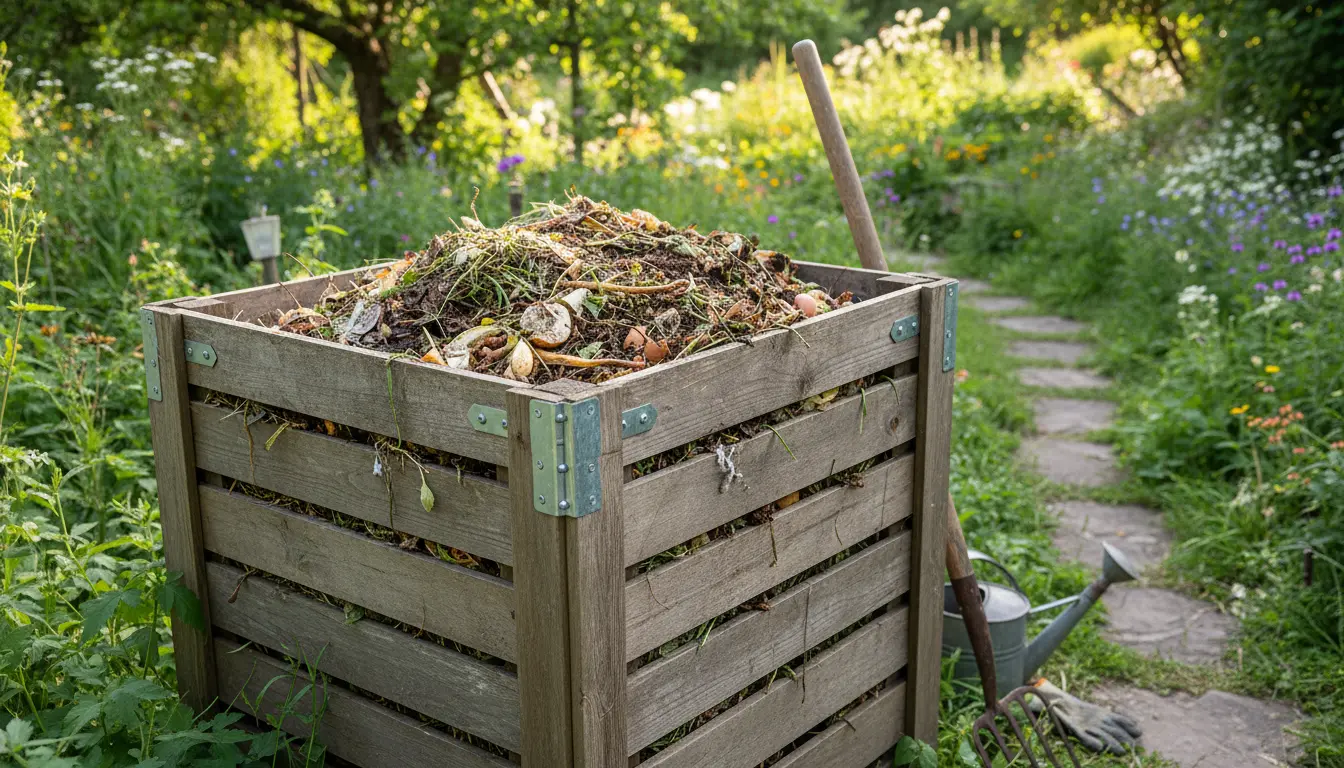
Home composting turns kitchen scraps and yard waste into rich soil. This guide gives clear, practical steps for beginners to start composting at home and avoid common mistakes.
Why Home Composting Matters
Home composting reduces waste sent to landfills and improves garden soil. It recycles nutrients back into plants and lowers household carbon footprint.
Most households can start with a simple bin or pile and a small routine. You do not need special tools or experience to make healthy compost.
How to Start Home Composting for Beginners
Begin by choosing a method that fits your space and lifestyle. Common options include a backyard bin, a tumbler, or a simple compost pile.
Follow these basic steps to set up a compost system:
- Pick a location with partial shade and good drainage.
- Select a container: open pile, wooden bin, plastic bin, or tumbler.
- Collect materials in two categories: greens and browns (see below).
- Build layers and maintain moisture and aeration.
- Monitor temperature and decompose time, then harvest finished compost.
What to Compost at Home
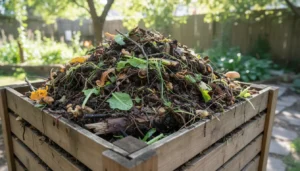
Home composting works best when you use the right mix of materials. Balance is the key to quick, odor-free decomposition.
- Greens (nitrogen): vegetable scraps, fruit peels, coffee grounds, fresh grass clippings.
- Browns (carbon): dry leaves, straw, shredded paper, cardboard, wood chips.
Avoid meat, dairy, oily foods, diseased plants, and pet waste to prevent pests and odors.
Equipment and Materials for Home Composting
You only need a few items to start. Choose what matches your budget and space.
- Compost bin or tumbler
- Pitchfork or garden fork for turning
- Water source or watering can
- Thermometer (optional) to check internal temperature
Compost can reach internal temperatures of 130 to 160°F when working well. Hot composting kills many weed seeds and pathogens, making finished compost safer for the garden.
Step-by-Step Home Composting Process
Follow these steps for a steady supply of finished compost.
- Start with a 6–12 inch layer of coarse browns (twigs or straw) to help drainage.
- Add a layer of greens about half as thick as the browns.
- Alternate layers, keeping the pile moist but not soggy.
- Turn the pile every 1–2 weeks to add oxygen and speed decomposition.
- Wait 2–6 months for compost to mature; time depends on method and conditions.
Adjust the green-to-brown ratio if the pile smells (add more browns) or is too dry (add water and greens).
Home Composting Troubleshooting
New composters often encounter a few common problems. Quick fixes make the system work smoothly.
- Bad smell: Add more brown materials and turn the pile to introduce air.
- Pests: Bury food scraps deeper, use a closed bin, or avoid meat and dairy.
- Slow breakdown: Chop materials smaller, increase moisture, and turn more often.
- Too wet: Mix in dry browns and improve drainage.
When Is Compost Ready to Use?
Finished compost is dark, crumbly, and earthy-smelling. You should not recognize original food scraps or leaves.
Use finished compost to:
- Mix into potting soil for containers
- Top-dress lawns and garden beds
- Improve soil structure in vegetable gardens
Simple Uses for Home Compost
Apply a thin layer around plants, then lightly work it into the topsoil. For new beds, mix one part compost with two parts garden soil.
Small Real-World Example: Sarah’s Balcony Compost
Sarah lives in an apartment with a small balcony. She uses a 20-gallon closed compost bin and kitchen collector. She balances coffee grounds and vegetable scraps with shredded paper and dry leaves.
Within four months she had crumbly compost that she mixed into her herb pots. The herbs showed fuller leaves and more blooms after the first season.
Key takeaways from Sarah’s case: consistent layering, keeping the bin closed, and turning the contents every two weeks made the system reliable and odor-free.
Quick Checklist to Start Home Composting Today
- Choose a compost method that fits your space.
- Gather greens and browns before you begin.
- Maintain moisture and aeration by turning regularly.
- Monitor and adjust based on smell and decomposition speed.
- Harvest finished compost and apply to your garden.
Home composting for beginners is straightforward when you follow simple rules. Start small, observe the process, and refine your routine. Within months you can reduce waste and create healthy soil for plants.