
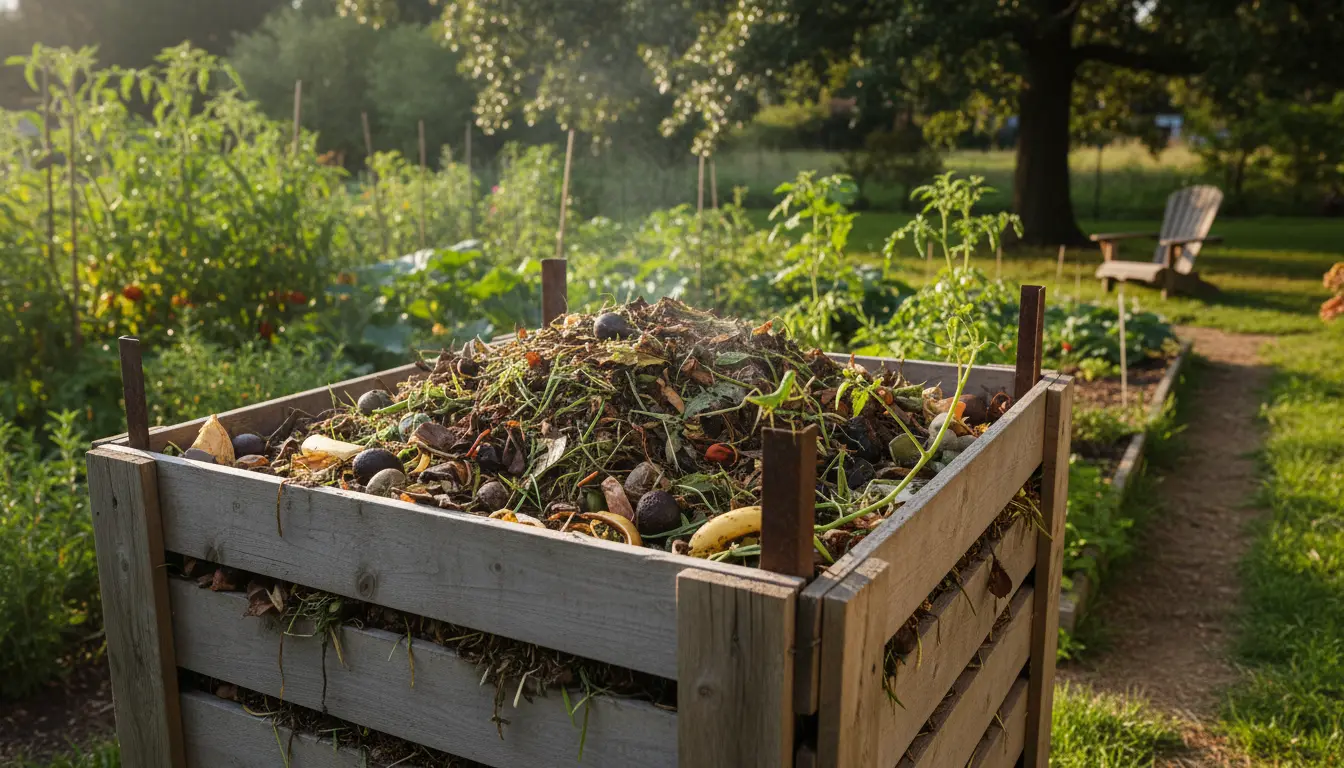
Home composting turns kitchen and yard waste into rich soil amendment. This guide gives clear steps to start a compost bin, manage it, and avoid common mistakes.
What Is Home Composting and Why Start a Compost Bin
Home composting is the controlled breakdown of organic matter at home. A compost bin holds those materials so microbes can turn them into usable compost.
Compost improves soil structure, feeds plants, and reduces waste sent to landfills. It is a practical way to close the loop on household organic material.
Benefits of Home Composting
Composting reduces household waste and saves on fertilizer costs. It also supports healthier soil and stronger plant growth.
Additional benefits include lower methane emissions from landfills and a reduced need for chemical inputs. Small actions add up across a community.
How to Start a Compost Bin
Choose a location that is level, shady, and has good drainage. Place the bin near your kitchen or garden for easy access.
Decide between options: a simple pile, a tumbling compost bin, or a multi-bin system. Each works; choose based on space and how much effort you want to invest.
Choosing a Compost System for Home Composting
For beginners, a closed bin or tumbler is tidy and pest-resistant. Open piles and three-bin systems suit larger gardens and serious composters.
- Compost tumbler: Fast turning and neat.
- Plastic bin: Affordable and low maintenance.
- Three-bin system: Best for staged composting and larger volumes.
What to Compost and What to Avoid in Your Compost Bin
Good materials include fruit and vegetable scraps, coffee grounds, tea bags, yard trimmings, leaves, and shredded paper. Aim for a mix of green (nitrogen) and brown (carbon) materials.
Avoid meat, dairy, oily foods, diseased plants, and pet feces. These items attract pests or create odor and pathogen risks.
Managing Your Compost Bin
Balance is the rule of thumb: equal parts greens and browns by volume works well. Chop materials into small pieces to speed decomposition.
Keep the pile moist like a wrung-out sponge. Too dry, and decomposition slows; too wet, and it becomes anaerobic and smelly.
Turning and Temperature for Home Composting
Turn the pile every 1–2 weeks to introduce oxygen. Aeration helps microbes work faster and reduces odors.
Hot composting reaches 131–160°F (55–71°C) and kills seeds and pathogens. If you do not reach those temperatures, the compost will still mature more slowly at ambient temperatures.
Troubleshooting Common Problems in Compost Bins
Foul odor: Add more brown materials and turn the pile to introduce air. Odors often signal too much wet, green material.
Pests: Avoid adding meat or oily foods. Use a closed bin or a fine mesh cover and bury food scraps inside the pile.
- Slow decomposition: Chop materials finer and check moisture.
- Too dry: Add water and more greens.
- Too wet: Add dry browns like leaves or shredded cardboard.
Simple 30-Day Compost Routine
Day 1: Start with a 6–12 inch base of coarse browns like twigs for drainage. Add alternating layers of greens and browns.
Weeks 1–4: Turn the pile weekly and monitor moisture. Add balanced layers and avoid overloading with fresh wet scraps.
After 30 days: Some systems yield crumbly compost in a month if conditions are ideal. More often, compost matures in 2–6 months depending on materials and management.
Composting one pound of food waste prevents about 0.5 pounds of greenhouse gas emissions compared to landfilling. Small home efforts contribute to larger climate benefits.
Case Study: Small Urban Compost Success
Maria, an apartment balcony gardener, used a 35-gallon compost tumbler to manage weekly kitchen scraps. She collected coffee grounds, vegetable peels, and shredded paper.
Within three months she had rich compost that she mixed into potting soil. Her balcony tomatoes produced 30% more fruit the next season and required no purchased fertilizers.
Tips, Examples, and Quick Checklist for Home Composting
Start small and scale up as you learn. Frequent small additions are better than piling up large amounts all at once.
- Keep materials chopped to a few inches for faster breakdown.
- Maintain a balance: aim for 2 parts brown to 1 part green by volume.
- Monitor moisture: add water or dry materials as needed.
- Turn regularly to keep the process aerobic.
Example: A typical weekly mix might include two grocery bags of leaves (browns) and a quart of kitchen scraps (greens). Layer and turn weekly for steady progress.
Home composting is practical and affordable. With basic attention to balance, moisture, and turning, nearly any household can produce useful compost and reduce organic waste.