
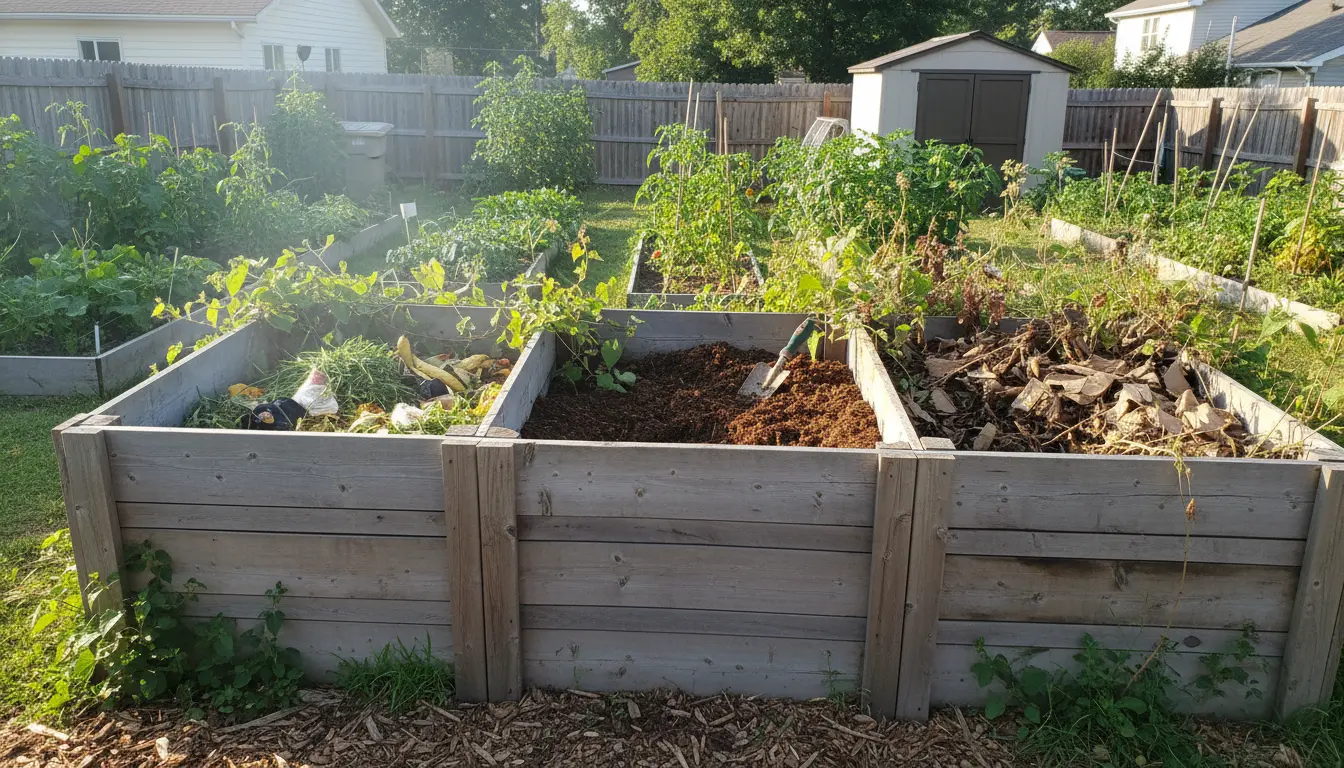
What Is Home Composting and Why Start
Home composting turns kitchen scraps and yard waste into nutrient-rich soil amendment. It reduces landfill waste, cuts trash costs, and improves your garden’s health.
For beginners, composting is a low-cost, simple practice that fits apartments to family gardens. The key is managing materials and conditions so organic matter breaks down efficiently.
How to Start Home Composting
Starting composting at home requires three basic elements: the right container, a balance of materials, and regular care. You can begin with simple tools and learn by doing.
Choose a Bin or Method
Select an approach that matches your space and commitment level. Common options include:
- Open pile: Best for large yards and minimal cost.
- Tumbler bin: Faster decomposition and easy turning.
- Bokashi: Fermentation method for small spaces and vegetable scraps, including meat.
- Indoor worm bin (vermicompost): Good for apartments and continuous small-batch compost.
Gather the Right Materials
Compost needs a mix of greens and browns. Greens supply nitrogen; browns supply carbon. Aim for roughly a 2:1 to 3:1 ratio of browns to greens by volume.
- Greens: vegetable peels, coffee grounds, fresh grass clippings, tea bags.
- Browns: dry leaves, shredded paper, straw, cardboard.
Avoid meat, dairy, oily foods, diseased plants, and pet waste unless using Bokashi or specialized systems.
Maintain Your Home Composting System
Maintenance keeps the pile active and prevents odors or pests. Follow three simple practices: aeration, moisture control, and regular feeding.
Aerate the Pile
Oxygen supports the microbes that break down matter. Turn a pile every 1–2 weeks with a shovel or rotate a tumbler regularly.
Control Moisture
Compost should be as damp as a wrung-out sponge. Too dry and decomposition slows; too wet and it smells. Add water or cover the pile if dry, and add more browns if soggy.
Feed Consistently
Add a mix of greens and browns. Chop large items to speed breakdown. Small, frequent additions keep microbes active and reduce odor spikes.
How to Tell When Compost Is Ready
Finished compost is dark brown, crumbly, and smells earthy. Most backyard systems take 2–12 months depending on method, material size, and maintenance.
Use finished compost as a top dressing, mix it into potting soil, or add it to garden beds to improve structure and nutrient content.
Home Composting Troubleshooting
Problems are common at first but easy to fix.
- Bad smells: Add more browns and aerate the pile.
- Slow breakdown: Chop materials finer, add nitrogen-rich greens, and increase heat by making the pile larger.
- Pests: Bury food scraps under browns, avoid meat/dairy, and secure the bin.
Composting can reduce household waste volume by up to 30 percent and returns valuable nutrients to the soil instead of sending them to landfill.
Small Real-World Example
Case study: A three-person household in a suburban townhouse started with a 60-liter tumbler. They collected kitchen scraps and shredded paper, maintaining a 3:1 brown-to-green mix. After six months of weekly tumbling, they produced 30 liters of finished compost used on container tomatoes. The plants showed improved growth and reduced watering needs.
Practical Tips for Success
Use these simple rules to make home composting easier and more reliable.
- Keep a small countertop bin with a lid for kitchen scraps to reduce trips outside.
- Shred cardboard and chop large items before adding to the bin.
- Place compost bins on soil or grass to allow drainage and encourage beneficial organisms.
- Record additions and turning dates to learn what mix works best for your climate.
Uses and Benefits of Finished Compost
Finished compost improves soil structure, water retention, and nutrient content. Use it as:
- Soil amendment for beds and lawns (mix into top 10–15 cm).
- Container mix component (replace 20–30% of potting soil).
- Mulch surface layer to suppress weeds and retain moisture.
Quick Home Composting Checklist
- Choose a bin or method that fits your space.
- Collect greens and browns and keep a 2–3:1 brown to green ratio.
- Turn the pile every 1–2 weeks and keep it moist like a sponge.
- Use finished compost in the garden or containers.
Home composting is a practical way to lower waste and improve garden health. Start small, stay consistent, and adjust based on what your compost teaches you.