
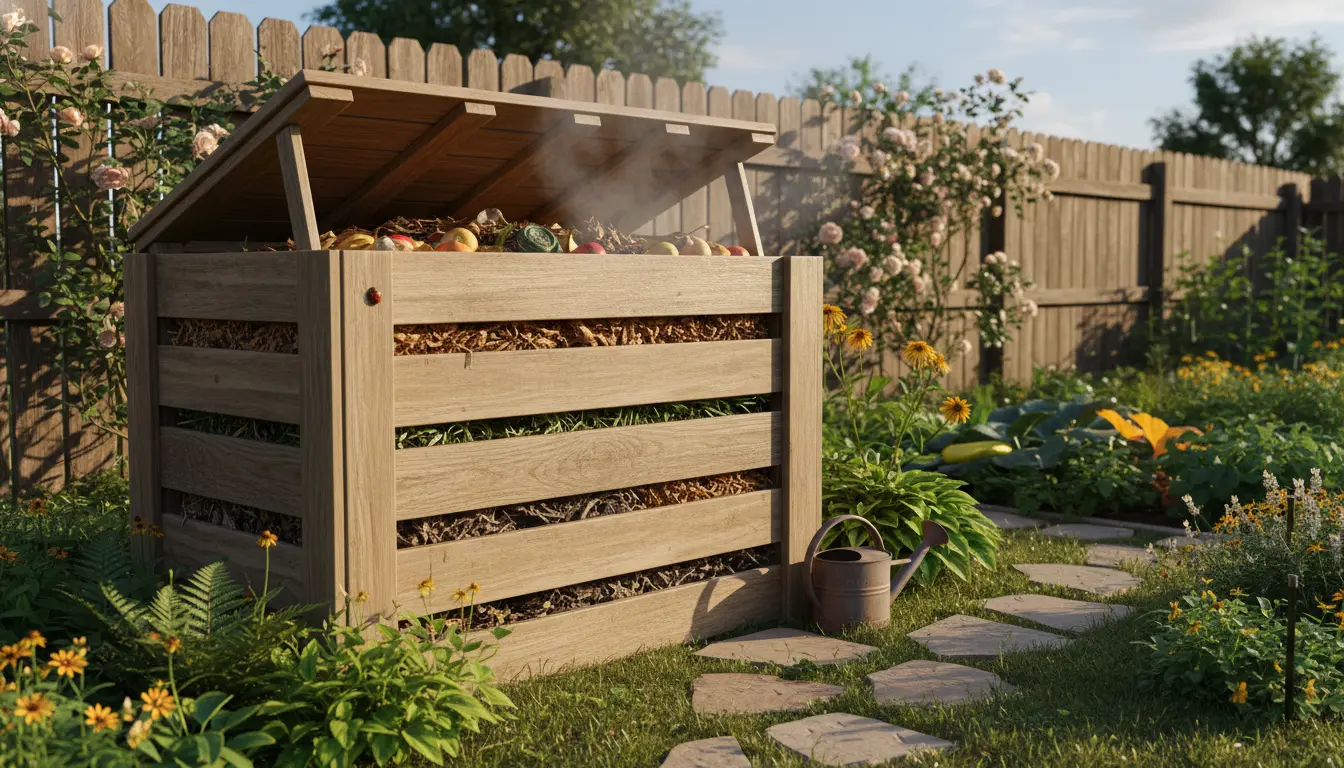
What Is Home Composting?
Home composting is the controlled breakdown of organic kitchen and yard waste into a nutrient-rich soil amendment. It reduces landfill waste and returns valuable nutrients to your soil.
Compost can improve soil structure, boost plant growth, and reduce the need for chemical fertilizers. You can compost in a backyard pile, a bin, or even indoors with a worm bin.
Why Choose Home Composting
Home composting saves money, lowers household waste, and supports sustainable gardening. It is practical for homeowners and renters who want to close the loop on food and yard waste.
Starting small and following a few rules makes composting manageable and odor-free.
How to Start Home Composting
Begin by choosing a method that fits your space and lifestyle. Commit a small weekly time for maintenance — typically 5–15 minutes.
Choosing a Compost System
Select a system based on space, odor tolerance, and how quickly you want finished compost. Common options include:
- Open pile: Low cost, good for yards, needs turning.
- Enclosed bin: Neat and compact, reduces pests and speeds decomposition.
- Tumbler: Easy turning and faster results, ideal for small yards.
- Worm bin (vermicompost): Best for indoor or apartment composting of kitchen scraps.
Where to Place Your Compost
Choose a level, well-drained spot with partial sun. Close proximity to the kitchen encourages regular use and reduces the temptation to discard scraps.
Avoid low-lying areas that collect water. On balconies, use a closed container or worm bin to limit smells and pests.
What to Compost: Greens and Browns
Compost needs a mix of ‘greens’ (nitrogen-rich) and ‘browns’ (carbon-rich) to decompose well. Aim for roughly a 1:3 ratio of greens to browns by volume.
- Greens: Fruit and vegetable scraps, coffee grounds, fresh garden clippings.
- Browns: Dry leaves, cardboard, shredded paper, straw, small wood chips.
Do not add meat, dairy, oily foods, or pet waste to a typical home compost pile. These items attract pests and can create odors.
Compost Maintenance Tips
Keep your compost moist like a wrung-out sponge; not too wet, not bone dry. Turn the pile every 1–2 weeks to add oxygen and speed decomposition.
Smaller pieces break down faster. Chop or shred large items and bury new material in the center of the pile to reduce flies.
Temperature and Time
Hot composting (130–160°F) breaks down materials faster and kills seeds and pathogens. It requires regular turning and a balanced mix of materials.
Cold composting is lower effort but slower, taking several months to a year. Both methods produce usable compost if managed correctly.
Signs of Healthy Compost
- Earthy smell (not foul).
- Warm center during active decomposition.
- Dark, crumbly texture when finished.
Troubleshooting Common Issues in Home Composting
Problems are usually simple to fix with small adjustments in moisture, aeration, or material balance.
Bad Odor
Cause: Too wet or too many greens. Fix: Add more browns, turn compost, and ensure drainage.
Slow Decomposition
Cause: Too dry, too cold, or not enough nitrogen. Fix: Moisten slightly, add greens, and chop materials finer.
Pests
Cause: Meat, dairy, or food scraps exposed. Fix: Bury food, use enclosed bins or tumblers, or compost those items in a hot system.
Composting can reduce household waste volume by up to 50 percent and can lower methane emissions from landfills when organic waste is diverted.
Small Real-World Example: Apartment Worm Bin Case Study
Maria, a city renter, started a 10-liter worm bin on her balcony. She added shredded cardboard as bedding and fed kitchen scraps twice weekly.
After three months, Maria harvested 7 liters of dark compost and a liquid rich in nutrients for her potted plants. The bin produced no odor because she balanced the feedstock and kept bedding moist but not wet.
Key takeaways: consistent feeding, proper bedding, and drainage prevent smells and pests in small-space composting.
Using Finished Compost
Finished compost is dark, crumbly, and smells earthy. Use it as a top dressing for lawns, mixed into potting soil, or dug into garden beds to improve structure.
Mix compost with existing soil at a 10–30 percent ratio for planting, or use it as mulch around shrubs and vegetables.
Quick Checklist to Start Home Composting
- Choose a compost system that fits your space.
- Locate the bin in a level, well-drained spot near the kitchen.
- Balance greens and browns; keep materials chopped small.
- Maintain moisture and turn regularly for faster results.
- Use finished compost to enrich soil and reduce fertilizer needs.
With minimal time and the right setup, home composting becomes a simple habit that reduces waste and improves your garden. Start with a small system, learn by doing, and scale up as you gain confidence.