
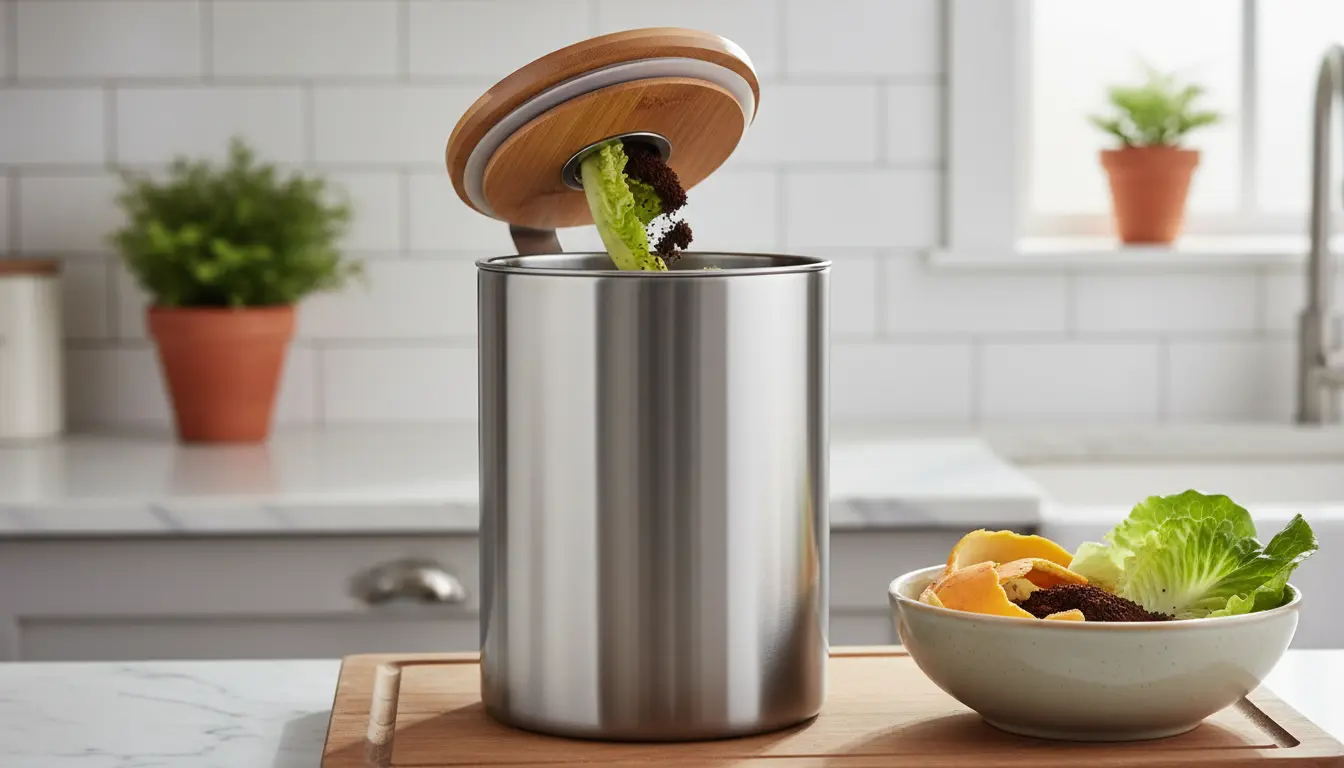
Composting at home turns kitchen and yard waste into a useful soil amendment. This guide explains simple methods, what to add, and how to avoid common problems. Use these steps to start composting whether you have a yard or a small apartment.
What Is Home Composting for Beginners
Home composting is the controlled decomposition of organic material to produce a nutrient-rich product called compost. It reduces household waste, improves garden soil, and can save money on fertilizers and bags of topsoil.
Common Home Composting Methods
There are three practical methods for most beginners: backyard pile or bin, compost tumbler, and vermicomposting (worms). Choose a method that fits your space, time, and the type of waste you generate.
Backyard Pile or Bin
Best for people with outdoor space. It requires periodic turning and a balance of green and brown materials. A simple wire bin or wooden crate works fine.
Compost Tumbler
Tumblers speed up decomposition by making turning easy. They are tidy and reduce pests but can be more expensive than a simple bin. Tumblers work well in small yards.
Vermicompost (Worm Bin)
Vermicomposting uses red worms to break down food scraps indoors. It suits apartments or people who want a fast, odor-free option. Worm bins need attention to moisture and feeding rates.
Materials to Use and Avoid in Home Composting for Beginners
Understanding what to add keeps your compost healthy. Aim for a balanced mix of carbon-rich and nitrogen-rich materials.
- Greens (nitrogen): fruit and vegetable scraps, coffee grounds, fresh grass clippings.
- Browns (carbon): dry leaves, shredded paper, cardboard, straw.
- Items to avoid: meat, dairy, oils, diseased plants, pet waste, and large woody branches.
Step-by-Step Setup: Home Composting for Beginners
Follow these clear steps to set up a basic backyard or bin compost system. Each step is short and actionable.
- Choose a location with partial shade and good drainage. Keep the bin accessible year-round.
- Start with a layer of coarse material like twigs or straw to help airflow.
- Add alternating layers of greens and browns. Aim for roughly 1 part greens to 2–3 parts browns by volume.
- Moisten each layer—compost should be as damp as a wrung-out sponge.
- Turn the pile every 1–2 weeks to add oxygen, or rotate the tumbler as needed.
How to Monitor Progress
Check temperature and moisture. An active compost pile will feel warm in the center. If it cools, add greens and turn. If it smells bad, add more browns and increase aeration.
Troubleshooting Common Issues
New composters often face a few recurring problems. Below are quick fixes that keep the system running smoothly.
- Bad odors: Caused by excess moisture or too many greens. Turn the pile and add dry browns.
- Pests: Avoid meat and dairy, bury food scraps in the center, or use a closed bin.
- Slow breakdown: Increase surface area by shredding materials, maintain moisture, and turn more often.
Maintenance Tips for Long-Term Success
Regular, small actions keep compost healthy. Schedule turning, maintain moisture, and adjust inputs seasonally. In winter, composting slows but continues.
- Turn the pile every 1–2 weeks during active decomposition.
- Keep the pile damp but not waterlogged.
- Chop or shred large items to speed decomposition.
Small Case Study: Apartment Vermicomposting Success
Sarah, a two-person household in a city apartment, started a 20-liter worm bin under her sink. She fed the worms about one to two cups of kitchen scraps three times per week.
After six months, Sarah produced about 35 liters of vermicompost. She reduced weekly food waste bags from two to one and used the worm castings on potted herbs. The system required weekly checks for moisture and one small harvest every two months.
Key Results
- Food waste reduced by roughly 50% by volume.
- Herb growth improved after adding compost tea and castings.
- Minimal odor or pest problems when maintained properly.
How to Use Finished Compost
Finished compost is dark, crumbly, and has an earthy smell. Use it as a soil amendment, top dressing, or potting mix ingredient. A common ratio is mixing 1 part compost to 3 parts soil for garden beds.
Practical Checklist to Start Home Composting for Beginners
- Choose a method: bin, tumbler, or worm bin.
- Collect a mix of greens and browns.
- Set a simple maintenance routine: check moisture weekly and turn regularly.
- Keep a small kitchen pail for scraps and empty it into the system daily.
Starting small and learning by doing is the most reliable approach. With a little attention and the right balance, home composting becomes a low-effort way to cut waste and improve garden health.