
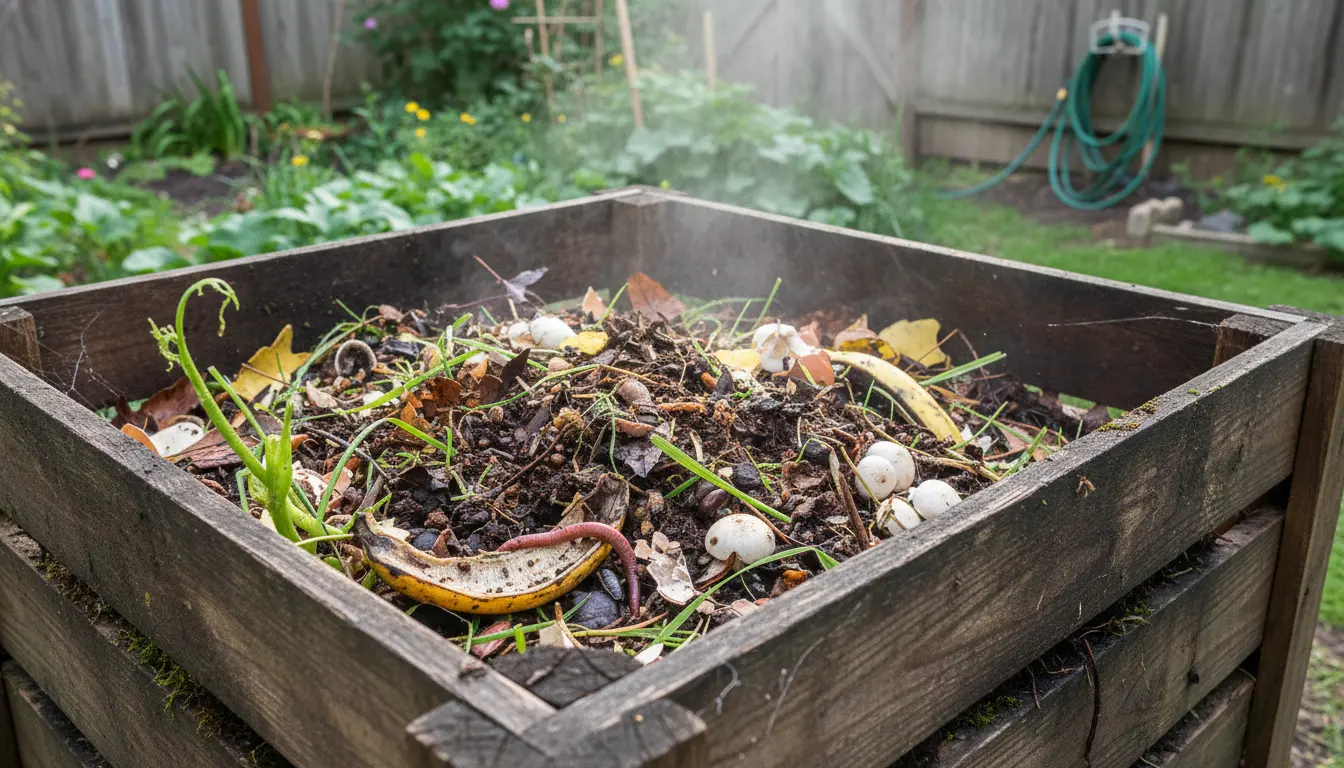
Composting turns kitchen and garden waste into rich soil that nourishes plants and reduces landfill waste. This guide explains practical steps for home composting for beginners, covering tools, materials, and common fixes.
Why Choose Home Composting for Beginners
Home composting reduces trash, lowers methane emissions from landfills, and creates nutrient-rich compost for gardens. It also saves money and improves soil structure for healthier plants.
Beginners can start with simple methods and scale up as they learn. Composting is flexible and works in apartments, small yards, and larger properties.
Essential Tools for Home Composting for Beginners
You do not need fancy equipment to start. A few basic items make composting easier and cleaner.
- Compost bin or tumbler (or a DIY pile)
- Pitchfork or garden fork for turning
- Kitchen compost caddy with a lid for scraps
- Optional: thermometer to monitor heat
What to Compost: Materials Checklist
Effective compost needs a mix of carbon-rich and nitrogen-rich materials. Think of them as browns and greens.
- Browns (carbon): dry leaves, straw, shredded cardboard, paper
- Greens (nitrogen): vegetable scraps, coffee grounds, grass clippings
- Avoid: meat, dairy, oils, diseased plants, pet waste
How to Start Home Composting for Beginners: Step-by-Step
Starting is mainly about layering and moisture. Follow these simple steps to build a stable pile or fill a bin.
- Choose a shaded spot with good drainage or place a tumbler on a hard surface.
- Add a 4–6 inch base layer of coarse browns (twigs or straw) for airflow.
- Alternate thin layers of greens and browns, aiming for roughly 2:1 browns to greens by volume.
- Maintain moisture like a wrung-out sponge—damp but not dripping.
- Turn the pile every 1–2 weeks to add oxygen and speed decomposition.
Managing Moisture and Temperature
Proper moisture and oxygen are the keys to a healthy compost. Too dry, and microbes slow down. Too wet, and the pile can smell.
- Too wet: add dry browns and turn; consider a raised bin for drainage.
- Too dry: add water while turning or include more greens.
- Ideal temperature: 55–65°C (131–149°F) in an active hot pile, but cold composting works slowly at ambient temperature.
Common Problems and Solutions for Home Composting for Beginners
New composters often face odors, pests, or slow breakdown. Each issue has a straightforward fix.
- Bad smell: Add more browns and turn the pile to introduce air.
- Pests: Avoid meat and oily foods; use a closed bin or bury food scraps in the center.
- Slow composting: Chop materials smaller, increase surface area, and maintain moisture and aeration.
How Long Until Compost Is Ready?

Timing depends on method and management. Hot composting can produce usable compost in 2–4 months. Cold composting may take 6–12 months.
You know compost is ready when it is dark, crumbly, and smells earthy. Large chunks that look like the original material should be screened out and returned to the pile.
Small Real-World Example: A Beginner’s Kitchen to Garden Loop
Case study: Sarah, an apartment dweller with a balcony, started a vermicompost bucket. She fed her worms kitchen scraps and shredded paper. In four months she produced about 10 liters of worm castings that she mixed into potted herbs.
The key actions that worked were: keeping the bin shaded, adding small amounts of food regularly, and avoiding citrus and onion in large quantities. The results were healthier basil and mint with less store-bought fertilizer.
Using Finished Compost
Finished compost can be used as a soil amendment, seed-starting mix ingredient, or top dressing for lawns and beds. Mix 2–4 inches into garden beds or blend 25–50% with potting soil for containers.
Compost improves water retention and feeds soil biology rather than just adding nutrients, so plants benefit long-term.
Quick Tips for Success
- Chop or shred materials to speed breakdown.
- Keep a balanced mix of browns and greens.
- Use a kitchen caddy with a lid to reduce flies and mess.
- Label the bin with start dates if you manage multiple piles.
Home composting is an easy, effective way to reduce waste and enrich your soil. Start small, observe, and adjust. Within months you’ll transform kitchen scraps into valuable compost and join a cycle that benefits your plants and the planet.