
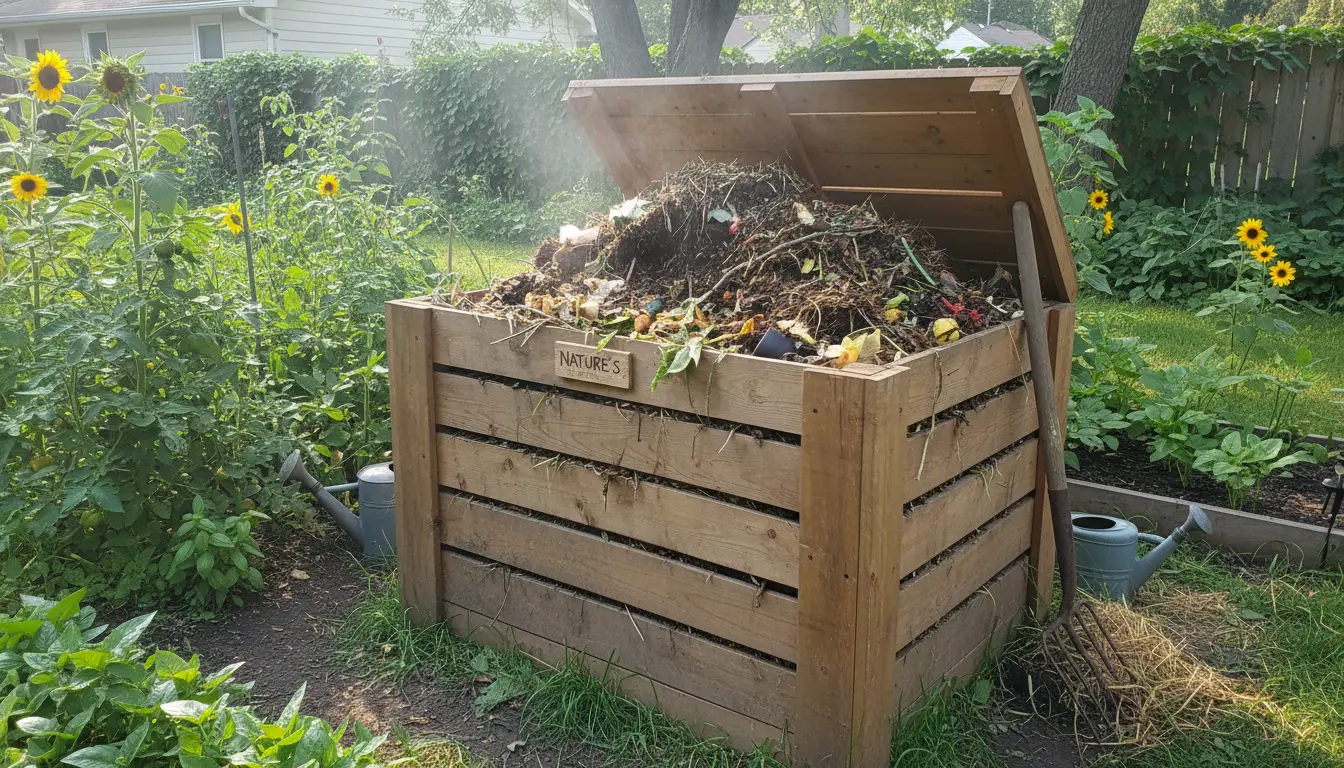
Why Home Composting for Beginners Matters
Home composting reduces household waste and creates nutrient-rich material for gardens. It is an easy, low-cost way to close the loop on food scraps and yard trimmings.
This guide focuses on clear steps and practical choices for people just starting home composting for beginners. No jargon—just what you need to start and keep compost healthy.
How Home Composting Works
Composting is a controlled process of decomposition. Microbes, worms, and oxygen break down organic matter into humus that improves soil structure.
Two main factors control the process: the carbon-to-nitrogen ratio and oxygen. Balancing these helps compost heat up and decompose efficiently.
Basic Ingredients for Compost
- Greens (Nitrogen): vegetable scraps, coffee grounds, fresh grass clippings.
- Browns (Carbon): dry leaves, cardboard, shredded paper, straw.
- Air and Moisture: occasional turning and keeping the pile damp like a wrung-out sponge.
Choosing a Bin and Location
Select a bin based on space, budget, and convenience. Options range from a simple pile to tumblers and worm bins.
Place your bin on bare soil or a well-drained surface. This allows beneficial organisms to enter and keeps drainage proper.
Selecting a Bin for Home Composting for Beginners
For many beginners, a small tumbler or a simple 3-bin system works best. Tumblers are tidy and reduce pests, while open bins are low-cost and scalable.
Consider these points when choosing a bin:
- Available space: balcony, backyard, or garage.
- Pest control: tumblers and sealed bins help keep critters out.
- Turn frequency: tumblers make turning easier and faster.
Step-by-Step Start Plan
Follow these steps to begin home composting for beginners with minimal guesswork.
- Pick a bin and site. Aim for shade and easy access.
- Start with a base layer of coarse browns to aid airflow.
- Add alternating layers of greens and browns, keeping a 1:2 ratio of greens to browns by volume as a general rule.
- Keep the pile moist but not soggy. Add water during dry spells.
- Turn or mix the material every 1–2 weeks to add oxygen and speed decomposition.
- Monitor temperature if possible: a warm center indicates activity. If the pile smells, add more browns and turn it.
Common Problems and Fixes
Beginner composters often face a few predictable issues. Identifying the problem quickly makes correction simple.
- Bad smell: Too wet or too many greens. Fix by adding dry browns and turning.
- Slow decomposition: Pile too dry, too small, or lacking nitrogen. Add water and greens, and increase pile size if needed.
- Pests: Avoid meat, dairy, and oils. Use a closed bin or bury food scraps in the center.
What to Compost and What to Avoid
Most plant-based kitchen scraps and yard waste are safe. Avoid items that attract pests or slow decomposition.
- Compostable: fruit and vegetable scraps, coffee grounds, eggshells, tea bags, leaves, and small yard trimmings.
- Do not compost: meat, dairy, oils, diseased plants, and pet waste from carnivores.
Tips for Small-Space Composting
Apartment dwellers can compost with a small worm bin or a sealed counter composter. Worms efficiently process food scraps into vermicompost.
Keep a small bin under the sink for daily scraps and empty into a larger bin outdoors or a worm bin on a balcony.
Composting can reduce household waste by up to 30 percent. A balanced compost pile can reach temperatures of 130–160°F (55–70°C), which helps kill weed seeds and pathogens.
Small Case Study: A Balcony Worm Bin
Maria lives in a two-bedroom apartment and started composting with a 10-liter worm bin on her balcony. She kept kitchen scraps in a sealed jar and added them to the bin every few days.
Within three months she harvested rich vermicompost and used it to feed potted herbs. Her waste to landfill dropped noticeably and her plants showed better growth.
How to Use Finished Compost
Finished compost looks dark, crumbly, and earthy. Use it as a soil amendment, top dressing, or potting mix ingredient.
Application ideas:
- Mix 1 part compost into 3 parts soil when planting.
- Top-dress lawns or garden beds with a thin layer to improve soil health.
- Create a seed-starting mix by combining compost with sterile medium at a low rate.
Final Checklist for Home Composting for Beginners
- Choose the right bin and a good location.
- Balance greens and browns and keep moisture steady.
- Turn the pile regularly and monitor for pests or odors.
- Harvest finished compost when it is dark and crumbly.
Starting home composting is low-risk and high-reward. With minimal tools and a little routine, beginners can turn common waste into a valuable soil resource in months rather than years.