
Why Home Composting Matters
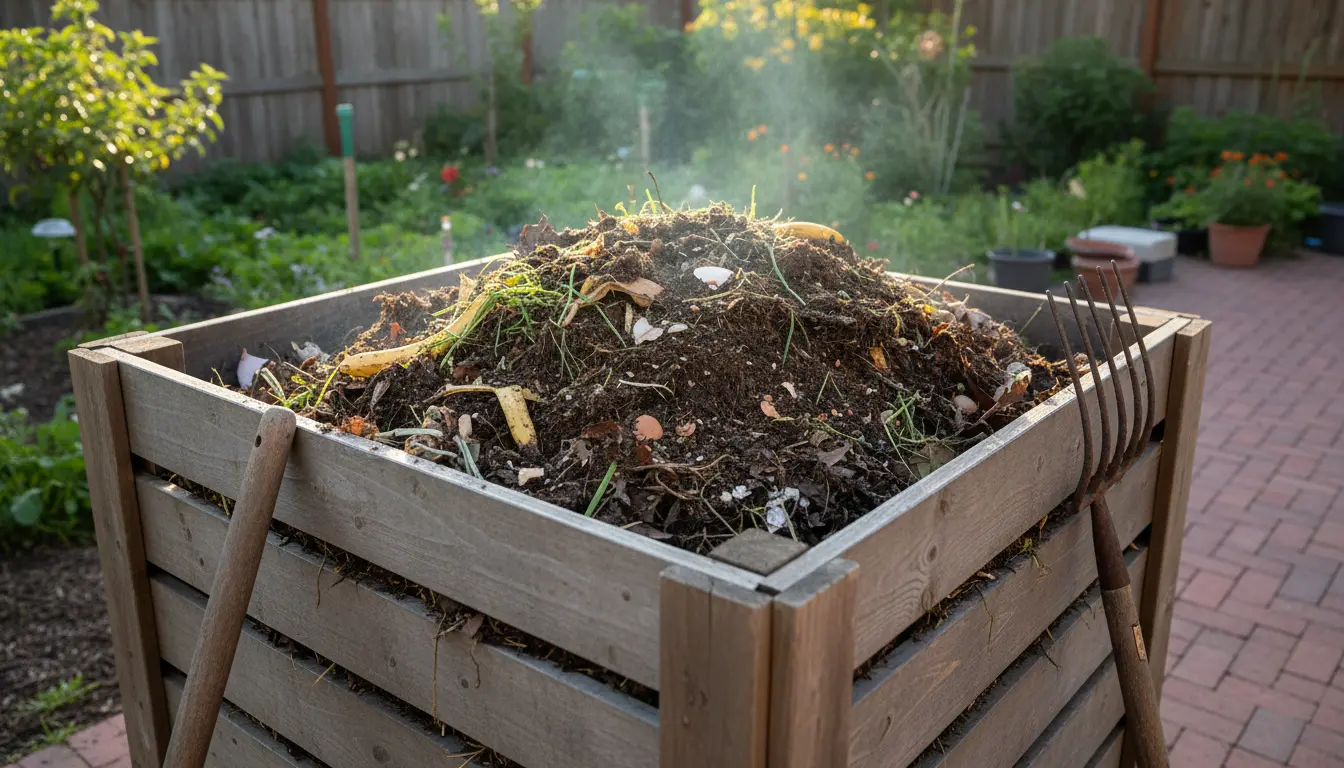
Home composting turns kitchen scraps and yard waste into nutrient-rich soil. It reduces landfill waste and supports healthier plants without chemical fertilizers.
This guide covers the basic steps to start and maintain a successful compost bin at home, with clear practices you can follow this week.
Choosing a Compost System for Home Composting
Select a system that fits your space and effort level. Common options include tumblers, stationary bins, and simple compost piles.
- Tumbler: Faster mixing, contained, less pest access.
- Stationary bin: Low cost, works for gradual composting.
- Compost pile: Best for larger yards, requires regular turning.
Place your bin on soil or a well-drained surface and in partial shade to maintain moisture and microbial activity.
What to Add to Your Home Composting Bin
Balance ‘greens’ (nitrogen) and ‘browns’ (carbon) for efficient decomposition. Aim for roughly a 2:1 ratio by volume of browns to greens.
- Greens: vegetable peels, fruit scraps, coffee grounds, fresh grass clippings.
- Browns: dry leaves, shredded paper, cardboard, straw, small wood chips.
- Avoid: meat, dairy, fats, diseased plants, pet waste to prevent odors and pests.
Layering and Volume Tips for Home Composting
Start with a coarse layer (twigs or straw) to improve airflow. Alternate green and brown layers about 2–4 inches thick.
Keep the pile at least 1 cubic foot to retain heat, but most backyard bins are effective at any scale if managed consistently.
Managing Moisture, Air, and Temperature
Microbes need moisture and oxygen to break down material. Aim for a damp sponge consistency—moist but not soggy.
- Moisture: Add water or browns to correct wetness.
- Air: Turn the pile or rotate a tumbler every 1–2 weeks for faster composting.
- Temperature: Active piles heat to 120–160°F (49–71°C); cooling means slower decomposition but still useful compost.
Troubleshooting Common Home Composting Problems
Bad odor: Usually from too many greens or excess moisture. Add dry browns and aerate.
Slow decomposition: Increase surface area by chopping materials and turn more often. Ensure proper moisture and a mix of greens and browns.
Pests: Use closed bins, bury food scraps under browns, avoid meat and dairy, and secure lids.
Harvesting and Using Finished Compost
Finished compost looks dark, crumbly, and earthy-smelling. Let it cure for a few weeks before use.
Use finished compost to:
- Top-dress lawns and garden beds.
- Mix with potting soil to improve structure and nutrient content.
- Use as mulch around trees and shrubs to retain moisture.
Small Real-World Example
Case Study: Sarah in Portland started a 60-gallon tumbler in her apartment garden. She added kitchen scraps and shredded paper and rotated the tumbler twice a week.
Within three months she had dark compost to feed potted herbs and tomatoes, reduced her kitchen waste by half, and reported fewer shopping trips for fertilizer.
Quick Home Composting Starter Checklist
- Pick a bin type (tumbler, stationary, pile).
- Collect greens and browns separately.
- Layer materials and keep volume consistent.
- Monitor moisture and aerate regularly.
- Harvest finished compost and apply to plants.
Adding small amounts of garden lime or crushed eggshells can help balance acidity in very acidic kitchen waste, but use sparingly—most composts balance naturally.
Simple Home Composting Schedule
Week 1: Start with a base layer, add mixed greens and browns. Monitor moisture.
Weeks 2–8: Turn or rotate every 1–2 weeks. Adjust moisture and add materials as needed.
After 8–12 weeks: Expect usable compost if the pile stayed active. Longer for passive systems.
Final Tips for Successful Home Composting
- Keep material size small—chop or shred larger items to speed decomposition.
- Be consistent: regular additions and turning yield faster results.
- Start small and scale up once you understand the balance your bin needs.
With basic attention to balance, moisture, and aeration, home composting becomes a low-effort way to recycle organic waste and improve your soil. Try one small system this season and adjust based on what you observe.