
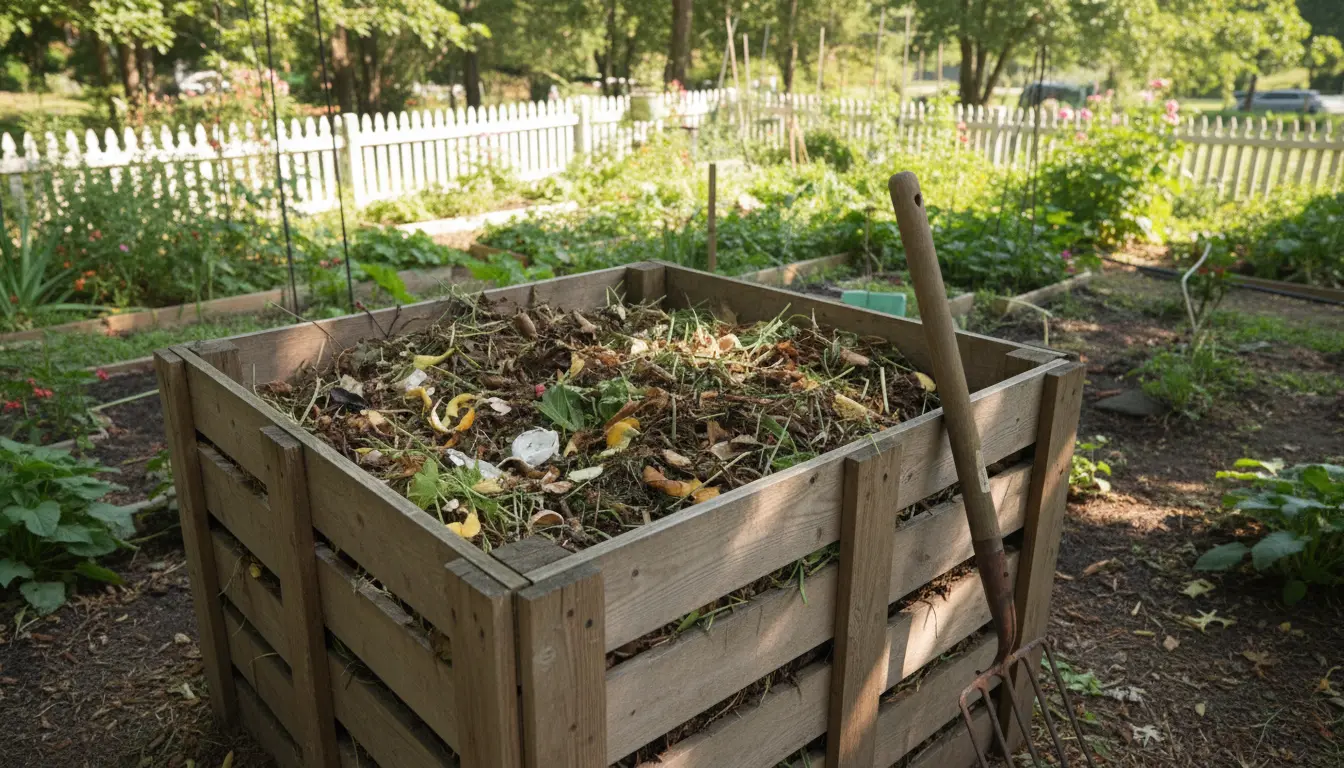
Why Home Composting Matters
Home composting turns kitchen and yard waste into a useful soil amendment while reducing landfill trash. It saves money, improves garden soil, and lowers greenhouse gas emissions from organic waste.
This guide walks you through simple, actionable steps to start home composting, maintain a healthy bin, and use finished compost effectively.
Home Composting Basics

Composting is the controlled breakdown of organic materials by microbes, worms, and insects. The key is providing the right mix of food, air, moisture, and time.
Begin with a basic setup and adjust as you learn. You do not need a large yard or special equipment to succeed.
Choose a Compost Method
Pick a method that suits your space and schedule. Popular options include compost bins, tumblers, pile composting, and vermicomposting for indoors.
- Compost bin: Good for backyard starters, contains material and reduces pests.
- Tumbler: Speeds decomposition and is easier to turn, but holds less volume.
- Pile: Works for large yards and low cost, requires occasional turning with a pitchfork.
- Vermicomposting: Uses worms for apartments or small-scale indoor composting.
Materials to Use in Home Composting
Compost ingredients are commonly grouped as greens and browns. Balance between them supports microbial activity.
- Greens: Fruit scraps, vegetable peels, coffee grounds, fresh grass clippings.
- Browns: Dry leaves, shredded paper, cardboard, straw, wood chips.
- Water: Keep material like a wrung-out sponge; not dripping wet.
How to Start Home Composting in 7 Steps
Follow these steps to establish an active compost system at home. Each step takes only a few minutes.
- Locate the bin in a partly shaded, accessible spot. A flat, well-drained area near the kitchen or garden works best.
- Build a base layer of coarse browns like twigs or straw to aid airflow at the bottom.
- Add alternating layers of greens and browns. Aim for roughly 1 part greens to 2 or 3 parts browns by volume.
- Moisten each layer if dry. The pile should feel like a damp sponge, not soggy.
- Turn or mix the pile every 1 to 2 weeks to add oxygen and speed decomposition. Tumblers make this easier.
- Monitor temperature and odor. A healthy pile will be warm and earthy-smelling. Cool piles need more greens or moisture.
- Harvest finished compost after several months. Fully decomposed compost is dark, crumbly, and smells like soil.
Troubleshooting Common Home Composting Problems
Problems are usually solved by adjusting moisture, aeration, or material balance.
- Foul odor: Add more browns and turn the pile to introduce air.
- Slow decomposition: Chop materials smaller, add greens, and keep the pile moist.
- Pests: Keep meat, dairy, and oily foods out of the bin; bury food scraps under browns.
- Dry pile: Add water and greens, and cover the pile to retain moisture.
Did You Know?

Most household organic waste, including fruit and vegetable scraps, coffee grounds, and paper towels, can be composted. Food waste makes up about 20 to 30 percent of household trash by weight in many countries.
Using Finished Compost from Home Composting
Finished compost improves soil structure, water retention, and nutrient supply. Use it as a top dressing, soil amendment, or potting mix ingredient.
- Vegetable beds: Spread 1 to 2 inches of compost and mix into the top 6 inches of soil before planting.
- Flower beds: Work compost into planting holes or use as mulch around established plants.
- Pots and containers: Mix one part compost with two parts potting soil for improved fertility.
Small Real World Example
Case study: A two-person household started a 60-liter compost bin on their apartment balcony. They combined kitchen scraps with shredded cardboard and turned the mix weekly. After five months they had a 15-liter yield of dark, crumbly compost, which they mixed into balcony tomato pots to increase yields. Minimal effort and no odors reported.
Practical Tips to Keep Going with Home Composting
Consistency matters more than perfection. Keep a small sealed container in the kitchen for scraps, empty it into the bin regularly, and maintain the brown to green balance.
Join local gardening groups or social media communities to swap tips and materials like leaves or wood chips.
Quick Checklist for New Home Composters
- Choose a bin or method that fits your space.
- Keep a balance of greens and browns.
- Maintain moisture like a damp sponge.
- Turn regularly to add oxygen.
- Avoid meat, dairy, and oily foods in outdoor bins.
- Use finished compost in soil or pots.
Home composting is a simple, practical way to reduce waste and improve garden health. Start small, learn as you go, and adjust your system to match your lifestyle and space.