
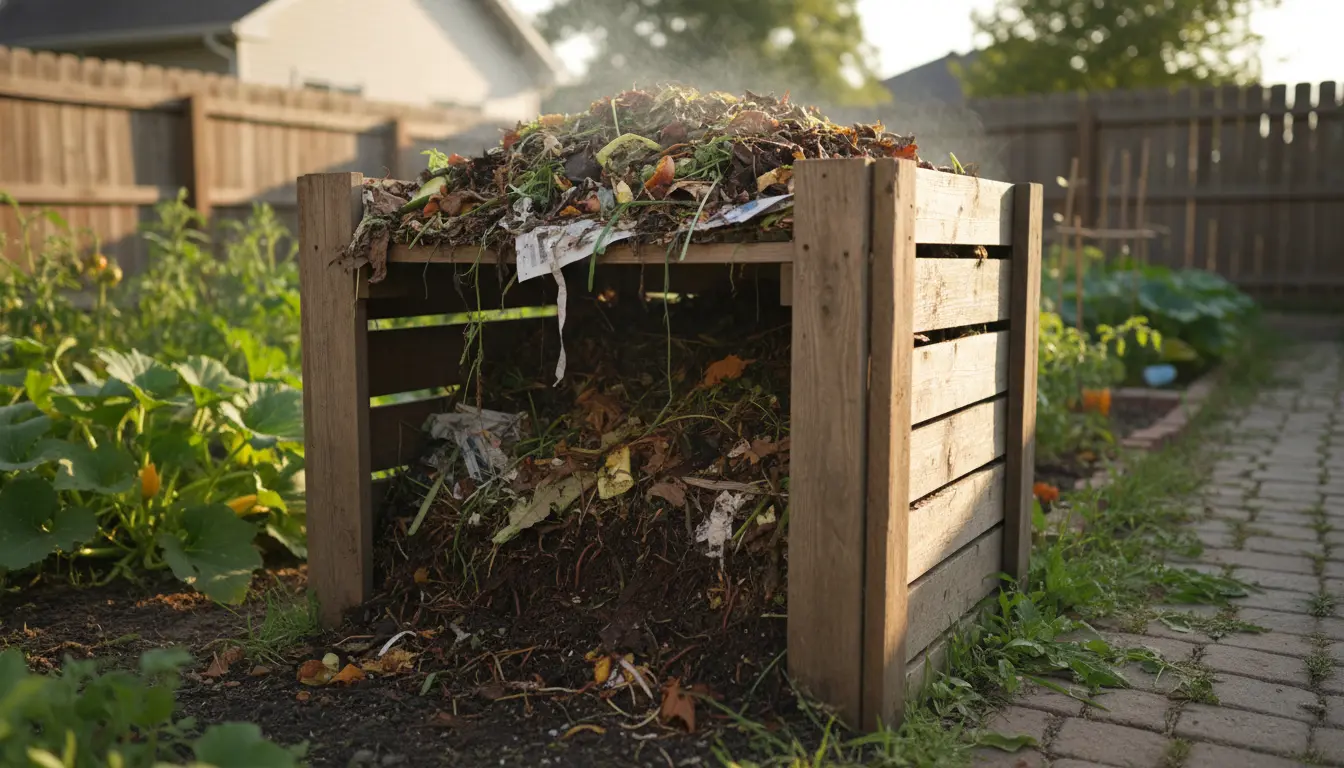
Home composting turns kitchen scraps and yard waste into valuable soil. It reduces trash, feeds your garden, and is easy to learn with the right steps.
What Is Home Composting?
Home composting is the controlled breakdown of organic material into a stable soil-like product. The result, called compost, improves soil structure and nutrient content for plants.
Why Start Home Composting?
Composting cuts landfill waste and lowers household odors from trash. It also saves money by reducing the need for commercial fertilizers and potting soil.
About 30 percent of household waste is compostable. Composting at home can reduce your trash by a third to half.
How to Start Home Composting
Begin with the right location and container for your space. A sunny or partly shaded spot near the kitchen is ideal for easy access and temperature balance.
Choosing a Bin for Home Composting
Options include open heaps, tumblers, and stationary bins. Choose based on available space, budget, and how fast you want compost ready.
- Open pile: Low cost, needs more turning and space.
- Tumbler: Easier to mix and faster results, more expensive.
- Stationary bin: Balanced option, keeps pests out when managed.
What to Compost
Balance green (nitrogen) and brown (carbon) materials for healthy decomposition. Greens provide protein and moisture, browns supply energy and structure.
- Greens: Fruit and vegetable scraps, coffee grounds, fresh grass clippings.
- Browns: Dry leaves, shredded paper, straw, cardboard pieces.
- Aim for roughly 1 part greens to 2–3 parts browns by volume.
What Not to Compost
Some items slow decomposition or attract pests and should be avoided. Keep these out of your home compost system.
- Meat, fish, dairy, and oily foods.
- Diseased plants and weeds with seeds.
- Pet waste from carnivores and treated wood products.
Step-by-Step Composting Process
Create layers and keep materials moist but not soggy. Turning the pile introduces oxygen and speeds up breakdown.
- Place a 4–6 inch layer of browns as a base.
- Add a 3–4 inch layer of greens, then cover with browns.
- Maintain moisture like a wrung-out sponge and turn every 1–2 weeks.
Troubleshooting Common Issues
Bad smells usually mean too much green or lack of airflow. Add dry brown material and turn the pile to restore balance.
- Too dry: Add water and more greens.
- Too wet: Add dry browns and increase turning.
- Slow breakdown: Chop materials into smaller pieces and ensure airflow.
Using Finished Compost
Compost is ready when it looks dark, crumbly, and earthy-smelling. Use it as a soil amendment, mulch, or in potting mixes.
- Mix 1–2 inches into garden beds before planting.
- Top-dress established plants with a thin layer of compost.
- Blend with potting soil at a ratio of about 1 part compost to 3 parts soil.
Small Real-World Example
Case Study: A small urban household started with a 50-liter tumbler and kitchen caddy. They collected fruit and veggie scraps and layered shredded paper every few days.
Within three months they had dark, usable compost. Their garden beds required less store-bought fertilizer, and weekly trash volume dropped noticeably. The family reported less odor and fewer grocery bags used for waste.
Tips for Success with Home Composting
Consistency and balance are the keys. Simple habits make composting reliable and low-effort over time.
- Keep a small sealed caddy in the kitchen for daily scraps.
- Chop large items to speed decomposition.
- Record turning and moisture checks on a calendar for the first few months.
Summary: Practical Steps to Maintain Compost
Start with the right bin and location, balance greens and browns, keep the pile moist, and turn regularly. Monitor your compost and adjust materials to prevent problems.
With a little attention, home composting becomes a sustainable routine that benefits your garden and reduces waste. Begin small and expand as you gain confidence.