
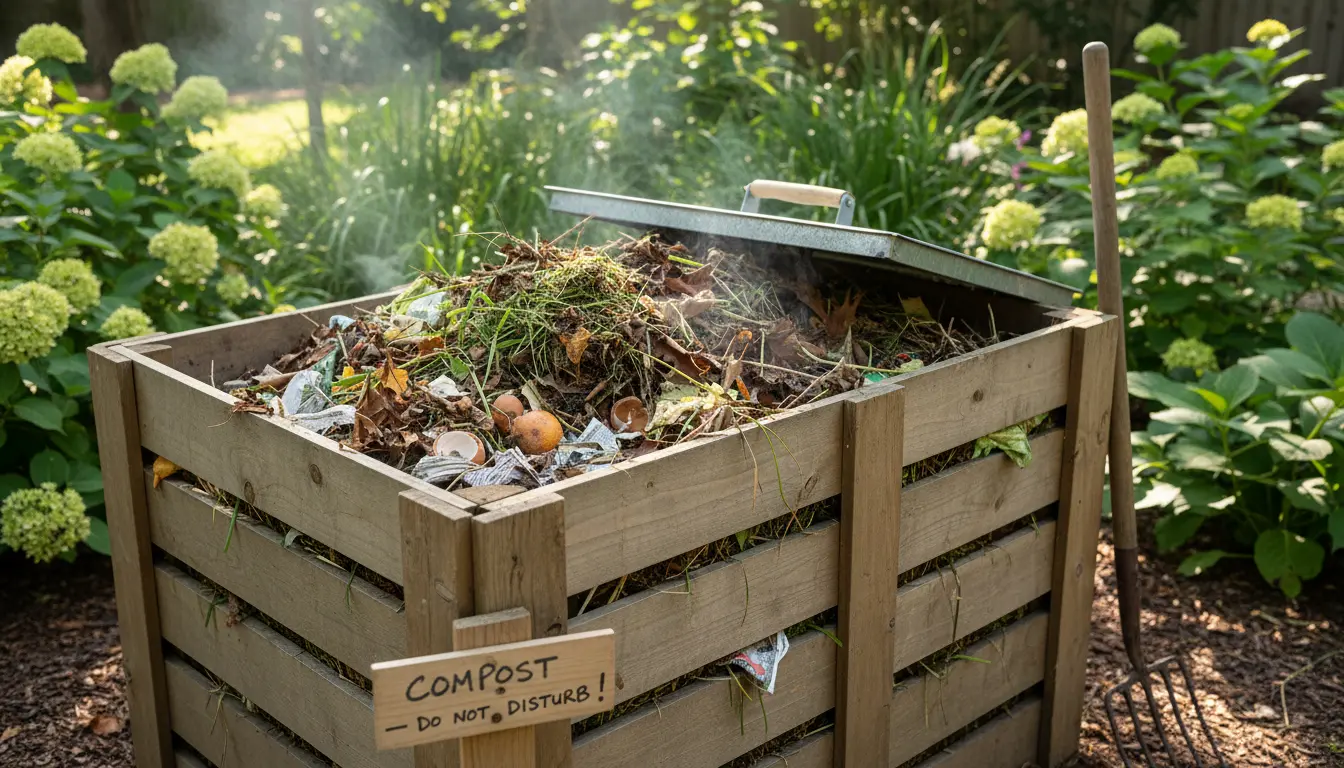
Home composting turns kitchen scraps and yard waste into useful soil material. This guide explains simple, practical steps to start and maintain composting at home, whether you have a garden or a small balcony.
Why Home Composting Works
Composting relies on natural decomposition by microbes and organisms. Proper balance of materials, moisture, and airflow speeds the process and reduces smells.
Home composting reduces landfill waste and returns nutrients to soil. It also lowers your household carbon footprint in a small but measurable way.
Basic Components of Home Composting
Successful home compost uses three main components: carbon, nitrogen, and air. Carbon-rich materials are often called browns and nitrogen-rich materials are greens.
- Carbon (browns): dry leaves, shredded paper, cardboard, straw.
- Nitrogen (greens): vegetable scraps, coffee grounds, fresh grass clippings.
- Air and water: keep the pile moist like a wrung-out sponge and turn to add oxygen.
How to Start Home Composting Step by Step
Starting compost at home is mainly a matter of choosing a method and following basic steps. Pick a bin or pile that fits your space and needs.
Choose a Compost System
Select a system based on space and effort. Options include a simple bin, a tumbler, or a worm (vermicompost) setup.
- Bin: Good for backyard gardens, low cost and low maintenance.
- Tumbler: Easier to turn and faster to process, ideal for small yards.
- Vermicompost: Uses worms and works indoors or on balconies, great for apartment dwellers.
Set Up the First Layer
Begin with a coarse layer for drainage. Use twigs or straw at the base to improve airflow and prevent soggy conditions.
After the base, add alternating layers of greens and browns. Aim for roughly a 2:1 ratio of browns to greens by volume.
Add Scraps and Maintain the Pile
Add kitchen scraps gradually and chop larger items to speed decomposition. Avoid dropping whole fruits or very large pieces into the pile.
Turn the pile every 1–2 weeks to introduce oxygen. If using a tumbler, rotate it following the manufacturer guidance.
Common Problems and Fixes in Home Composting
Home composting can have issues, but most are easy to fix with basic adjustments. Here are common problems and practical solutions.
- Bad smell: Usually from too much wet greens or poor airflow. Add dry browns and turn the pile.
- Slow decomposition: Add smaller pieces, increase nitrogen slightly, and keep the pile moist.
- Pests: Avoid adding meat, dairy, or oily foods. Use a closed bin or bury scraps inside the pile.
- Dry pile: If compost is dry, add water while turning and include greens or fresh kitchen scraps.
Temperature and Time
Hot composting reaches higher temperatures and finishes faster, often within 2–3 months. Cold composting takes longer but requires less active turning.
Most home compost ends up ready in 3–12 months depending on method and management.
Compost can reduce household waste by up to 30 percent. Using compost in your garden improves soil structure and water retention.
Case Study: Small Apartment Compost Setup
Maria lives in a two-bedroom apartment and wanted to reduce kitchen waste. She chose a 10-liter vermicompost bin for her balcony.
She started with shredded cardboard, added a handful of garden soil to introduce microbes, and introduced 500 red wiggler worms. Maria added small fruit and vegetable scraps, avoiding citrus and onion in large amounts.
Within three months she had rich castings to mix into potted plants. The system fit her space, had minimal odor, and cut her kitchen waste by half.
Tips to Maintain Home Composting Success
Consistency is key to home composting. Small, regular additions and occasional turning keep the process active and predictable.
- Chop or shred large items to speed breakdown.
- Keep the pile moist but not waterlogged.
- Mix browns and greens to maintain balance.
- Use finished compost as mulch, potting mix additive, or soil conditioner.
What Not to Compost at Home
Avoid meat, dairy, oily foods, diseased plants, and pet waste. These items attract pests or introduce pathogens into the compost.
Home composting is practical and adaptable. Whether you use a backyard bin, tumbler, or worm bin, following the basic principles leads to steady results.
Start small, observe how your system behaves, and adjust moisture and materials. Over time you’ll produce nutrient-rich compost that benefits plants and reduces waste.