
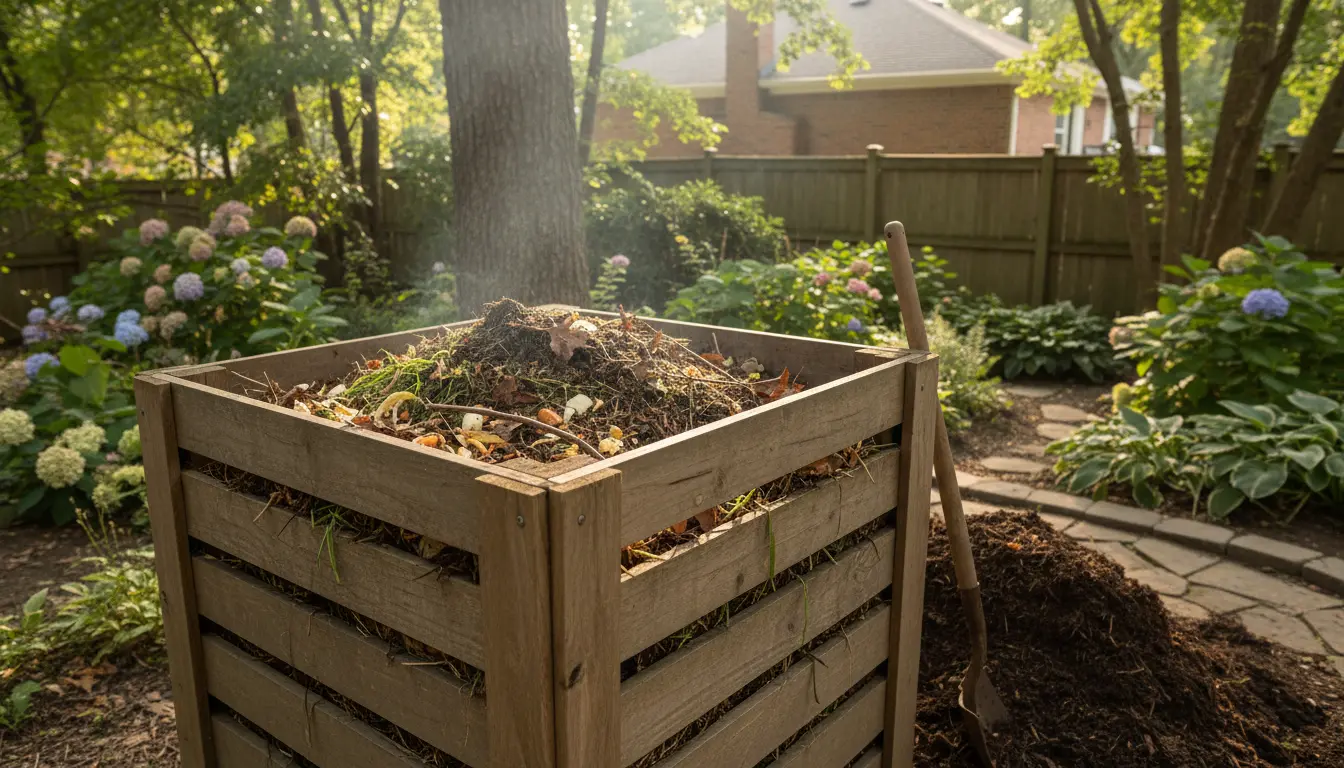
Composting turns kitchen scraps and yard waste into a valuable soil amendment. This guide explains practical steps for home composting for beginners so you can start recycling organic waste at home.
Why Choose Home Composting
Home composting reduces household waste and improves soil structure for gardens and potted plants. It also saves money on fertilizers and supports plant health by returning nutrients to the soil.
Key Benefits of Home Composting
- Diverts organic waste from landfills.
- Creates nutrient-rich compost for lawns and gardens.
- Improves soil moisture retention and structure.
How to Start Home Composting
Getting started requires a few basic choices: location, container, and material balance. Follow practical steps and you can have compost in months.
Step 1: Choose a Location and Bin
Select a level, well-drained spot near water and not far from your kitchen. For small yards or balconies, consider a compact tumbler or a countertop bokashi system.
Common bin options include:
- Open pile — low cost, needs space.
- Closed bin or tumbler — faster, neater, pest-resistant.
- Bokashi system — ferments food waste including meat and dairy for indoor use.
Step 2: Balance Greens and Browns

Compost needs a mix of nitrogen-rich “greens” and carbon-rich “browns.” Aim for a ratio near 1:3 by volume (greens to browns) for balanced decomposition.
- Greens: fruit and vegetable scraps, coffee grounds, fresh grass clippings.
- Browns: dry leaves, straw, shredded cardboard, paper towel rolls.
Step 3: Build Layers and Keep Airflow
Start with a layer of coarse browns for drainage. Alternate thin layers of greens and browns, and keep the pile loosely packed to allow air flow.
Turn the pile every 1–2 weeks to add oxygen and speed decomposition. Tumblers make turning easier and are ideal for beginners.
Maintaining Your Home Composting System
Maintenance is simple when you monitor moisture, temperature, and particle size. Small adjustments keep the process on track.
Moisture and Temperature
Compost should feel like a wrung-out sponge: moist but not soggy. Add water during dry spells and more browns if it becomes too wet.
Active compost heats up to 120–160°F (50–70°C) when microbes are working. In small home setups, you may see lower temperatures but decomposition continues slowly.
Particle Size and Turning
Chop or shred large pieces to speed breakdown. Turning the pile every 1–2 weeks mixes microbes and oxygen into the center. If using a tumbler, rotate according to the manufacturer’s instructions.
Troubleshooting Common Problems in Home Composting
Problems are usually easy to fix once you identify the cause. Use these quick checks.
Bad Odor
Cause: too many greens or lack of air. Solution: add more browns, turn the pile, and increase aeration.
Pests
Cause: exposed food scraps or meat/dairy in an open pile. Solution: switch to a closed bin or bury food under browns. Bokashi systems are good for handling meat and dairy.
Pile Not Heating or Slow Breakdown
Cause: pile too small, too dry, or wrong carbon-nitrogen balance. Solution: add more greens, increase moisture, or combine small piles to reach adequate mass.
Compost can reduce your household waste by up to 30 percent. Finished compost also increases soil carbon, helping retain moisture and support plant life.
Using Finished Compost
Finished compost looks dark, crumbly, and earthy-smelling. It can be applied in multiple ways to boost garden health.
- Top-dress lawns with a thin layer to add nutrients and improve soil.
- Mix with potting soil for container plants to increase nutrient content and moisture retention.
- Work into garden beds before planting to improve soil structure and fertility.
Small Real-World Example
Case study: A two-person household in an urban apartment used a 50-liter tumbler for two years. They combined kitchen scraps with shredded cardboard and weekly turning.
Result: They diverted about 150 kg of organics annually and produced enough compost to feed three balcony planters and a community garden plot. The tumbling bin minimized odors and pests, making composting feasible in a small space.
Quick Checklist to Start Home Composting
- Choose a bin or system suitable for your space.
- Collect greens and browns separately for balance.
- Layer materials, maintain moisture, and turn regularly.
- Monitor odors, pests, and decomposition rate and adjust accordingly.
- Harvest finished compost and use it around plants and soil.
Home composting for beginners is achievable with basic equipment and a little routine. Start small, observe your system, and adjust materials or turning frequency as needed. Over time you will create a reliable source of organic matter that benefits both your garden and the environment.