
Why Home Composting for Beginners Is a Good Place to Start
Home composting turns kitchen and yard waste into a useful soil amendment. It reduces landfill waste and improves garden soil structure and fertility.
This guide gives clear steps for beginners to start and maintain compost without specialist equipment. Follow the practical tips to get usable compost in months, not years.
Choose a Compost System
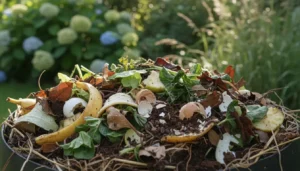
Pick a method that fits your space, time, and local climate. Common options include a simple pile, a tumbling bin, and a stationary bin.
Consider these pros and cons:
- Pile: cheap and simple, but slower and less tidy.
- Tumbler: faster decomposition and contained, but costs more and holds less volume.
- Stationary bin: balanced option for many gardens; can be DIY or purchased.
What to Compost: Greens and Browns
Effective composting mixes “greens” (nitrogen-rich) and “browns” (carbon-rich). Both are needed for balanced microbial activity.

Examples of items to use:
- Greens: fruit and vegetable scraps, coffee grounds, fresh grass clippings.
- Browns: dry leaves, shredded paper, cardboard, straw.
What Not to Compost
Avoid meat, dairy, oils, diseased plants, and pet waste. These attract pests or slow decomposition and can introduce pathogens.
Small amounts of citrus and onion are usually fine, but large quantities can slow the pile.
Balance and Ratios
Target a mix that approximates a 25–30:1 carbon to nitrogen ratio. Practical rule: add two parts browns to one part greens by volume.
If the pile smells, add more browns. If it is dry and slow, add greens and water.
Turning, Moisture, and Temperature
Turning the compost every 1–2 weeks introduces oxygen and speeds decomposition. Tumblers make turning easier for beginners.
Keep the pile as damp as a wrung-out sponge. Too dry and microbes slow down; too wet and it becomes anaerobic and smelly.
Compost that heats to 120–160°F (50–70°C) breaks down quickly and kills many weed seeds. If you do not reach these temperatures, decomposition will still occur but slower.
Troubleshooting Common Problems
Problems are usually easy to fix with simple adjustments. Use these checks:
- Smell of rot: add dry browns and turn to introduce air.
- Slow breakdown: chop materials smaller, add greens, and ensure moisture.
- Pests: secure bin, bury food scraps inside, avoid meats and oily foods.
Harvesting and Using Finished Compost
Finished compost is dark, crumbly, and earthy-smelling. Screen or sift if you need fine texture for potting mixes.
Use finished compost as a top dressing, mixed into planting beds, or as an ingredient in potting soil. Typical application rates are a few inches on beds or 10–20% by volume in potting mixes.
Composting can reduce household waste volume by up to 30 percent and can improve garden water retention, reducing irrigation needs.
Practical Weekly Checklist for Home Composting for Beginners
- Add kitchen scraps and dry browns regularly to keep layers balanced.
- Turn or tumble the pile once a week if possible.
- Check moisture and adjust to a damp, sponge-like feel.
- Monitor for pests and odors and adjust materials accordingly.
Small Real-World Example
Case study: Anna, an apartment gardener, used a 30-gallon tumbling composter on her balcony. She started by alternating a layer of shredded paper with vegetable scraps.
Within three months of weekly turning and adjusting moisture, her composter produced dark, crumbly compost. She mixed 1 part compost with 3 parts potting soil for new tomato plants and saw improved growth and fewer watering needs.
Tips to Speed Up Composting
To get compost faster, follow these practical steps:
- Shred or chop materials before adding them to the bin.
- Maintain a balanced mix of greens and browns.
- Turn frequently and keep the pile moist but not soggy.
Final Notes on Starting Home Composting for Beginners
Home composting is flexible and forgiving. Start small, observe your pile, and make simple adjustments as you learn.
With basic attention to balance, moisture, and aeration, most beginners can produce useful compost within a few months. This practice reduces waste and supports healthier plants.