
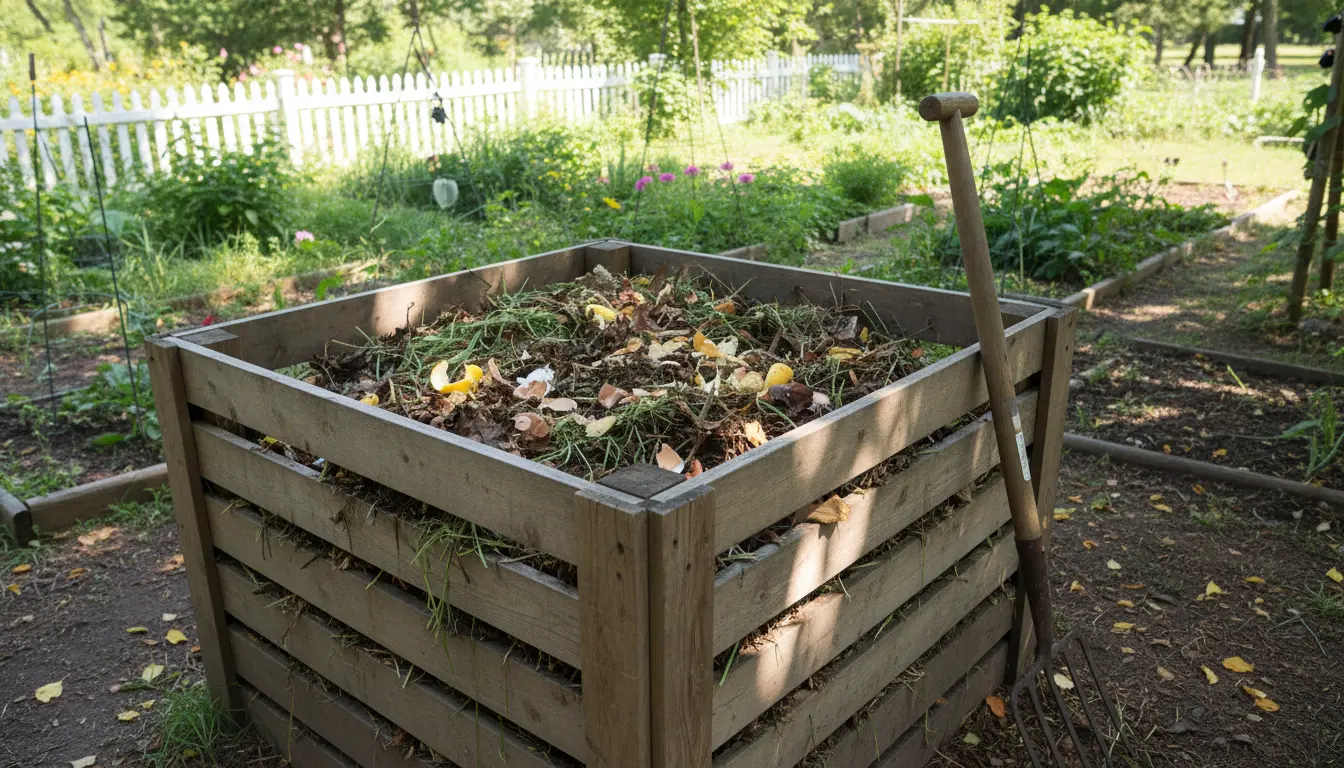
Home composting turns kitchen scraps and yard waste into rich soil that improves gardens and reduces trash. This guide gives clear, practical steps for home composting for beginners, with setup tips and troubleshooting advice.
Home Composting for Beginners: What You Need to Know
Composting is a controlled natural process where microbes break down organic matter into nutrient-rich humus. You can compost in a backyard bin, a tumbler, or even a small indoor setup with a worm bin.
Start by learning the basic inputs and the role of air, moisture, and temperature. Balanced inputs speed decomposition and keep odors away.
Key Composting Terms for Beginners
- Greens: Nitrogen-rich materials like food scraps and fresh grass clippings.
- Browns: Carbon-rich materials like dry leaves, straw, or cardboard.
- Active compost: Warm, fast-decomposing pile you turn regularly.
- Finished compost: Dark, crumbly material that smells earthy.
How to Set Up a Compost Bin for Beginners
Choose a container that fits your space and waste volume. Options include a simple pile, a plastic bin, a wooden bin, or a rotating tumbler.
Place the bin on bare soil if possible to let worms and microbes enter. If on a patio, add a layer of coarse material at the base for drainage.
Materials to Start Your First Pile
- Greens: fruit and vegetable scraps, coffee grounds, tea bags.
- Browns: shredded paper, dry leaves, cardboard, wood chips.
- Small amounts of soil or finished compost to introduce microbes.
Step-by-Step Composting Process
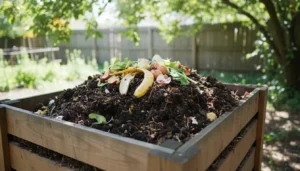
Follow these steps to keep the pile active and healthy.
- Layering: Start with a 2–4 inch coarse base, then alternate browns and greens. Aim for a 3:1 ratio of browns to greens by volume.
- Moisture: Keep the pile as damp as a wrung-out sponge. Add water or dry material as needed.
- Turning: Aerate the pile every 1–2 weeks for active composting. Turning speeds up decomposition and prevents odors.
- Monitoring: Check temperature; a hot center (between 110–160°F or 43–71°C) indicates active breakdown. If it cools, add greens and turn.
- Harvesting: After a few months to a year you’ll have finished compost. Sift or use as-is around plants and in potting mixes.
Troubleshooting Common Issues for Home Composting Beginners
Problems usually come from imbalance or lack of air and moisture. Here are common issues and fixes.
- Bad smells: Add more browns and turn the pile to introduce air.
- Pests: Avoid meat, dairy, and oily foods. Use a closed bin or bury scraps in the pile.
- Slow decomposition: Add greens, chop materials smaller, and turn more often.
- Too dry: Add water and more greens; cover the bin to retain moisture.
Quick Maintenance Checklist
- Add kitchen scraps daily or as they accumulate.
- Keep a balance of bulky browns to prevent compaction.
- Turn the pile regularly if you want faster results.
- Harvest finished compost and replace with fresh materials.
Composting at home can divert up to 30% of household waste from the trash. Finished compost improves soil structure and can reduce watering needs by up to 25% in garden beds.
Small Real-World Example: Apartment Composting Case Study
Anna lives in a two-bedroom apartment and started a small worm composting bin on her balcony. She used a 10-gallon plastic bin with bedding made from shredded newspaper and a handful of soil.
Within four months she produced about 15 liters of vermicompost. She used it for potted herbs and seedlings, and she reduced her kitchen waste by nearly half.
Practical lessons: chopping scraps and feeding consistent amounts helped keep the bin balanced. Regular harvesting prevented overfilling and odors.
Uses for Finished Compost
Finished compost improves plant health and can be used in many ways. Here are practical uses to get full value from your compost.
- Soil conditioner: Mix into garden beds to improve structure and nutrient content.
- Potting mix additive: Blend 20–30% compost into potting soil for better water retention.
- Top dressing: Apply a thin layer around shrubs and vegetables to slowly release nutrients.
- Seed starting: Use aged compost mixed with sterile media for stronger seedlings.
Safety Tips for Beginners
- Avoid adding meat, dairy, diseased plants, or pet waste to home compost.
- Wash hands after handling compost and use gloves if you have skin sensitivity.
- Keep compost away from food prep areas and secure the bin to deter pests.
Final Tips for Success in Home Composting for Beginners
Start small and build a routine. Success in composting comes from balancing materials, monitoring moisture, and regular turning.
Track what you add and how the pile responds. Adjust browns and greens and you’ll see steady improvement over a few months.
Composting is a low-cost, high-benefit habit. With a simple setup and a small time commitment, most beginners can produce valuable compost that improves gardens and reduces waste.