
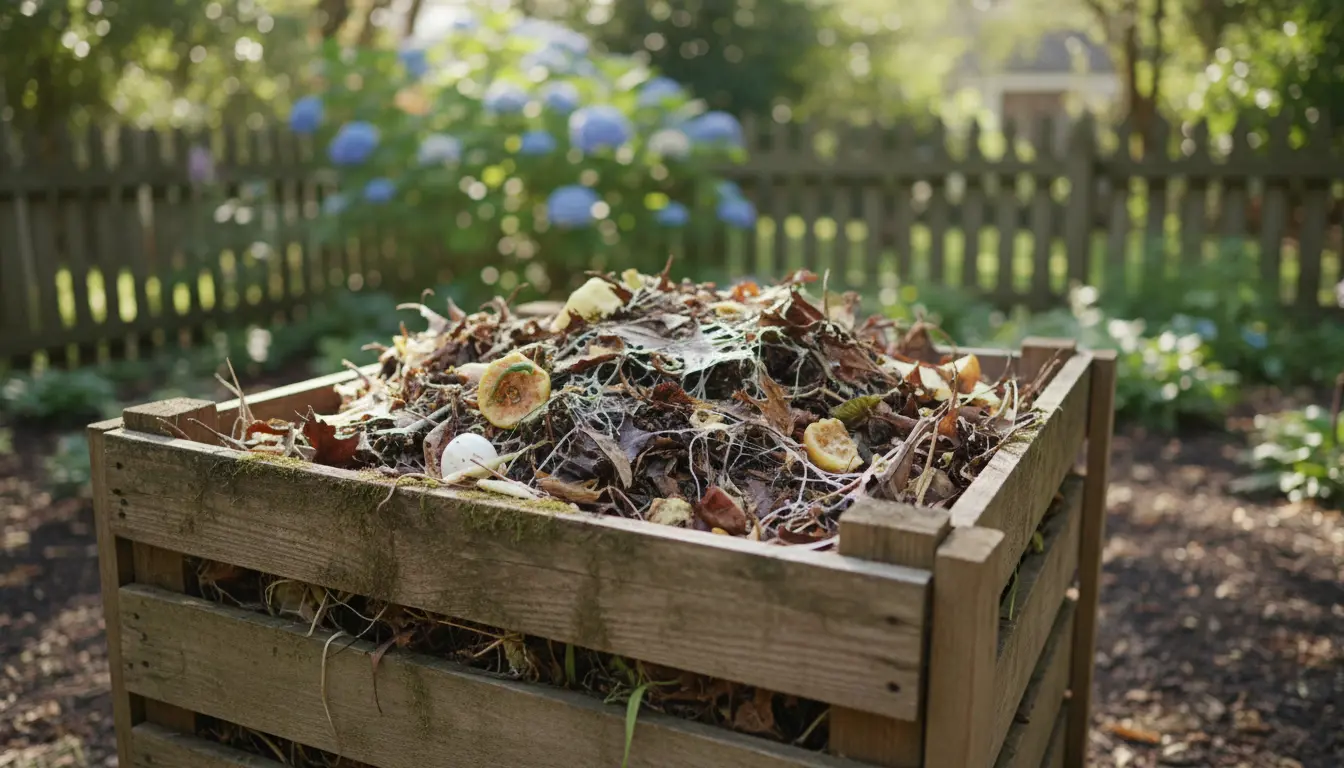
Home composting turns kitchen scraps and yard waste into a valuable soil amendment. This guide gives clear steps, materials, and troubleshooting tips to help beginners build a reliable compost pile.
Why Start Home Composting
Composting reduces household waste while creating nutrient-rich material for gardens and potted plants. It lowers trash output and improves soil structure and water retention.
Many cities accept composting as a simple sustainability practice. Even small apartments can compost with minor adjustments like worm bins or bokashi systems.
What You Need to Start Home Composting
Starting home composting requires basic tools and materials anyone can obtain. Choose an approach that fits your space and lifestyle.
- Container: compost bin, tumbler, or open pile
- Base materials: browns (dry leaves, shredded paper) and greens (vegetable scraps, coffee grounds)
- Garden fork or aerator for turning
- Water source to keep the pile moist but not soggy
Greens vs Browns for Home Composting
Balance is key: greens provide nitrogen and browns supply carbon. A common rule is about 3 parts browns to 1 part greens by volume.
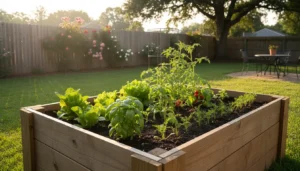
Examples of greens: fruit and vegetable scraps, coffee grounds, fresh grass clippings. Examples of browns: dry leaves, cardboard, straw, shredded paper.
Compost Bin Options for Home Composting
Choose a bin based on space, effort, and budget. Each option has pros and cons for maintenance and speed.
- Open pile: cheapest, requires space, slower decomposition.
- Stationary bin: tidy and low-cost, moderate maintenance.
- Tumbler: speeds up decomposition with easy turning, higher cost.
- Worm bin (vermicomposting): ideal for small spaces and kitchen scraps.
How to Build and Maintain a Compost Pile
Follow these steps to create a healthy home compost system. Regular attention speeds up the process and prevents odors.
- Pick a location: partial shade, good drainage, and easy access.
- Start with a layer of coarse browns for airflow and drainage.
- Add alternating layers of greens and browns, keeping the 3:1 ratio.
- Moisten each layer so it feels like a wrung-out sponge.
- Turn the pile every 1–2 weeks to add oxygen and mix materials.
- Monitor temperature: a hot pile (130–160°F or 55–70°C) breaks down materials faster.
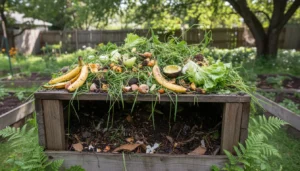
Smaller bins may need more frequent turning. Worm bins should be kept slightly cooler and turned less often to avoid disturbing worms.
Troubleshooting Common Home Composting Problems
Even simple systems run into problems. Diagnose by looking, smelling, and feeling the compost mass.
- Bad odor: Usually too much green or not enough air. Add browns and turn the pile.
- Pile too wet: Add shredded paper or dry leaves and mix to improve drainage.
- Pile too dry: Add water and more greens; cover to retain moisture.
- Pests: Avoid adding meat, dairy, or oily foods. Use enclosed bins or bury food scraps within the pile.
Compost can increase soil microbial activity and nutrient availability, helping plants use water more efficiently during dry spells.
Real-World Example: A Small Backyard Compost Case Study
Jane, a homeowner with a 0.1-acre lot, installed a three-bin compost system to process yard and kitchen waste. She used two 55-gallon plastic barrels as turning bins and a small open bin for curing.
Within six months, regular turning and a 3:1 brown-to-green ratio produced two cubic feet of finished compost. She used it in vegetable beds and noted improved plant vigor and reduced need for store-bought fertilizer.
How to Use Finished Compost from Home Composting
Finished compost is dark, crumbly, and earthy-smelling. Use it to enrich garden beds, topdress lawns, or mix into potting soil for container plants.
- Soil amendment: mix 1–2 inches into topsoil before planting.
- Mulch/topdress: apply a thin layer around established plants to improve moisture retention.
- Potting mix: blend 20–30% finished compost with other components for nutrient-rich containers.
Final Tips for Successful Home Composting
Start small and adjust as you learn what works for your climate and household. Consistency with turning and moisture control yields the best results.
Track what you add and how the pile responds. Over a few cycles you will develop a routine that fits your space and needs.
Home composting is a practical way to reduce waste and produce a valuable resource for your garden. With basic tools and regular attention, anyone can turn kitchen scraps into healthy compost.