
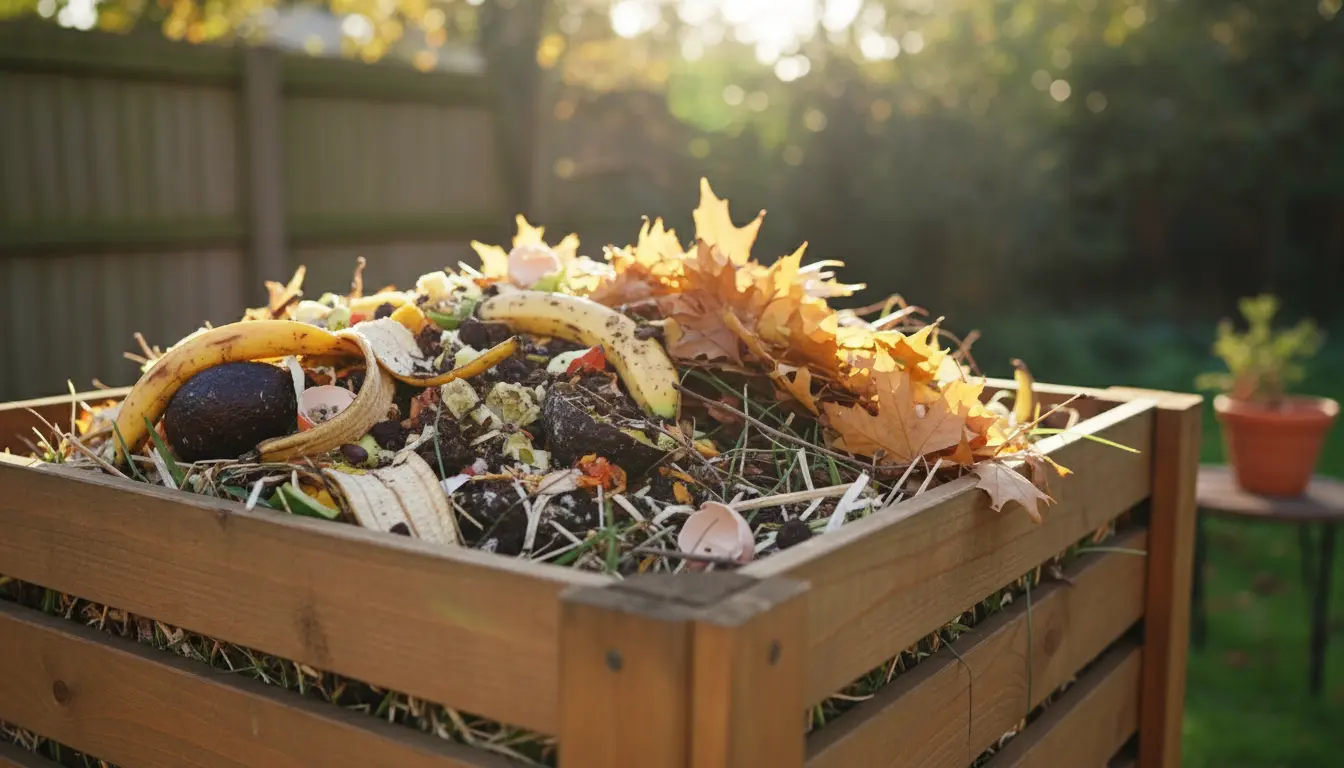
Why Home Composting Matters
Home composting reduces household waste and returns nutrients to your soil. It lowers landfill waste and supports healthier plants without chemical fertilizers.
For beginners, composting is a simple system you can adapt to any home or garden size. This guide focuses on practical steps you can apply right away.
Choosing a Compost System for Home Composting
Select a system that fits your space and effort level. Options range from a simple pile to a closed tumbler or a worm bin for indoor composting.
- Open pile: Low cost, suited for larger yards, requires turning.
- Compost bin: Contained, neater, available in plastic or wooden versions.
- Tumbler: Easy to turn, speeds up decomposition, good for small yards.
- Vermicompost (worm bin): Works indoors, great for kitchen scraps, produces liquid fertilizer.
How to Start Composting at Home
Start with a good location: a shady, well-drained spot close to water. Keep it accessible so you will use it regularly.
Layering is simple and effective. Alternate carbon-rich ‘browns’ with nitrogen-rich ‘greens’ to keep decomposition balanced.
Basic Layering for Home Composting
- Bottom: Coarse material like twigs or straw for airflow.
- Middle: Alternate kitchen scraps (greens) with dry leaves or shredded paper (browns).
- Top: A light cover of soil or finished compost to reduce flies and odor.
What to Compost and What to Avoid
Good materials speed up composting and make safe, rich humus. Avoid items that attract pests or slow decomposition.
Acceptable Materials
- Greens: fruit and vegetable scraps, coffee grounds, fresh grass clippings.
- Browns: dry leaves, shredded paper, cardboard, straw.
- Small amounts of garden waste: non-diseased plants, small prunings.
Materials to Avoid
- Meat, dairy, fats, and oily foods (attract pests).
- Diseased plants, weeds with seeds, treated wood or ash.
- Pet feces from carnivores, coal ash, and synthetic chemicals.
Maintaining Your Home Composting System
Key variables are moisture, aeration, and particle size. Balanced attention to each keeps compost active and odor-free.
- Moisture: Compost should be as damp as a wrung-out sponge. Add water or dry materials to adjust.
- Aeration: Turn the pile every 1–2 weeks to add oxygen and speed decomposition.
- Particle size: Chop or shred large pieces to increase surface area and speed the process.
Troubleshooting Home Composting Problems
Common problems have simple fixes. Check a few basic conditions before changing your approach.
Bad Odor

Usually caused by too much green material or poor aeration. Turn the pile and add more browns like dry leaves or shredded paper.
Pests
Avoid meat and dairy. Bury food scraps under browns and use a closed bin or secure tumbler if rodents are an issue.
Slow Decomposition
Improve aeration, chop materials finer, and check moisture. Adding a shovel of finished compost can introduce microbes to boost breakdown.
Properly managed compost can reach temperatures of 130 to 160°F (55 to 70°C), killing many weed seeds and pathogens. Small household systems rarely reach these highs but still produce valuable humus.
When Is Compost Ready to Use?
Finished compost is dark, crumbly, and earthy-smelling. Most home systems produce usable compost in 2–6 months depending on materials and management.
You can sieve finished compost for a fine soil amendment or use coarser material as mulch around shrubs and vegetable beds.
Real-World Example: A Small Backyard Success
Case: Sarah, a homeowner in a temperate climate, started a 55-gallon tumbler in spring. She layered kitchen scraps with shredded cardboard and dry leaves.
She turned the tumbler twice per week and adjusted moisture as needed. After three months she had rich, dark compost she mixed into her vegetable beds, improving soil structure and reducing watering needs.
Practical Tips to Stay Consistent
- Keep a small countertop bin for scraps to make composting routine.
- Collect fall leaves to use as a free source of browns all year.
- Start with a manageable system and scale up as you learn.
Final Checklist for Home Composting Beginners
- Choose a suitable bin or pile location in partial shade.
- Balance greens and browns and keep materials relatively small.
- Monitor moisture and aerate by turning regularly.
- Avoid unwanted items that attract pests or slow decomposition.
- Harvest finished compost and apply it to gardens and pots.
Home composting is a low-cost, high-impact practice that benefits your garden and the planet. With basic routines and a little attention, beginners can produce nutrient-rich compost within months.