
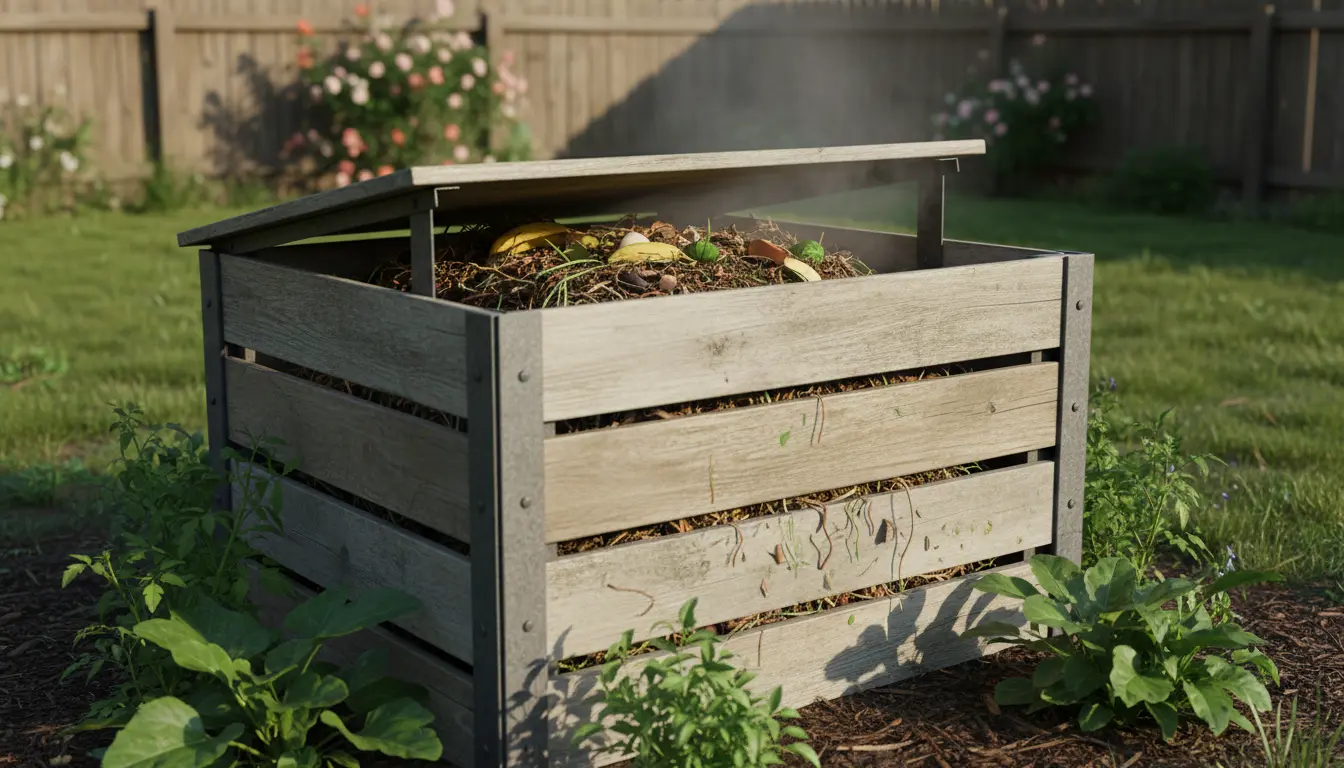
What is Home Composting and Why It Matters
Home composting is the process of turning kitchen scraps and yard waste into nutrient-rich soil using natural decomposition. It reduces landfill waste and creates a free soil amendment for gardens.
Composting lowers household garbage volumes and improves soil structure. For beginners, it is a low-cost, practical step toward sustainability.
How to Start Home Composting
Starting home composting is a step-by-step process that beginners can follow. The core tasks are choosing a method, adding the right materials, and keeping the pile balanced.
Choose a Composting Method
There are several easy methods suitable for beginners. Pick one based on space, budget, and effort.
- Static bin: Simple enclosed bin for small yards, low maintenance.
- Tumbler: Easier turning, faster results, good for limited space.
- Cold pile: Pile food and yard waste in one spot; takes longer but minimal work.
- Vermicomposting: Uses worms for indoor or small-scale composting; ideal for apartments.
Gather the Right Materials
Compost needs a mix of carbon and nitrogen materials. Balance is key for decomposition and odor control.
- Greens (nitrogen): Vegetable scraps, coffee grounds, fresh grass clippings.
- Browns (carbon): Dry leaves, shredded paper, straw, cardboard.
- Avoid: Meat, dairy, oily foods, diseased plants, and pet waste.
Maintaining Your Home Composting System
Regular maintenance keeps the compost active and healthy. Follow simple steps to encourage microbes and reduce problems.
Layering and Moisture
Layer greens and browns in roughly equal volumes for a balanced mix. If the pile is too wet, add more browns; if it is dry, add water and more greens.
Target a moisture level like a wrung-out sponge. Too dry and decomposition slows; too wet and it smells.
Turning and Aeration
Oxygen powers the microbes that break down materials. Turn a bin or pile every 1–2 weeks for faster compost.
If using a tumbler, rotate it every few days. Static bins can be aerated with a garden fork or aeration pipe.
Troubleshooting Common Problems
Beginners may encounter odors, pests, or slow decomposition. Each issue has a straightforward fix.
- Bad smell: Add browns and turn the pile; reduce wet kitchen scraps temporarily.
- Pests: Avoid meat and fatty foods; use a closed bin or fine mesh barrier.
- Slow breakdown: Chop materials finer, increase moisture slightly, and turn more often.
When Is Compost Ready to Use?
Finished compost is dark, crumbly, and smells earthy. It may take 2–12 months based on method and maintenance.
- Use as a top dressing for garden beds.
- Mix into potting soil for houseplants.
- Amend lawn soil at seeding or top-dressing.
Practical Tips for Home Composting Success
- Chop or shred large items to speed decomposition.
- Keep a small counter caddy for kitchen scraps to avoid trips outside.
- Use finished compost sparingly the first season to observe plant response.
- Record what you add and how often you turn to refine your routine.
Food scraps and yard trimmings make up about 30 percent of household waste in many cities. Composting those materials can cut landfill trash and return valuable nutrients to soil.
Small Real-World Example
Case study: A two-person household started a 200-liter static bin in their backyard. They added kitchen scraps and shredded leaves, turning the pile every two weeks.
Within six months they produced a compost batch used to top-dress their vegetable beds. Their weekly trash volume dropped by one full bag, and their tomato plants showed stronger growth the following season.
Quick Start Checklist for Home Composting
- Choose a bin or method that fits your space.
- Collect greens and browns separately to balance layers quickly.
- Monitor moisture and aerate regularly.
- Keep out banned items like meat and pet waste.
- Harvest finished compost when it is dark and crumbly.
Final Notes on Home Composting for Beginners
Home composting is a simple, low-cost practice with clear environmental benefits. Beginners can start small and scale up as they learn the rhythm of decomposition.
With a balanced mix, regular aeration, and basic troubleshooting, most households can produce useful compost and reduce waste within months.