
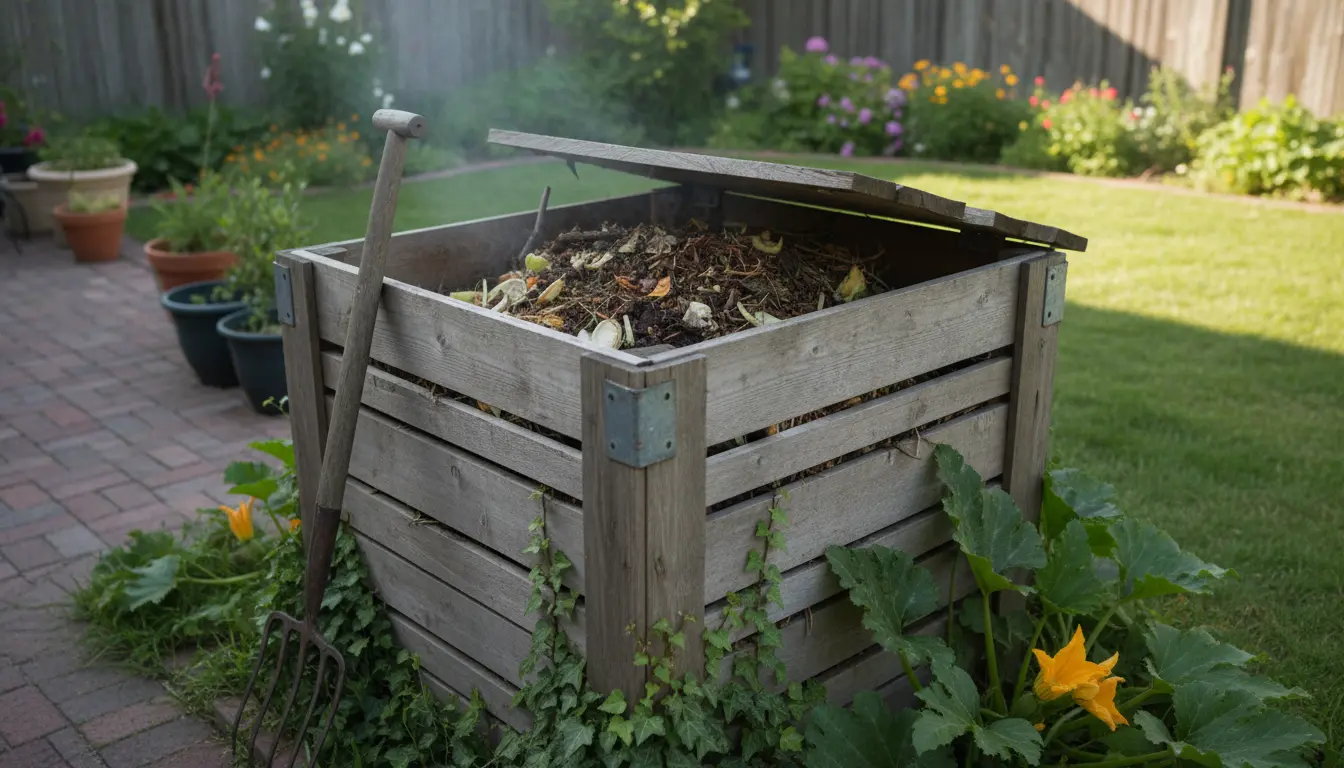
Why Start Home Composting for Beginners
Home composting turns kitchen scraps and yard waste into nutrient-rich soil. It reduces household waste and improves your garden without chemical fertilizer.
This guide focuses on simple, reliable steps for beginners to set up and maintain a compost system at home. Follow practical advice and avoid common mistakes.
What You Can Compost
Knowing what to add keeps your compost healthy. Balance “greens” (nitrogen-rich) and “browns” (carbon-rich) for steady decomposition.
- Greens: vegetable peels, coffee grounds, tea bags, grass clippings.
- Browns: dry leaves, shredded paper, cardboard, straw.
- Avoid: meat, dairy, oils, diseased plants, and pet waste for typical backyard systems.
Choosing a Method for Home Composting for Beginners
Pick a method that fits your space and time. Common beginner options are tumblers, bins, and simple piles.
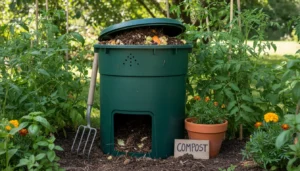
- Compost Tumbler: Low maintenance, faster turning, good for small yards.
- Static Bin: Simple and discreet; requires occasional turning with a pitchfork.
- Open Pile: Cheapest option; works well if you have space and few neighbors.
Tools and Materials You Need
Start with a few basic tools and materials to keep composting manageable. You don’t need specialized gear to begin.
- Pitchfork or garden fork for turning
- Bin or tumbler appropriate to your space
- Kitchen caddy for collecting scraps
- Water source or watering can to maintain moisture
Step-by-Step: How to Start Home Composting
Follow these steps to build and maintain a balanced compost pile. Each step is short but important for success.
- Location: Choose a shaded, level spot with good drainage near your garden or water source.
- Layering: Start with coarse browns like twigs for airflow, then add alternating layers of greens and browns.
- Moisture: Keep the pile damp like a wrung-out sponge. Add water if it dries or browns if it gets too wet.
- Turning: Aerate the pile every 1–2 weeks to speed decomposition and reduce odor.
- Monitoring: Check temperature; a well-working pile will feel warm. Adjust materials to rebalance if needed.
Troubleshooting Common Problems
Simple adjustments fix most compost issues quickly. Use these rules to diagnose and correct problems.
- Bad smell: Add more browns and turn the pile to introduce air.
- Too dry: Add greens and water evenly.
- Slow breakdown: Chop materials smaller and maintain warmth by adding fresh greens.
- Pests: Avoid adding food scraps like meat and keep the bin covered or use a closed tumbler.
Composting just 1 pound of food scraps prevents about 0.67 pounds of CO2 equivalent emissions compared with landfilling. Home composting reduces methane production and returns carbon to soil.
How Long Until Compost Is Ready
Decomposition time depends on method, materials, and how often you turn the pile. Typical backyard compost becomes usable within 3 to 12 months.
Finished compost is dark, crumbly, and smells earthy. It should no longer resemble its original materials.
Using Finished Compost in Your Garden
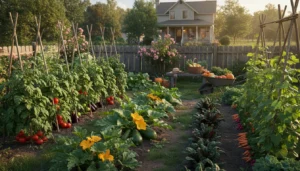
Blend finished compost into garden beds, use it as a top dressing, or make compost tea for potted plants. It improves soil structure, water retention, and nutrient availability.
- Vegetable beds: Mix 1–2 inches into the top 6–8 inches of soil.
- Lawns: Top-dress with a thin layer and rake in for healthier turf.
- Houseplants: Use a small amount mixed into potting soil to boost fertility.
Small Case Study: A Family Starts Composting
Maria and her family began composting in a small tumbler on their urban lot. They started with kitchen scraps and shredded newspaper, turning the tumbler weekly.
Within four months they had usable compost for their container vegetable garden. Their household waste to landfill dropped by nearly 30 percent, and tomato yields improved noticeably the next season.
Practical Tips for Busy Beginners
Make composting part of your routine with a few habits. Consistency matters more than perfection.
- Keep a small sealed kitchen caddy to avoid trips to the outdoor bin.
- Chop or blend larger scraps to speed decomposition.
- Collect yard waste in a separate bin during fall for a steady supply of browns.
Conclusion: Start Small and Learn
Home composting for beginners is practical and scalable. Start with a simple system, learn the balance between greens and browns, and adjust to your space and schedule.
Over time you’ll reduce waste, enrich your soil, and gain a useful, sustainable habit. Begin with one bin or tumbler and expand as you get comfortable.