
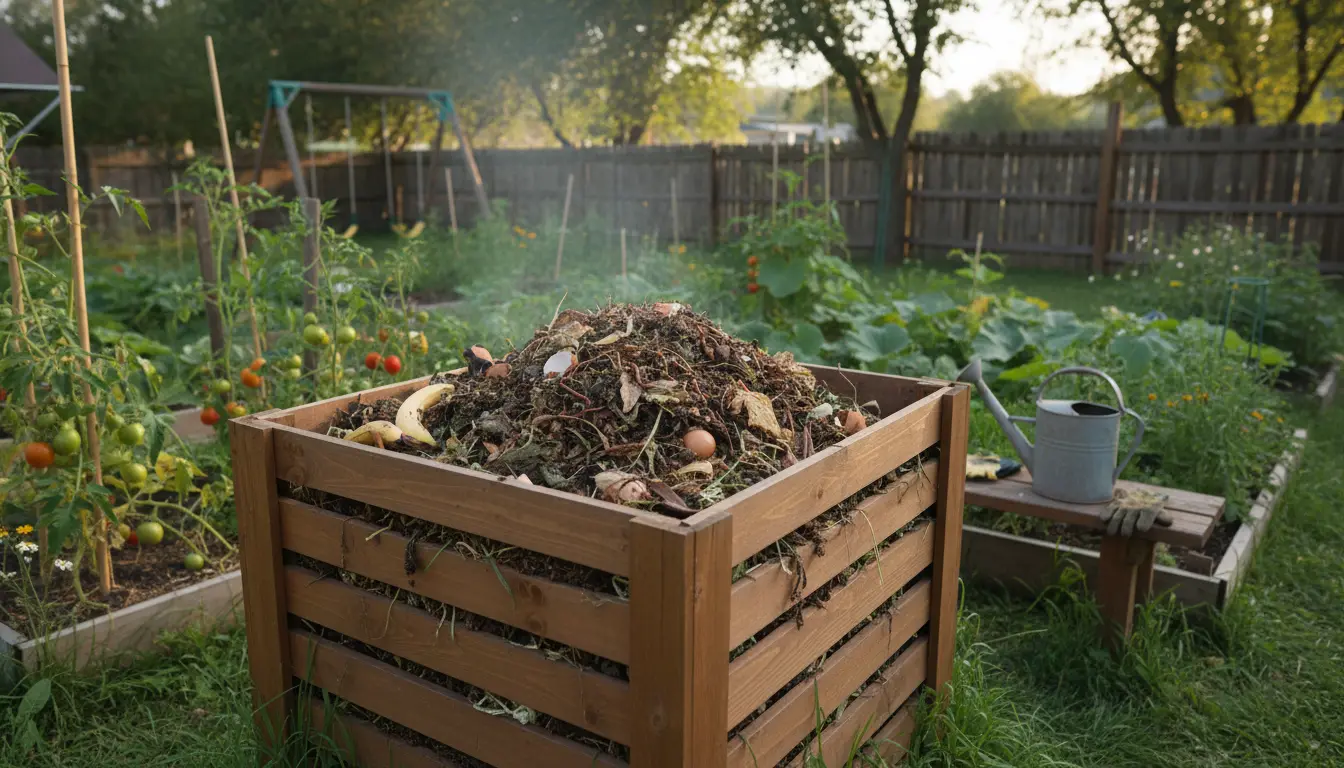
What Is Home Composting?
Home composting is the controlled breakdown of organic waste into nutrient-rich material you can use in the garden. It converts kitchen scraps and yard trimmings into a soil amendment that improves soil structure and plant health.
Benefits of Home Composting
Composting reduces the amount of waste sent to landfills and cuts greenhouse gas emissions. It also saves money on fertilizers and boosts soil water retention, which helps plants during dry periods.
How to Start Home Composting
Starting home composting is straightforward and requires only a few basic choices: where to compost, what system to use, and what materials to add. You can scale the process from a small countertop bin to a larger backyard pile.
Choosing a Compost System for Home Composting
Select a method that fits your space and schedule. Popular options include an open pile, a bin, a tumbler, or a worm composting bin for apartments.
- Open pile – Cheap and simple, best for larger yards.
- Bin – Neater and reduces pests, suitable for most homeowners.
- Tumbler – Faster turning, less manual labor, good for medium volumes.
- Vermicompost (worms) – Ideal for small spaces and kitchens, produces very rich compost.
What to Compost
Home composting works best with a mix of ‘greens’ and ‘browns’. Greens are moist, nitrogen-rich inputs; browns supply carbon and structure.
- Greens: fruit and vegetable scraps, coffee grounds, fresh lawn clippings
- Browns: dry leaves, straw, shredded newspaper, cardboard
A good rule of thumb is to aim for roughly 2 to 3 parts browns to 1 part greens by volume. If the pile smells, add more browns. If decomposition stalls, add more greens and moisture.
How to Layer and Maintain Your Compost
Build the pile in alternating layers of browns and greens. Each layer should be a few inches thick to ensure good contact and airflow. Keep the pile moist, like a wrung-out sponge.
- Turn the pile every 1 to 2 weeks to add oxygen and speed up breakdown.
- Keep particle size small by chopping or shredding materials; that speeds decomposition.
- Monitor temperature: a hot pile (120 to 160 F, 50 to 70 C) breaks down materials faster and kills seeds and pathogens.
Home composting can cut household waste by up to 30 percent. Even small apartments can compost using a worm bin or bokashi system.
Troubleshooting Home Composting Problems
Common issues are usually easy to fix with simple adjustments. Smells usually mean too much moisture or too many greens, while a dry, slow pile needs more water and greens.
Common Problems and Fixes
- Foul odors: Add dry browns, turn the pile, and ensure proper drainage.
- Pests: Use a closed bin, bury food scraps, and avoid meat, dairy, and oily foods.
- Slow decomposition: Increase surface area by shredding materials and add nitrogen-rich greens.
- Excess heat: If compost is too hot, turn it and add browns to cool and balance carbon to nitrogen.
Small Real-World Example
Case study: A two-person household in a suburban lot started a 3×3 ft bin in spring. They used a mix of kitchen scraps and yard waste with a 3:1 ratio of browns to greens. After turning weekly, they had usable compost in about four months.
Results included healthier container plants, reduced grocery waste, and one less bag of trash per week. The family found that shredding leaves and keeping a small countertop container for scraps made the process easy to maintain.
When Is Compost Ready to Use?
Finished compost is dark, crumbly, and earthy-smelling. Most active decomposition stops and materials are no longer recognizable. Depending on method and climate, that can take 2 to 12 months.
Use finished compost as a soil top-dressing, mix into potting soil, or add to garden beds at planting time. Avoid using unfinished compost around seedlings because it can compete for nitrogen.
Final Tips for Successful Home Composting
- Start small and scale up as you learn what works for your space and schedule.
- Keep a balance of browns and greens and monitor moisture regularly.
- Use a kitchen caddy for scraps to make collection simple and reduce trips to the bin.
- Learn by doing: each pile behaves differently by season and climate.
With a little attention, home composting becomes a low-effort habit that delivers real benefits for your garden and the environment. Begin with one simple bin and adjust inputs and turning frequency as you observe results.