
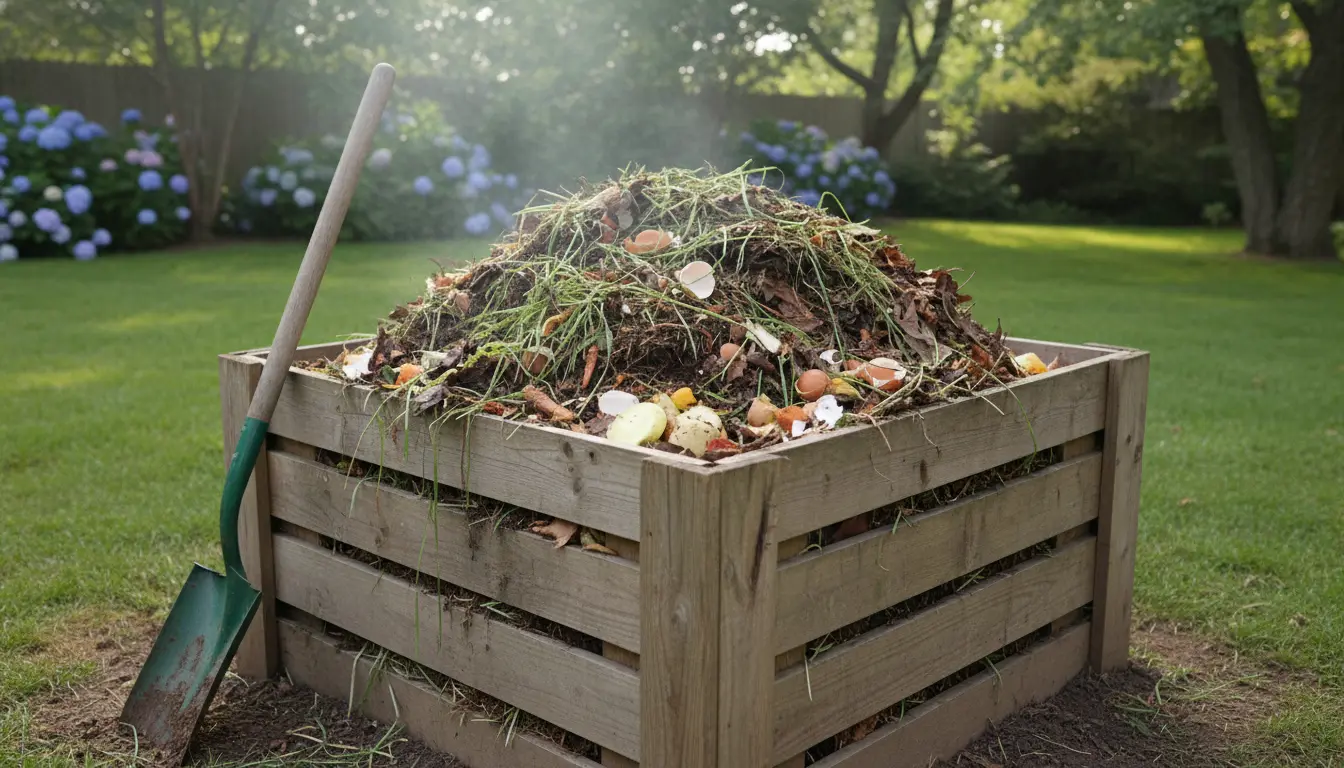
Composting turns kitchen scraps and yard waste into rich soil without special equipment. This guide on home composting for beginners gives practical steps you can use whether you have a backyard, balcony, or small apartment.
Why Choose Home Composting for Beginners
Home composting reduces food waste, lowers trash volume, and creates nutrient-rich material for plants. It also reduces greenhouse gas emissions linked to landfill disposal.
For beginners, home composting is a low-cost, scalable habit. Start small and expand as you learn what works for your situation.
What You Need to Start Home Composting for Beginners
You don’t need complex tools to start. Basic items and a small plan are enough to produce usable compost within months.
- Compost container: a bin, tumbler, or simple pile
- Brown materials: dry leaves, cardboard, shredded paper
- Green materials: vegetable scraps, coffee grounds, grass clippings
- Garden fork or aerator to turn the pile
- Water source to keep material moist
Choosing a Bin for Home Composting for Beginners
Select a bin that fits your space and budget. A lidded plastic bin works in small yards or patios. Tumblers speed decomposition but cost more.
If you have only a balcony, consider a sealed indoor vermicompost (worm bin) or a small bokashi kit for pre-composting.
Simple Step-by-Step: How to Compost at Home
Follow this step sequence to establish a stable composting process you can repeat.
- Place the bin on soil or a breathable surface to allow drainage and microbial access.
- Start with a layer of coarse browns like twigs to aid airflow.
- Add alternating layers: a layer of greens (food scraps) then a thicker layer of browns.
- Keep the pile moist like a wrung-out sponge; water if it dries out.
- Turn or aerate the pile every 1–2 weeks to speed decomposition and avoid odors.
What to Put in Your Home Composting for Beginners Bin
Good items:
- Vegetable and fruit scraps, coffee grounds, tea bags
- Dry leaves, shredded paper, cardboard, straw
- Yard trimmings and small plant prunings
Avoid meat, dairy, oily foods, and pet waste in open systems because they attract pests and cause odors.
Troubleshooting: Common Problems and Fixes
New composters encounter a few typical issues. Fixes are usually simple adjustments to balance moisture, airflow, or materials.
- Bad smells: add more brown material and aerate the pile.
- Slow decomposition: chop materials smaller, increase greens for nitrogen, and turn more often.
- Fruit flies: bury food scraps under browns or use a closed bin.
- Too wet: add dry browns and improve drainage or turn to aerate.
Speeding Up Composting for Beginners
To get finished compost faster, aim for a balanced mix of browns and greens (approximately 3:1 by volume of browns to greens). Maintain moisture and turn regularly to keep oxygen available to microbes.
Compost can reach temperatures of 130–160°F (54–71°C) in active piles, which helps kill weed seeds and pathogens. Small home piles usually stay cooler but can still produce excellent humus over time.
Using Finished Compost from Home Composting for Beginners
Finished compost is dark, crumbly, and earthy-smelling. Use it to enrich garden beds, potting mixes, or as a top dressing for lawns.
Blend compost with soil at a ratio of 1:3 for planting, or add a 1-inch layer to vegetable beds annually to improve structure and fertility.
Case Study: Small-Scale Urban Home Composting for Beginners
Maria, a city renter with a small balcony, started a worm bin (vermicompost) using a plastic two-tray system. She collected vegetable scraps from weekly meals and shredded cardboard as bedding.
Within four months she harvested dark, crumbly compost and reduced her weekly trash bag by nearly half. Her balcony herbs thrived after she mixed a cup of vermicompost into each pot every month.
Tips and Best Practices for Home Composting for Beginners
Keep composting manageable with these practical tips:
- Start with a small system and expand only if needed.
- Keep a kitchen scrap container with a lid to reduce odors and flies.
- Record simple notes: what you add and how the pile responds to improve results.
- Use local resources: community composting programs can accept items you can’t compost at home.
Conclusion: Make Composting a Simple Habit
Home composting for beginners is a stepwise, forgiving process. With basic materials, a little routine, and the troubleshooting tips above, you can turn waste into a valuable resource for plants and soil health.
Start small, keep it balanced, and your compost system will improve each season.