
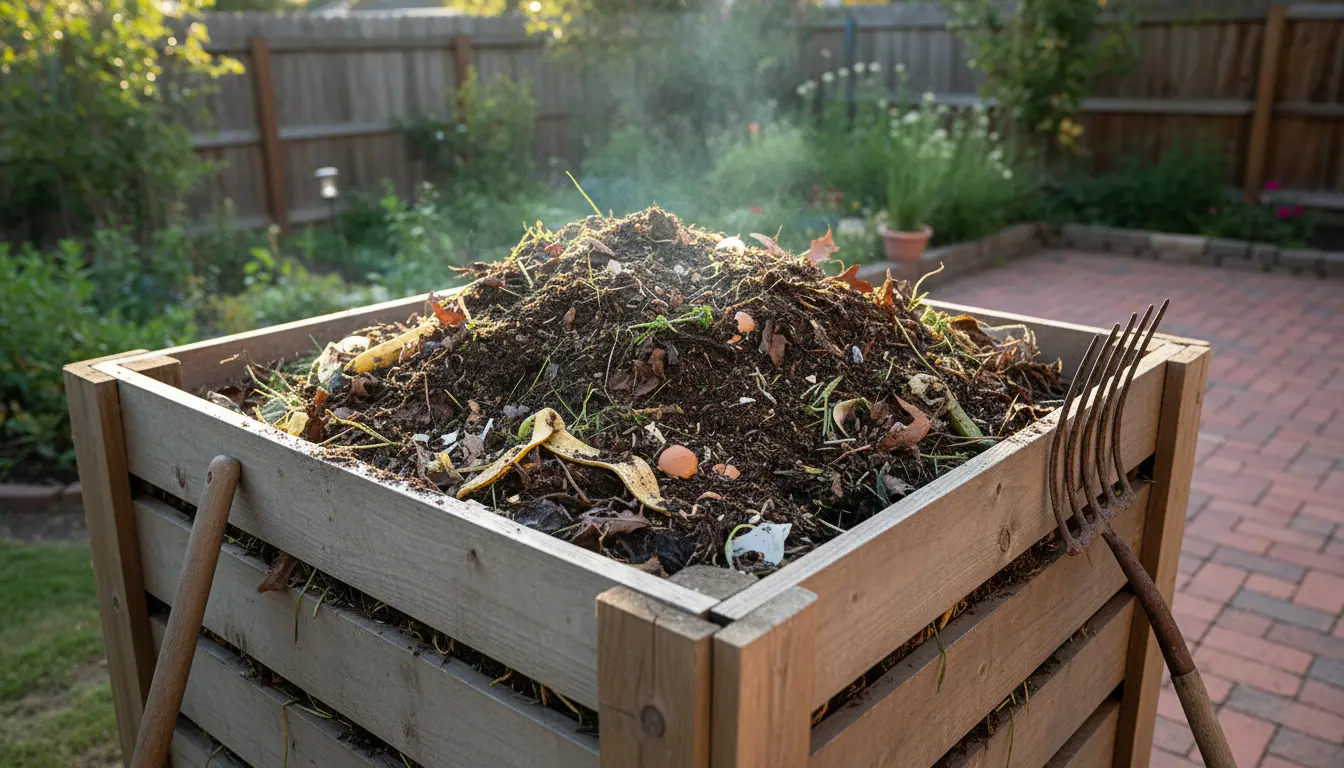
Home composting turns kitchen scraps and yard waste into nutrient rich soil amendment. This guide explains practical steps to start a home compost system, keep it healthy, and use finished compost effectively.
Why Home Composting Matters
Composting reduces household waste and lowers methane emissions from landfills. It returns organic material to the soil, improving structure, water retention, and plant health.
For gardeners and homeowners, home composting is a low cost, low tech way to close the loop on organic waste.
Getting Started with Home Composting
Begin by choosing a location and a container. A shady, well drained spot close to the house is ideal for regular access and stable moisture.
Select a container size that fits your household. Small families often use a single 3 to 5 cubic foot bin, while larger households may choose multiple bins or a tumbler.
Composting Methods for Beginners
There are several simple methods suited to different needs and spaces. Choose the one that matches how much waste you produce and how much time you can spend.
- Open pile: Easy for large yards but less tidy and slower to heat.
- Closed bin: Keeps pests out and looks neater. Good for small yards.
- Tumbler: Fast mixing and quicker results, useful for limited space and faster breakdown.
- Vermicomposting: Uses worms indoors or in a sheltered area to process kitchen scraps quickly.
Balanced Greens and Browns
Compost needs a balance of nitrogen rich materials (greens) and carbon rich materials (browns). Aim for a general ratio near 1 part greens to 2 or 3 parts browns by volume.
- Greens: Vegetable scraps, coffee grounds, fresh grass clippings.
- Browns: Dry leaves, shredded paper, cardboard, straw.
What to Compost and What to Avoid
Most fruit and vegetable scraps, coffee grounds, egg shells, and yard waste are safe. Small amounts of paper and cardboard are acceptable if shredded.
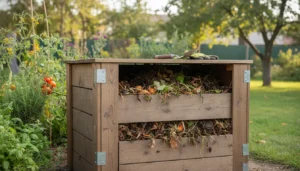
Avoid meat, dairy, oily food, diseased plants, and pet waste in simple backyard systems. These items attract pests or create odors unless you have an advanced hot composting setup.
Maintaining Your Compost
Three factors control compost speed and quality: moisture, aeration, and particle size. Monitor and adjust these regularly.
Moisture
Compost should be as damp as a wrung out sponge. Add water during dry spells or more dry browns if it becomes soggy.
Aeration and Turning
Oxygen is needed for aerobic microbes that break down material without bad odors. Turn a pile every 1 to 2 weeks for faster results in bins, or every few days for tumblers.
Shredding and Layering
Smaller pieces break down faster. Shred cardboard and chop large branches before adding them. Layer greens and browns rather than dumping a large amount of one type at once.
Troubleshooting Common Problems
Most issues are easy to fix once identified. Use simple checks to restore balance and keep composting on track.
- Bad odor: Add more browns and increase aeration by turning the pile.
- Too dry: Add water and cover the pile to retain moisture.
- Slow decomposition: Chop materials smaller, increase moisture slightly, and ensure proper green to brown balance.
- Pests: Avoid adding meat or fatty foods and secure the bin lid or use a closed container.
Hot composting that reaches 131 F for several days can kill most weed seeds and pathogens, turning waste into safe, stable compost rapidly.
Using Finished Compost
Finished compost is dark, crumbly, and earthy smelling. Use it as a soil amendment, top dressing, or in potting mixes to improve soil structure and fertility.
Add 1 to 3 inches of compost to garden beds annually or mix 10 to 20 percent compost into potting mixes for container plants.
Small Real World Example
Case Study: A three person household started a 50 gallon closed bin. They balanced kitchen scraps with shredded leaves collected each autumn. By turning the bin every two weeks and maintaining moisture, they produced usable compost in about five months.
The family reduced weekly trash by one bag and used the compost to enrich a vegetable bed, increasing tomato yields the next season.
Checklist to Start Home Composting
- Choose a method and pick a location.
- Gather tools: bin or tumbler, pitchfork or turning tool, water source, and a shredder or scissors for large items.
- Collect both greens and browns and start with a balanced base layer.
- Monitor moisture and turn the pile regularly.
- Use finished compost in gardens and pots when it looks uniform and crumbly.
Conclusion
Home composting is a practical, low cost practice that benefits soil and reduces waste. With simple equipment and a basic understanding of balance, anyone can compost successfully at home.
Start small, pay attention to moisture and aeration, and scale up as you gain experience.