
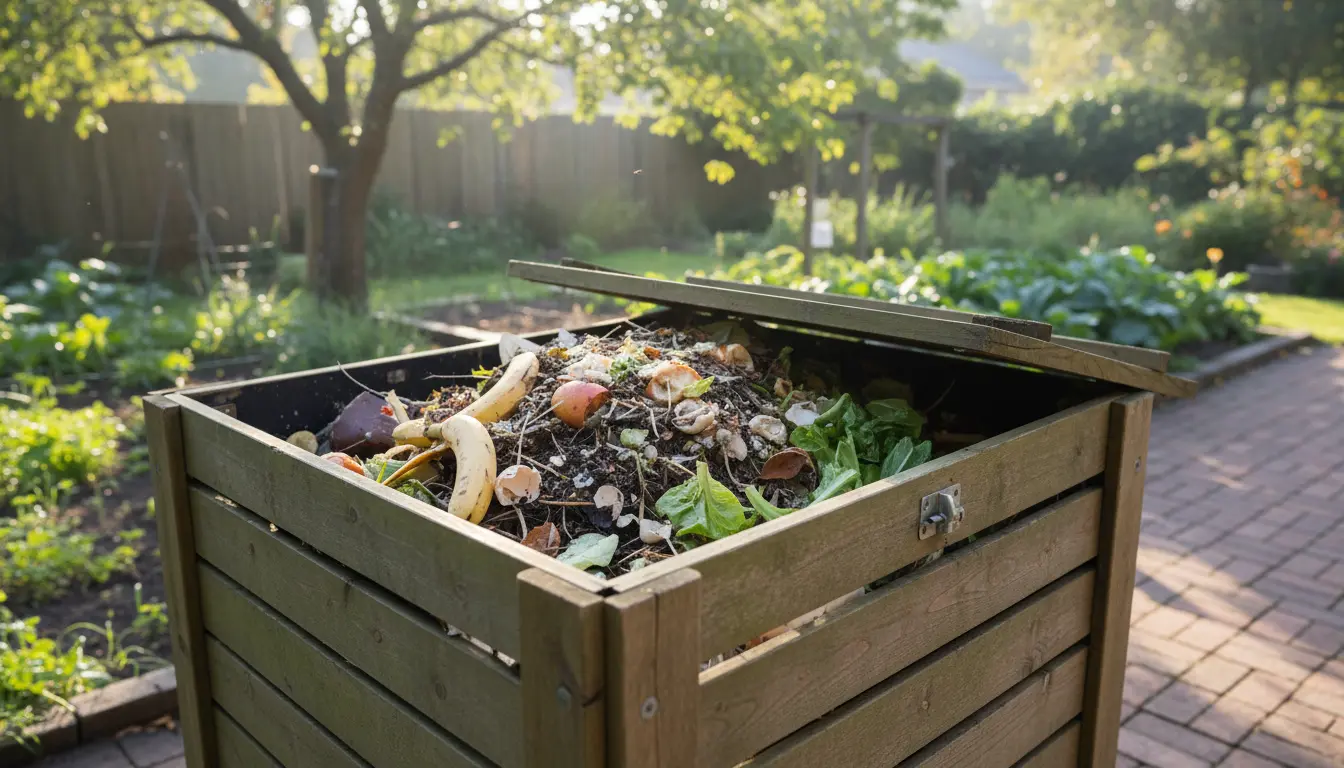
Composting at home turns food scraps and yard waste into a valuable soil amendment. This guide explains practical steps you can follow today to begin home composting, whether you have a backyard or a small balcony.
Why Home Composting Matters
Home composting reduces household waste and returns nutrients to the soil. It also helps retain moisture in garden beds and reduces the need for chemical fertilizers.
For many households, composting lowers trash volume and cuts disposal costs. The environmental benefits are immediate and measurable when practiced consistently.
How to Start Home Composting
Starting composting requires a few basic choices and regular attention. Follow these steps to set up an efficient system at home.
- Pick a location: Choose a level spot with partial shade if you have a yard. For small spaces, pick a balcony corner or a container that fits your area.
- Choose a container: Use a compost bin, tumbler, or a simple open pile. Containers keep pests out and speed decomposition.
- Layer materials: Add alternating layers of ‘greens’ and ‘browns’ to balance carbon and nitrogen.
- Maintain moisture and aeration: Keep the pile damp like a wrung-out sponge and turn it regularly for oxygen.
- Harvest finished compost: After a few months to a year, sift and use the dark, crumbly compost in your garden or potted plants.
Choosing a Compost System for Home Composting
Select a system based on space, budget, and effort. Each option works when managed properly.
- Open pile: Low cost and easy for large yards, but can be messy and attract pests.
- Bin or tumbler: Cleaner and faster, ideal for small yards and beginners.
- Vermicomposting: Uses worms in a small bin to compost kitchen scraps quickly. Great for apartments.
What to Compost at Home

Understand which items are compostable to avoid problems. Balance keeps decomposition steady and odor-free.
Include these items:
- Greens: vegetable peels, fruit scraps, coffee grounds, fresh grass clippings.
- Browns: dry leaves, shredded paper, cardboard, small wood chips.
Avoid meat, dairy, oily foods, pet waste, and diseased plants. These items can attract pests or slow the process.
Managing Your Home Composting Pile
Active management speeds composting and prevents common issues. You only need a few simple checks each week.
- Turn the pile: Use a pitchfork or rotate a tumbler every 1–2 weeks to add oxygen.
- Check moisture: If the pile is dry, add water or more greens. If it’s soggy, mix in browns and turn it.
- Monitor temperature: A hot pile (120–140°F or 50–60°C) breaks down material quickly. Cooler piles still compost but more slowly.
Common Problems and Solutions for Home Composting
Beginners often encounter odors, pests, or slow decomposition. These are solvable with simple fixes.
- Bad smell: Add browns like shredded paper and turn the pile to increase aeration.
- Pests: Avoid putting meat or dairy in the pile and secure the bin with a lid or mesh.
- Slow breakdown: Chop large pieces, add nitrogen-rich greens, and ensure adequate moisture and turning.
Compost can improve soil water retention by 20 to 40 percent, which reduces the need for frequent watering in garden beds.
Case Study: Small Balcony Home Composting
Maria, a city apartment renter, started a worm bin on her balcony and reduced kitchen waste by 60 percent. She used a 2-bin system for kitchen scraps and mixed in dry paper for balance.
After four months she harvested dark, earthy compost and mixed it into her container plants. Her herbs and tomatoes showed fuller growth and needed less fertilizer.
Tips for Faster Results in Home Composting
Small changes can speed up decomposition and improve compost quality.
- Chop or shred materials before adding them to the pile.
- Mix greens and browns in roughly a 1:2 volume ratio for steady breakdown.
- Use a compost thermometer or touch test to monitor activity.
- Cover the pile with a lid or tarp to keep excess rain out and retain heat.
Using Finished Compost from Home Composting
Finished compost is dark, crumbly, and smells like earth. Use it as a top dressing, soil amendment, or potting mix ingredient.
Examples of use:
- Mix 1 part compost with 3 parts garden soil to improve structure and nutrients.
- Top-dress lawn or flower beds with a 1/4 to 1/2 inch layer to slowly feed plants.
- Blend with potting mix for containers to increase water retention and fertility.
Home composting is a low-cost, practical way to reduce waste and improve your soil. Start small, follow the balance of greens and browns, and adjust as you learn. With consistent care, your home composting system will reward you with rich soil and healthier plants.