
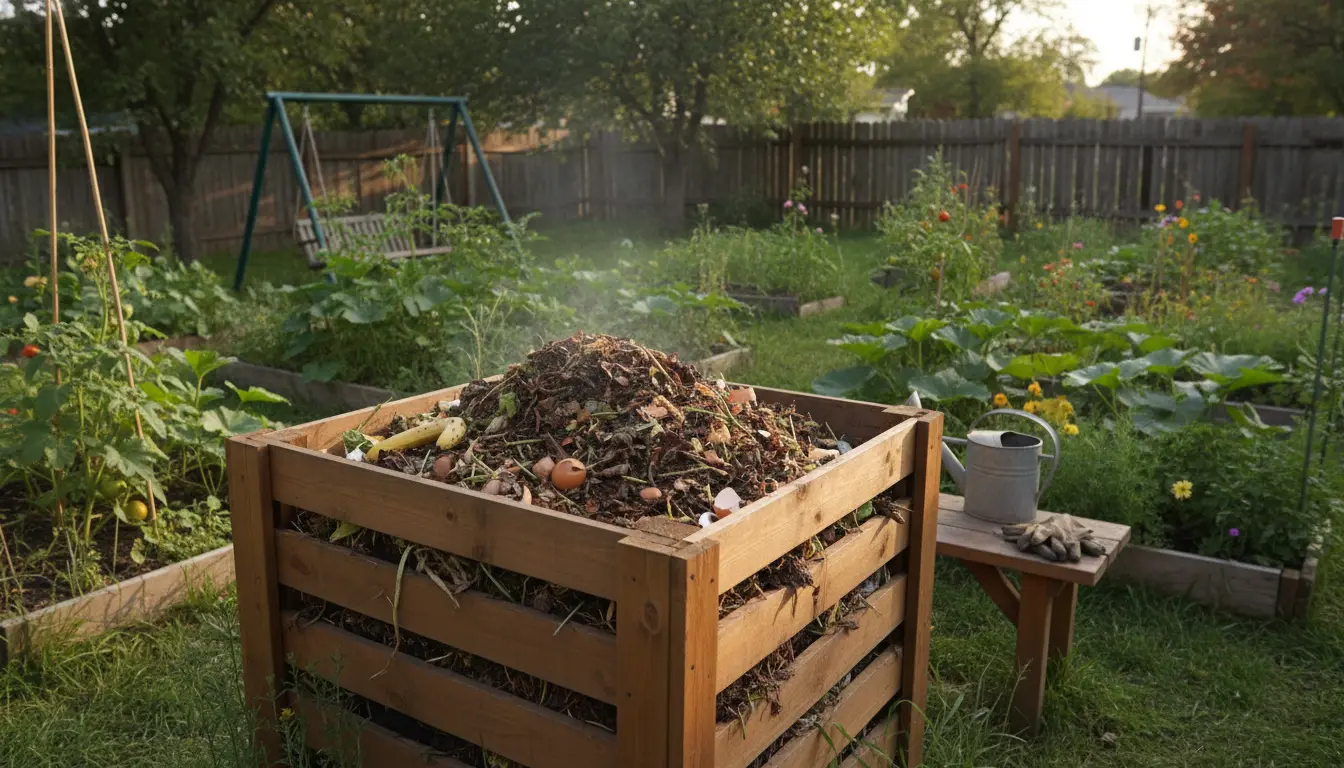
Home Composting for Beginners: Getting Started
Composting turns kitchen scraps and yard waste into nutrient-rich soil. For beginners, it is a low-cost way to reduce household waste and improve garden health.
This guide gives a practical, step-by-step approach to home composting for beginners, including materials, process, troubleshooting, and a short real-world example.
Why Home Composting for Beginners Matters
Composting reduces landfill waste and returns organic matter to the soil. It helps retain moisture in garden beds and feeds plants naturally.
Even a small compost bin can cut household trash and save money on store-bought soil amendments.
Materials You Need for Home Composting for Beginners
Start with a simple setup. You do not need fancy equipment to begin composting at home.
- Compost bin or tumbler (or a simple pile)
- Carbon materials (dry leaves, shredded paper, cardboard)
- Nitrogen materials (kitchen vegetable scraps, coffee grounds, grass clippings)
- Water source and a pitchfork or garden fork
Choosing a Bin
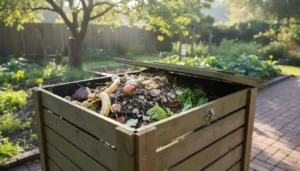
For beginners, choose one of these options based on space and budget.
- Closed tumbler: Faster, cleaner, and pest resistant.
- Stationary bin: Cheaper, suitable for larger volumes.
- Open pile: No cost, but more maintenance and attention needed.
Step-by-Step Process for Home Composting for Beginners
Follow these simple steps to build and maintain a healthy compost pile.
1. Layering
Start with a 4–6 inch layer of coarse carbon material for airflow. Alternate layers of carbon and nitrogen.
Example layer order: coarse carbon, green scraps, thin soil, repeat.
2. Maintain Moisture and Air
Compost should be as damp as a wrung-out sponge. Add water if dry and cover or turn if too wet.
Turning the pile every 1–2 weeks speeds decomposition by adding oxygen.
3. Monitor Temperature
A warm pile (110–160°F or 43–71°C) breaks down faster and reduces pathogens. A garden thermometer helps but is optional.
If the pile is cold, add more nitrogen and turn it to reheat the pile.
What to Compost and What to Avoid
Knowing what materials to include helps avoid smells and pests.
- Good: vegetable scraps, fruit peels, coffee grounds, tea bags, eggshells, yard trimmings
- Avoid: meat, dairy, oily foods, diseased plants, invasive weeds, pet waste
Troubleshooting Common Problems in Home Composting for Beginners
Problems are usually fixable with small adjustments.
- Smelly compost: Add carbon (dry leaves, shredded paper) and turn the pile.
- Pests: Avoid adding meat or oily foods; use a closed bin or fine mesh cover.
- Slow decomposition: Increase surface area by shredding materials and turn more often.
A typical household can divert up to 30% of its waste by composting food scraps and yard waste. Proper composting also reduces methane emissions from landfills.
How Long Before Compost Is Ready?
Compost can take from 2 months to a year depending on method and maintenance. Hot, well-aerated piles can finish in 2–3 months.
Finished compost looks dark, crumbly, and smells earthy. It no longer looks like the original materials.
Using Finished Compost
Use finished compost as a soil amendment, top dressing, or potting mix ingredient. It improves soil structure and nutrient retention.
Apply a 1–3 inch layer around plants or mix into garden beds at planting time.
Small Real-World Example: A Two-Person Household
Case study: Emma and Mark started home composting in a 50-liter tumbler. They added kitchen scraps and shredded mail as carbon.
Within six months they had a steady supply of compost. Their weekly trash volume dropped by about 40%. They used finished compost to top-dress potted herbs and saw healthier leaves and better water retention.
Quick Checklist for Home Composting for Beginners
- Choose an appropriate bin for your space
- Balance carbon and nitrogen
- Maintain moisture like a wrung-out sponge
- Turn regularly for faster results
- Use finished compost in the garden
Final Tips for Success
Start small and learn by doing. Keep notes on what you add and how the pile responds.
Join a local gardening group or composting workshop for hands-on tips and troubleshooting advice.
Home composting for beginners is practical and rewarding. With a simple setup and regular attention, anyone can turn waste into valuable soil and reduce their environmental footprint.