
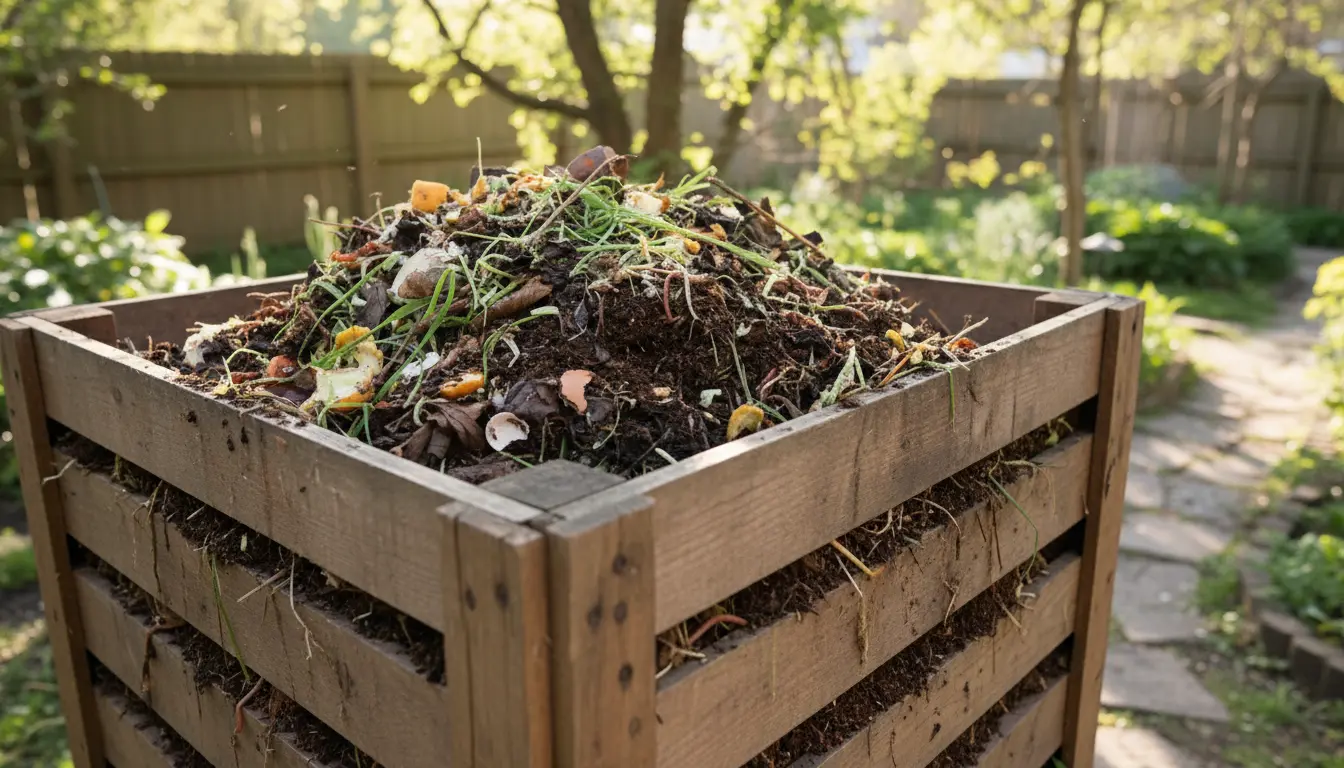
Why Home Composting for Beginners Is Worth It
Home composting reduces kitchen and yard waste while creating rich soil for plants. It lowers garbage volume and cuts methane emissions from landfills.
For beginners, composting is mainly about habit and simple rules. You do not need special equipment to start.
Choose a Simple Compost System
Pick a method that fits your space and schedule. Popular beginner options include a basic outdoor bin, a tumbling composter, or a simple pile.
An outdoor bin suits most yards and keeps things tidy. A tumbler speeds up mixing but costs more, while an open pile works if you have room and a patient schedule.
What to Put in a Home Compost
Compost needs a balance of carbon (browns) and nitrogen (greens). Browns include dry leaves, shredded paper, and straw; greens include vegetable scraps, coffee grounds, and fresh grass clippings.
- Greens: fruit and vegetable scraps, coffee grounds, tea bags (no plastic), fresh grass clippings.
- Browns: dry leaves, straw, shredded cardboard, paper towels (unbleached).
- Avoid: meat, dairy, oils, diseased plants, pet waste from carnivores.
Starter Checklist for Home Composting
Use this quick checklist to begin right away. Start small and expand as you gain confidence.
- Choose a bin or spot for a pile.
- Collect a mix of browns and greens.
- Keep the pile moist like a wrung-out sponge.
- Turn or mix every 1–2 weeks to add air.
Step-by-Step Setup for Beginners
Follow a few practical steps to set up your bin. Minimal tools are required: a pitchfork or garden fork and a container for scraps.
- Locate the bin in a partly shaded area with good drainage.
- Place a layer of coarse browns on the bottom to help airflow.
- Add alternating layers of greens and browns about 2–4 inches thick.
- Maintain moisture and turn the pile regularly.
How to Know When Compost Is Ready
Finished compost is dark, crumbly, and earthy-smelling. The process can take 2 months to a year depending on temperature, materials, and how often you turn it.
If you see identifiable scraps, more turning and smaller pieces will speed decomposition. Use a screen or sift to remove large bits before applying to soil.
Troubleshooting Common Problems
Beginner composters often face smells, pests, or slow breakdown. Each problem has a simple fix you can apply quickly.
- Bad odor: add more browns and turn the pile to introduce air.
- Pests: avoid meat and fatty foods; use a closed bin or bury scraps.
- Too dry: add water and greens; keep moisture like a wrung-out sponge.
- Too wet and compacted: add coarse browns and turn to aerate.
Small Case Study: A Four-Person Household
Sarah from Portland started simple: a 50-gallon outdoor bin and a kitchen compost pail. She kept a 2:1 ratio of browns to greens and turned the bin every 10 days.
Within six months Sarah had enough compost to top-dress houseplants and amend her vegetable beds. Her household composted roughly 20–30% of weekly trash, cutting waste pickup by one bag every two weeks.
Composting one ton of organic waste can reduce greenhouse gas emissions by about one ton of CO2 equivalent compared with landfill disposal.
Using Finished Compost
Apply finished compost as a soil amendment, mulch, or potting mix component. Use it to improve soil structure, water retention, and plant nutrition.
Sprinkle compost around plants, work it into vegetable beds, or mix one part compost to three parts soil for potted plants.
Tips to Keep Going
Start with manageable goals and add more complexity as you learn. Track what you add and the balance that works for your climate and bin type.
Neighbors or local gardening groups often exchange tips or excess compost. Joining a community workshop can accelerate results and avoid common mistakes.
Quick Starter Supplies
- Outdoor bin or tumbler
- Kitchen scrap container with lid
- Garden fork or compost turning tool
- Cardboard shredder or scissors for small browns
Home composting for beginners is practical and low-cost. With basic setup and a little routine, you can turn kitchen scraps into valuable soil and reduce household waste.