
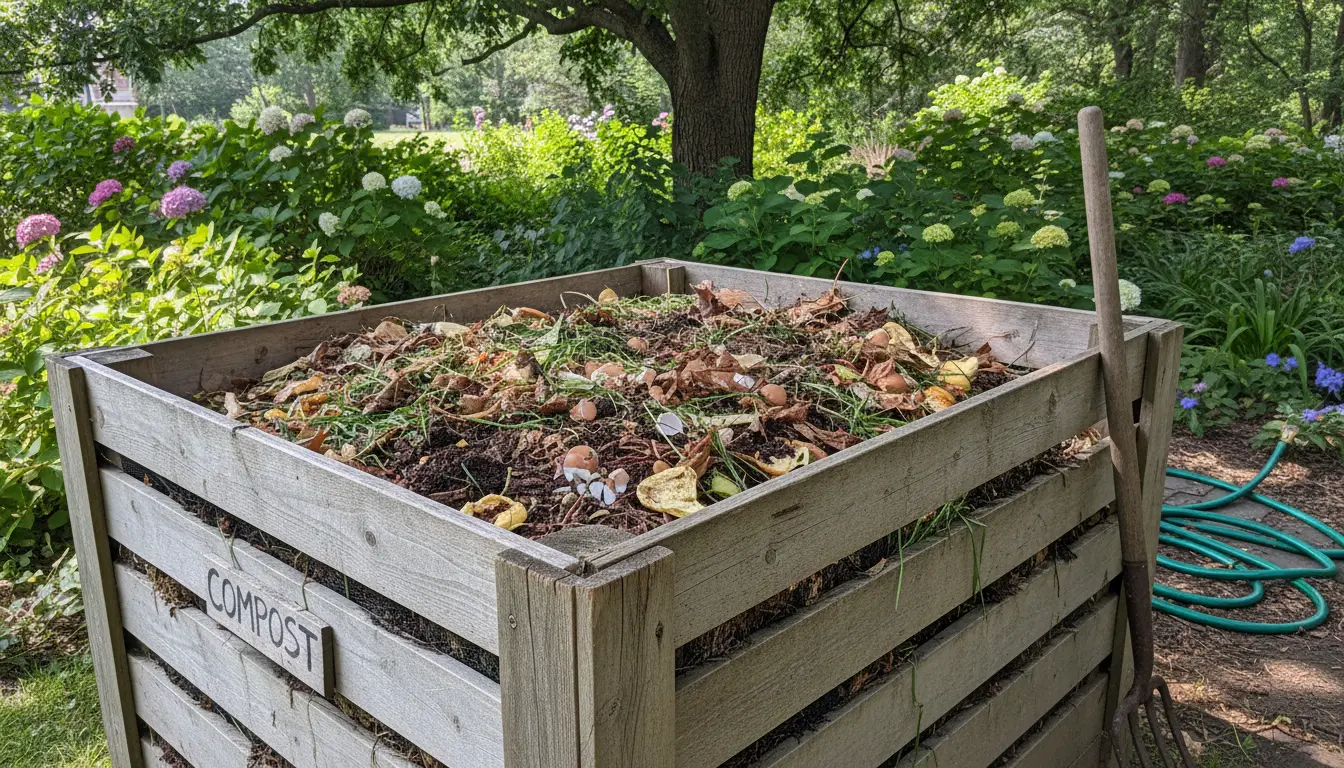
Home composting turns kitchen scraps and yard waste into a useful soil amendment. This guide gives clear, practical steps for beginners to start composting at home with minimal fuss.
Why home composting works
Composting is the controlled breakdown of organic material by microbes, fungi, and invertebrates. Over weeks to months, these organisms convert waste into stable humus that improves soil structure and fertility.
Composting reduces landfill waste, recycles nutrients, and lowers the need for synthetic fertilizers. For beginners, the process is mainly about managing balance: the right materials, moisture, and airflow.
Getting started with home composting for beginners
Decide on a method that fits your space and routine. Common options include a simple bin, a tumbler, a compost pile, or worm composting for small indoor setups.
Pick a location that is convenient, level, and has some drainage. A shady spot near your kitchen or garden makes it easy to add material regularly.
Choose a method
- Open pile – Low cost, needs space, good for larger yards.
- Stationary bin – Contained and tidy, common for suburban yards.
- Tumbler – Faster mixing, cleaner, more expensive.
- Worm composting (vermicompost) – Ideal for small spaces and kitchens, produces rich castings.
Location and container
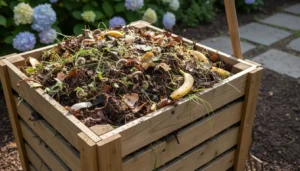
Use a container that allows some airflow and retains moisture. Recycled plastic bins, wooden pallets, or purpose-built composters all work well.
Ensure the base allows contact with soil so beneficial organisms can enter and excess moisture can drain away.
What to compost and what to avoid
Compostable items break down quickly and add nutrients to the pile. Keep a list near your bin to reduce confusion.
- Acceptable: fruit and vegetable scraps, coffee grounds, tea bags, eggshells, yard trimmings, shredded paper, cardboard.
- Avoid: meat, dairy, oils, diseased plants, pet feces, and excessive citrus or onion peels in small systems.
Step-by-step process for home composting
Follow these practical steps to build and maintain a compost pile that stays active and odor-free.
- Start with a 4-6 inch base of coarse material like twigs or straw for drainage and airflow.
- Add alternating layers of browns and greens. Aim for roughly 3 parts browns to 1 part greens by volume.
- Keep the pile moist but not soggy. It should feel like a wrung-out sponge.
- Turn or mix the pile every 1-2 weeks for faster decomposition and to prevent odors.
- Monitor temperature: a hot pile (120-160°F or 50-70°C) breaks down material faster; cool piles take longer but still work.
Balancing browns and greens
Greens are nitrogen-rich items such as food scraps and fresh grass clippings. Browns are carbon-rich materials like dry leaves, straw, and shredded paper.
Too many greens cause odors; too many browns slow the process. Adjust ratios by adding dry browns if the pile smells, or adding moist greens if decomposition stalls.
Troubleshooting common problems in home composting
Beginners often encounter common issues that are easy to fix with simple adjustments.
- Bad smells – Add dry browns and turn the pile to introduce air.
- Pests – Avoid meat and dairy, bury food scraps in the pile, and use a closed bin or wire mesh.
- Pile too dry – Add water in small amounts and mix, or add fresh green material.
- Slow decomposition – Increase surface area by chopping materials and ensure proper moisture and aeration.
Compost can reach temperatures high enough to kill weed seeds and pathogens when managed properly. Regular turning and a balanced mix help achieve these temperatures.
Small real-world example or case study
Case study: A suburban household started a 3-bin system in spring. They collected kitchen scraps in a countertop pail and added yard leaves for browns. By alternating layers and turning the middle bin every two weeks, they produced usable compost in about six months.
The household reduced waste pickup volume by 40 percent and used the compost to top-dress vegetable beds, improving soil moisture retention and tomato yields the following season.
Tips to use finished compost
Finished compost is dark, crumbly, and earthy-smelling. Use it to enrich garden beds, mix into potting soil, or apply as a mulch layer around trees and shrubs.
Blend finished compost at a ratio of 1 part compost to 3 parts soil for planting mixes, or apply a 1-2 inch mulch layer on top of garden beds.
Practical checklist for home composting beginners
- Choose bin type and location.
- Set up a small countertop container for daily scraps.
- Collect both greens and browns; keep a balance.
- Monitor moisture and turn regularly.
- Use finished compost in the garden and reduce waste.
Home composting for beginners is achievable with a little planning and regular attention. Start small, observe how your pile behaves, and adjust materials and maintenance to suit your climate and space.