
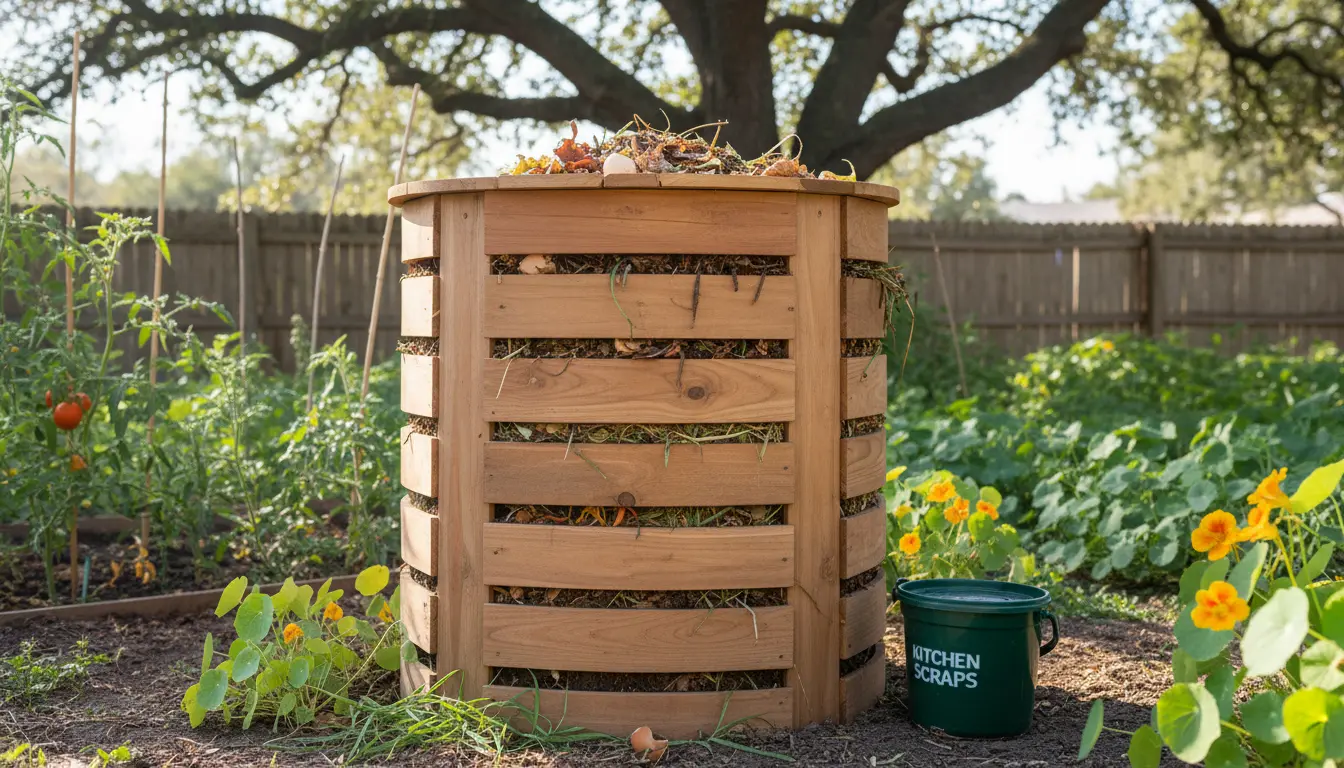
Home Composting for Beginners: Why Start?
Home composting turns kitchen scraps and yard waste into nutrient-rich soil. It reduces household trash and improves garden health without complex equipment.
This guide for home composting for beginners explains simple methods, common mistakes, and maintenance tips you can use today.
What You Need to Start Home Composting
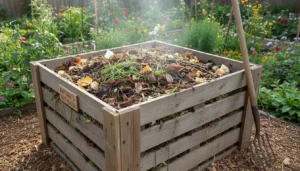
You do not need expensive tools to begin. A few basic items and consistent habits are enough to create healthy compost at home.
Basic Supplies
- Compost bin, tumbler, or a designated pile space
- Kitchen container for scraps (small lidded bin)
- Garden fork or shovel for turning
- Water source for occasional moistening
Materials to Compost
Compost materials fall into two groups: greens and browns. Balance these for effective decomposition.
- Greens (nitrogen): fruit and vegetable scraps, coffee grounds, tea leaves, fresh grass clippings
- Browns (carbon): dried leaves, newspaper, cardboard, wood chips
Step-by-Step Guide to Home Composting for Beginners
Follow these steps to set up a reliable compost system that fits your home and lifestyle. Each step is short and actionable.
1. Select a Method

Choose a composting method that matches your space and time. Options range from simple piles to worm bins.
- Backyard bin: Good for most households with outdoor space.
- Compost tumbler: Faster turning, less smell, good for small yards.
- Vermicomposting (worm bin): Ideal for apartments and indoor composting.
- Open pile: Low cost but needs space and occasional management.
2. Build the Right Mix
Layer greens and browns to create airflow and provide nutrients. Aim for a roughly 2:1 ratio of browns to greens by volume.
Shredded materials decompose faster and reduce clumping. Keep layers 4–6 inches thick and add water until the pile is as damp as a wrung-out sponge.
3. Maintain Your Compost
Turn the pile every 1–2 weeks to introduce oxygen and speed up decomposition. For tumblers, rotate according to manufacturer guidance.
Monitor moisture and temperature. If the pile smells sour, add more browns and turn. If it’s dry, add water or fresh greens.
Troubleshooting and Common Mistakes
Beginners often face predictable problems. Fixes are usually simple and prevent future issues.
Smell Problems
- Cause: Too many greens or lack of air.
- Fix: Add browns, turn the pile, and increase aeration.
Pests and Flies
- Avoid adding meat, dairy, oily foods, and cooked leftovers.
- Cover fresh greens with browns and use a closed bin or secure lid if animals are a problem.
Slow Decomposition
- Cause: Wrong ratio or large chunks.
- Fix: Chop materials, add moisture, and turn more frequently.
Practical Tips for Successful Home Composting
- Save kitchen scraps in a sealed container in the fridge if you produce scraps slowly.
- Shred paper and cardboard before adding to help balance carbon content.
- Keep a compost thermometer for larger piles to monitor activity; ideal range is 120–160°F for hot composting.
- Use finished compost as a top dressing, soil amendment, or potting mix component.
Composting reduces methane emissions from landfills and can cut household waste by up to 30 percent when widely adopted.
Real-World Example: Small Apartment Compost Success
Case study: Maria, a city renter, started vermicomposting in a 10-liter worm bin on her balcony. She collected kitchen scraps in a small bucket and added shredded newspaper as a brown layer.
Within three months, Maria produced enough compost to refresh five potted herbs and reduced her trash bag volume by half. Her key practices were consistent feeding, keeping the bin moist, and harvesting compost every six weeks.
How to Use Finished Compost
Finished compost is dark, crumbly, and smells earthy. Use it to enrich soil and help retain moisture.
- Mix 1–2 inches into garden beds before planting.
- Add to potting mixes at 10–25 percent by volume for houseplants.
- Apply as a thin mulch around vegetables and ornamentals.
Final Checklist for Home Composting for Beginners
- Choose a compost method that fits your space.
- Collect greens and browns and maintain a 2:1 brown to green ratio.
- Turn regularly and monitor moisture and smell.
- Avoid adding problematic items like meat and dairy.
- Harvest finished compost and put it to use in your garden or pots.
Starting home composting for beginners is straightforward and scalable. With a small container and basic routine, you can divert waste, improve your soil, and contribute to a healthier environment.