
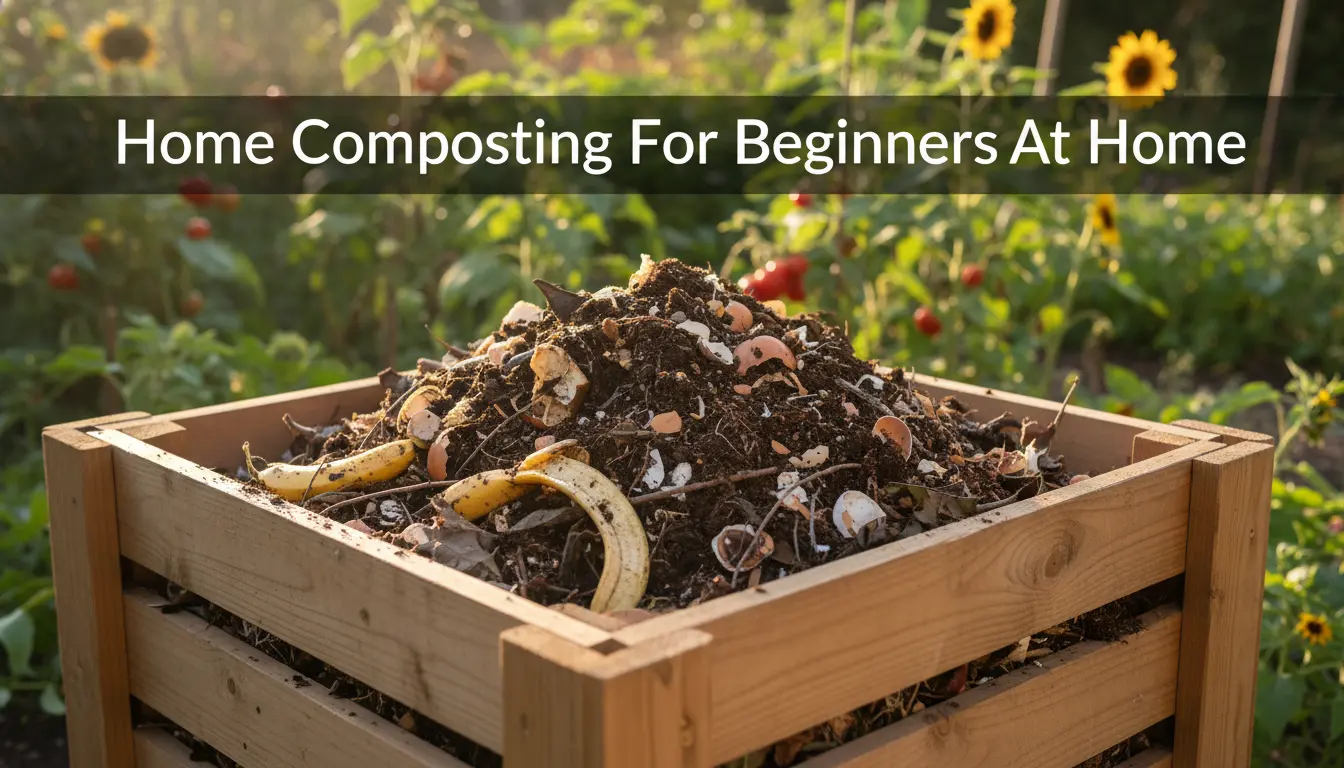
Home Composting for Beginners: What You Need to Know
Home composting for beginners is an easy way to turn kitchen and yard waste into nutrient-rich soil. This guide explains simple steps, common mistakes, and practical tips to start composting at home.
Why Choose Home Composting for Beginners
Composting reduces landfill waste and produces compost that improves soil structure and fertility. It saves money on store-bought soil amendments and helps your garden retain water.
For beginners, home composting is low-tech and scalable, from a small worm bin to a backyard heap.
Basic Principles of Home Composting for Beginners
Composting works by combining carbon-rich (brown) and nitrogen-rich (green) materials and allowing microbes to break them down. Balance, moisture, and aeration are the three essential factors.
- Carbon (browns): dry leaves, shredded paper, cardboard
- Nitrogen (greens): vegetable scraps, fresh grass clippings, coffee grounds
- Moisture: like a wrung-out sponge
- Aeration: turn or mix the pile periodically
How to Start Home Composting for Beginners
Choose a container: a simple bin, tumbler, or open pile works. Beginners often start with a closed bin to avoid pests and retain heat.
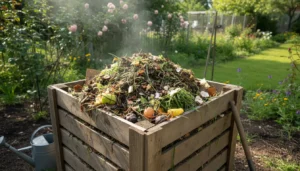
Location matters. Place the bin on soil or grass for drainage and microbe access, and choose a partly shaded spot to maintain moisture.
Step-by-step Setup
- Prepare the base: add coarse twigs or straw for drainage.
- Layer materials: alternate thin layers of greens and browns.
- Moisten: add water until the pile feels like a damp sponge.
- Cover: use a lid or tarp to keep heavy rain out.
- Turn: mix the pile every 1–2 weeks to add oxygen.
What to Compost (Good for Home Composting for Beginners)
Start with commonly available materials that break down quickly and add variety for balanced nutrients.
- Vegetable and fruit scraps (avoid large amounts of citrus)
- Coffee grounds and tea bags (remove staples)
- Crushed eggshells
- Yard waste: grass clippings, leaves, small prunings
- Shredded paper, cardboard, and paper towels (unbleached)
What Not to Compost
Avoid items that attract pests, cause odors, or slow the process.
- Meat, fish, dairy, and oily foods
- Pet or human waste
- Diseased plants or invasive weeds gone to seed
- Coal ash or treated wood
Troubleshooting for Home Composting for Beginners
If your compost smells, is slimy, or not breaking down, small adjustments fix most issues quickly.
- Smelly pile: add more browns and turn to aerate.
- Too dry: add water and some greens.
- Slow breakdown: chop materials into smaller pieces and add nitrogen (greens).
- Pests: avoid meat and dairy, secure the bin, bury food scraps in the pile.
Compost can reach internal temperatures of 130 to 160°F (54 to 71°C) in an active pile, which helps kill most weed seeds and garden pathogens if properly maintained.
Simple Tools and Supplies
You don’t need fancy tools. Start with a basic bin, a pitchfork or compost aerator, and a kitchen collection container with a lid.
- Compost bin or tumbler
- Garden fork or turning tool
- Kitchen caddy with lid for scraps
- Optional: thermometer to monitor pile temperature
Small Real-World Example: Quick Case Study
Case: Sarah, a city renter with a small balcony, started a worm bin in March. She used kitchen scraps and shredded cardboard and kept the bin shaded and slightly moist.
Outcome: After 12 weeks, Sarah harvested rich worm castings and reduced her household waste by an estimated 40%. She used the castings to pot herbs and saw healthier growth.
Tips for Success with Home Composting for Beginners
- Chop scraps into smaller pieces to speed decomposition.
- Keep a balance of browns and greens; aim roughly for 3:1 brown to green by volume.
- Monitor moisture: cover during heavy rain, water during dry spells.
- Be patient: cold composting may take longer but still works well.
Using Finished Compost
Finished compost is dark, crumbly, and earthy-smelling. Use it as a soil amendment, top dressing, or potting mix component.
Incorporate 1–3 inches into garden beds or mix with potting soil to improve structure and nutrient content.
Home composting for beginners is practical and scalable. Start small, monitor the balance, and adjust based on what your pile needs. With a little effort, you’ll reduce waste and create a valuable resource for your plants.