
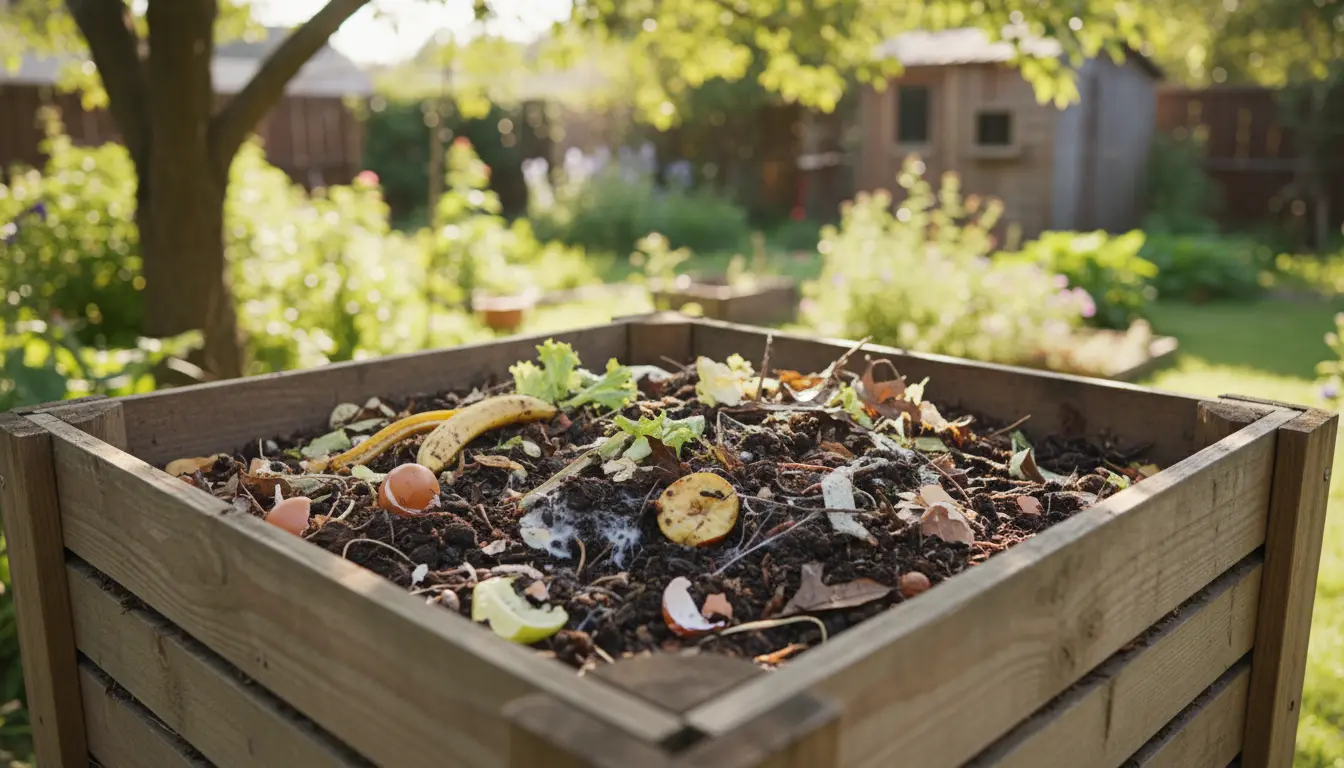
Home composting turns kitchen and yard waste into a useful soil amendment while cutting household trash. This guide gives practical, step-by-step instructions for home composting for beginners so you can start composting with confidence.
Why Home Composting for Beginners Matters
Composting reduces landfill waste and returns nutrients to your garden. It also lowers methane emissions compared with sending organic waste to landfill.
Starting small is fine; even a single countertop bin and a backyard pile make a difference.
Getting Started: Supplies and Site
Choose a spot that is convenient, well-drained, and has some airflow. A shaded corner or near a garden bed works well to keep the pile from drying out or overheating.
Basic supplies include a bin, a garden fork, and a kitchen caddy for scraps. Bins range from simple wire cages to plastic tumblers.
Choosing a Bin for Home Composting for Beginners
Select a bin based on space, budget, and maintenance willingness. For small yards, a closed tumbler speeds up decomposition and keeps pests away.
For larger gardens, an open pile or three-bin system gives flexibility for turning and maturing compost.
What to Compost: Greens and Browns
Compost needs a balance of nitrogen-rich materials (greens) and carbon-rich materials (browns). Aim for variety and small-sized pieces.
- Greens: fruit and vegetable scraps, fresh grass clippings, coffee grounds.
- Browns: dry leaves, shredded paper, straw, cardboard.

A simple rule is to add roughly two to three parts browns to one part greens by volume for an aerobic pile.
Easy Items to Avoid
- Meat, fish, and dairy (attract pests and create odors)
- Oily foods and large bones
- Diseased plants or invasive weeds with seeds
Step-by-Step Composting Process
Follow these basic steps to maintain a healthy compost pile that breaks down efficiently.
- Layer a base of coarse browns for airflow (twigs or straw).
- Add chopped greens and cover with a layer of browns to reduce odors and flies.
- Keep the pile moist like a wrung-out sponge; add water if it’s dry.
- Turn the pile every 1–2 weeks to supply oxygen and speed decomposition.
- When material is dark, crumbly, and smells earthy, it’s ready to use.
Troubleshooting Common Problems in Home Composting for Beginners
Problems are usually easy to fix by adjusting moisture, aeration, or the green/brown balance.
- Smell of rot: Add dry browns and turn the pile to introduce air.
- Pests: Use a closed bin or bury food scraps under browns.
- Too dry: Water gently and add greens to increase moisture.
- Slow decomposition: Increase surface area by chopping materials and turn more often.
Composting can reduce household waste by up to 30 percent. Finished compost improves soil structure, water retention, and nutrient availability for plants.
How to Use Your Finished Compost
Finished compost is a dark, crumbly material with an earthy smell. It should not have recognizable food or leaf pieces.
Use compost as a soil amendment, top dressing, or component in potting mixes. Apply a 1–2 inch layer to garden beds or mix into planting holes.
Examples of Practical Uses
- Mix into vegetable garden beds to boost fertility.
- Top-dress lawns in spring for improved soil health.
- Blend with potting soil for container plants to improve moisture retention.
Small Real-World Case Study
Jane, a family of four in Portland, started home composting with a simple 90-liter tumbler. They collected fruit and vegetable scraps plus coffee grounds; yard trimmings were shredded.
After six months of twice-weekly tumbling and layering browns, they produced enough compost to feed their raised vegetable beds. Their weekly trash volume fell by 40 percent, and plant yields improved noticeably.
Quick Tips for Success in Home Composting for Beginners
- Chop scraps into small pieces to speed breakdown.
- Keep a small kitchen caddy to minimize trips and odors.
- Monitor moisture and aerate regularly for faster compost.
- Be patient—initial learning makes future batches easier.
Home composting for beginners is accessible, affordable, and effective. With a basic bin, regular maintenance, and a balanced feedstock, you can turn household waste into a valuable resource for your garden.