
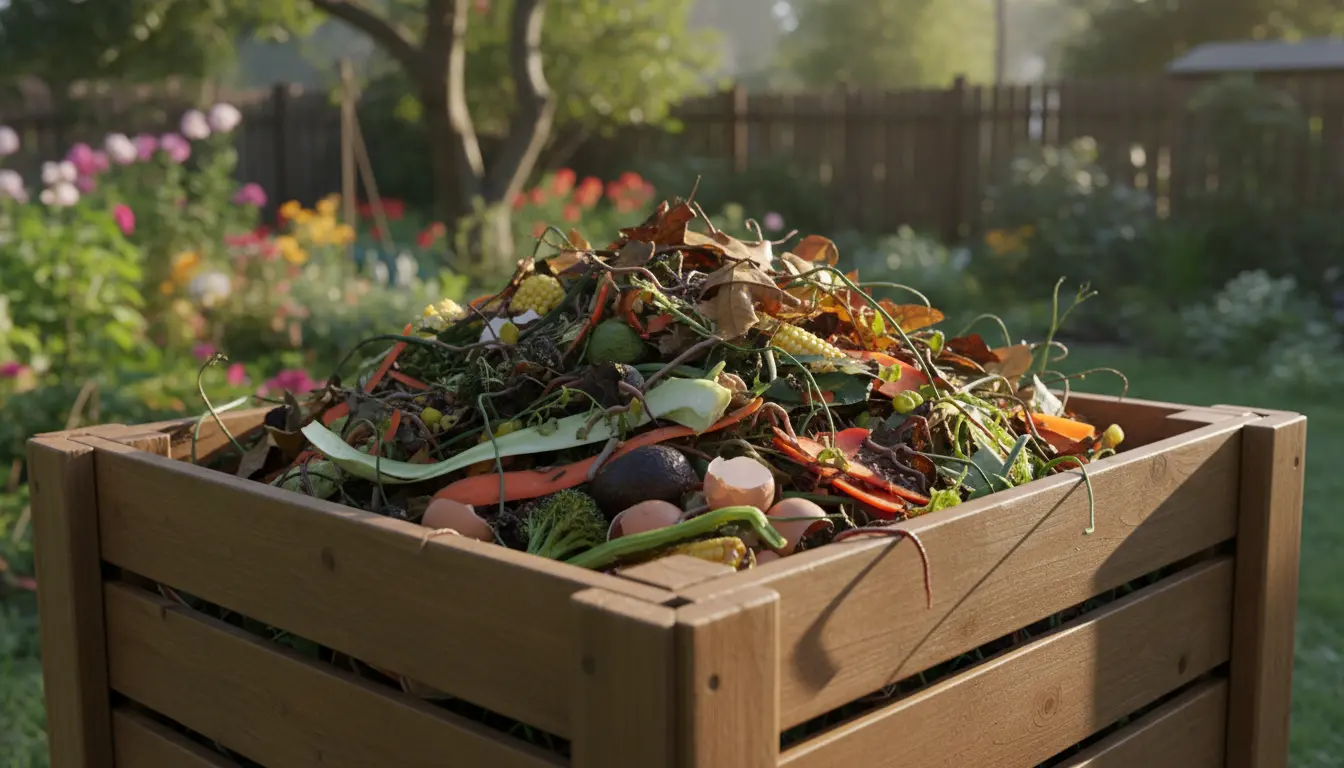
Composting at home turns food scraps and yard waste into a valuable soil amendment. This guide explains simple steps to start and maintain home composting, aimed at beginners who want practical, reliable results.
How Home Composting Works
Composting is a natural process where microorganisms break down organic material into humus. You control the process by managing ingredients, moisture, and airflow.

Key elements are carbon, nitrogen, moisture, and oxygen. Balance these and decomposition proceeds quickly without strong odors.
Essential Composting Terms
- Brown materials: carbon-rich items like dried leaves, cardboard, and straw.
- Green materials: nitrogen-rich items like vegetable scraps, fresh grass clippings, and coffee grounds.
- Finished compost: dark, crumbly material ready to use in soil.
Setting Up Home Composting
You can compost in a bin, tumbler, or an open pile. Choose a spot with good drainage and partial shade.
Choose a Compost Bin for Home Composting
- Plastic or wooden bins are inexpensive and easy to manage.
- Tumblers speed up mixing and reduce pests, but cost more.
- Open piles work for large properties where appearance and pests are not a concern.
What to Add to Your Compost
Aim for a rough carbon-to-nitrogen ratio of 25-30:1. In practical terms, layer browns and greens.
- Greens: fruit and vegetable scraps, coffee grounds, fresh grass clippings.
- Browns: dry leaves, shredded paper, cardboard, straw.
- Small wood chips can add structure and increase airflow.
Starting a Compost Pile
Begin with a 6-12 inch base of coarse browns to promote airflow. Add alternating layers of greens and browns.
Chop or shred large items to speed decomposition. Keep the pile at least 3x3x3 feet for heat retention, but smaller bins work with active management.
Water and Air
- Moisture: the pile should feel like a wrung-out sponge. Add water during dry spells and cover if rainfall soaks it.
- Turn the pile every 1–3 weeks for faster decomposition and even heating.
Maintaining Your Home Composting System
Regular attention keeps compost healthy. Check moisture, add browns when the pile smells, and turn to supply oxygen.
Troubleshooting Common Problems
- Bad smells: usually too wet or too many greens. Add browns and turn the pile.
- Pests: avoid adding meat, dairy, or oily foods. Use a closed bin or bury food scraps inside.
- Slow decomposition: increase surface area by chopping materials and ensure a good mix of greens and browns.
Well-managed home compost can reduce household waste by up to 30 percent and improve garden soil structure and water retention.
Using Finished Compost
Finished compost looks uniform, dark, and crumbly and has an earthy smell. Use it as a soil amendment, mulch, or potting mix ingredient.
Ways to Use Compost
- Mix 1–2 inches into garden beds to improve structure and fertility.
- Top-dress lawns with a thin layer to add nutrients.
- Create potting mixes with 20–30% compost for houseplants and containers.
Small Real-World Case Study
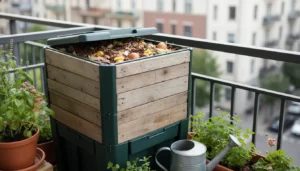
Case: A small urban household started a 50-gallon compost bin. They added kitchen scraps and shredded leaves, turned the bin weekly, and kept it moist.
Results: In six months they produced about 80 liters of finished compost. They applied a 1-inch layer to two raised beds and reported better plant growth and fewer watering needs the following season.
Practical Tips for Beginners
- Collect food scraps in a small countertop container and empty to the bin every 2–3 days.
- Shred or chop items when possible to speed breakdown.
- Keep a supply of dry browns on hand: shredded paper, dry leaves, or cardboard strips.
- Record what you add and how often you turn the pile to learn what works for your climate.
Final Checklist for Successful Home Composting
- Pick the right bin and location for your space.
- Balance greens and browns and maintain moisture.
- Turn regularly and troubleshoot odors or pests quickly.
- Harvest finished compost and use it to improve your soil.
Home composting is a practical way to cut waste and build better soil. Start small, observe results, and adjust the mix and routine to fit your home and garden.