
Home Composting for Beginners: Why Start Composting
Composting reduces household waste and produces rich soil for gardens. For beginners, it is an accessible way to recycle kitchen and yard scraps into useful material.
Understanding basic rules makes the process simple and reliable. This guide focuses on practical steps you can apply in small spaces or a backyard.
Getting Ready: Tools and Location for Home Composting for Beginners
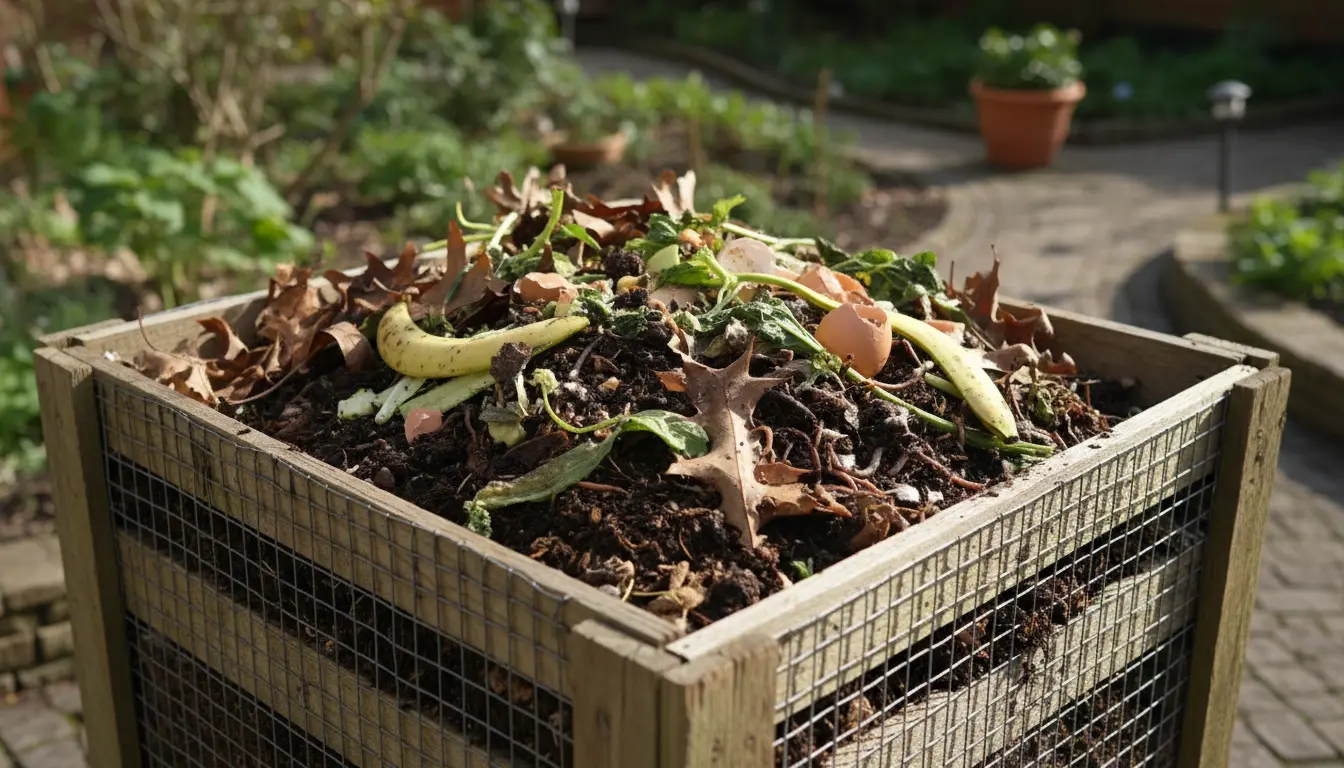
Choose a compost bin or make a simple pile. Bins are cleaner and help retain heat; piles work if you have space and can turn the material.
Select a well-drained, partly shaded spot near your kitchen for easy access. A location with good airflow speeds decomposition without creating odors.
Essential tools and supplies
- Compost bin or tumbler (30–200 gallons depending on household size)
- Pitchfork or compost aerator for turning
- Kitchen caddy or sealed container for collecting scraps
- Garden thermometer (optional) to monitor temperature
What to Compost: Simple Rules for Home Composting for Beginners
Balance carbon rich (brown) and nitrogen rich (green) materials. Aim for roughly 3 parts brown to 1 part green by volume.
Good materials decompose quickly and keep the pile healthy, while some items should be avoided to prevent pests or slow breakdown.
Examples of suitable materials
- Greens: fruit and vegetable scraps, coffee grounds, fresh grass clippings
- Browns: dry leaves, shredded paper, straw, cardboard (torn into small pieces)
- Small amounts of garden trimmings, eggshells (crushed), and sawdust from untreated wood
Items to avoid
- Meat, dairy, oily foods, bones (attract pests)
- Diseased plants or invasive weeds (may survive composting)
- Pet waste and glossy printed paper (contaminants)
How to Build and Maintain a Compost Pile
Start with a 4–6 inch base of coarse browns to improve airflow. Alternate layers of greens and browns, keeping layers thin for faster breakdown.
Moisture is essential: aim for a damp sponge feel. Too wet causes odor and anaerobic conditions; too dry stops decomposition.
Turning and temperature
Turn the pile every 1–2 weeks to add oxygen and mix materials. A hot active pile (120–160°F or 50–70°C) breaks down faster and kills many weed seeds.
If you want low-effort cold composting, turn less often and expect a longer decomposition time of many months to a year.
Troubleshooting Common Problems for Home Composting for Beginners
Bad smell usually means too much green material or too much moisture. Add shredded brown materials and turn the pile to introduce air.
Pests indicate exposed food scraps or inappropriate materials. Bury kitchen scraps within the pile and avoid meat and dairy.
Slow decomposition fixes
- Chop or shred materials to increase surface area.
- Balance more greens or browns as needed.
- Ensure the pile stays moist but not waterlogged and turn regularly.
When Is Compost Ready and How to Use It
Mature compost is dark, crumbly, and smells earthy. Most home piles are ready in 3–9 months depending on method and care.
Use finished compost to enrich garden beds, as a top dressing for lawns, or mixed into potting soil for container plants.
Simple Case Study: Backyard Composting by a Small Family
Jane and Luis, a family of three, used a 90-gallon tumbler in a small backyard. They collected kitchen scraps in a sealed caddy and added dry leaves weekly.
Within six months they produced about 50 liters of finished compost and reduced their weekly trash bag volume by roughly 30%. Their garden yields improved and they spent minimal time on turning and maintenance.
Quick Checklist for Home Composting for Beginners
- Choose bin type and location
- Collect scraps in a sealed container
- Layer browns and greens, keep moisture balanced
- Turn regularly or accept a slower cold compost method
- Use finished compost in garden beds and pots
Starting composting at home is practical and scalable. With the basic steps above, beginners can set up an efficient system, reduce waste, and create nourishing soil for plants.