
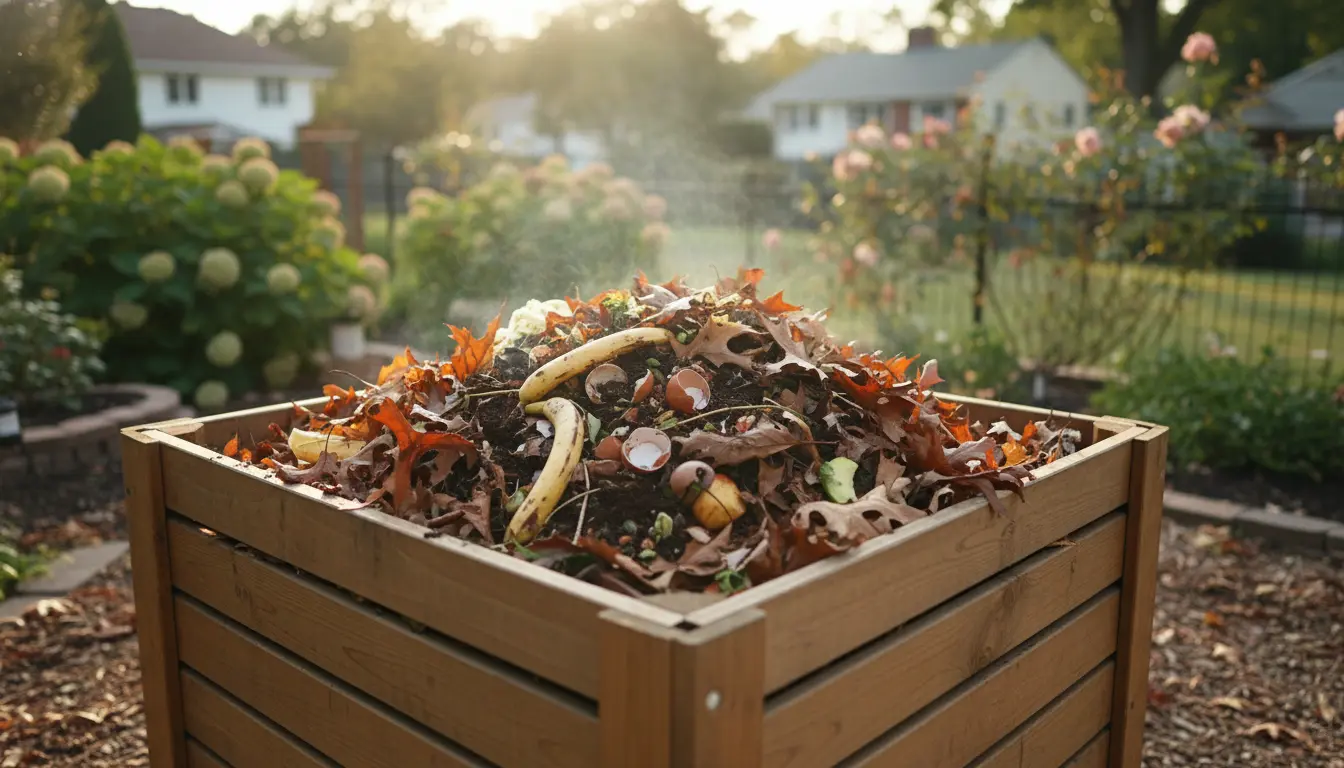
Home Composting for Beginners: Why It Matters
Home composting turns kitchen scraps and yard waste into rich soil. This reduces landfill waste and gives your plants nutrient-dense compost.
For beginners, composting is a low-cost way to improve soil, reduce water needs, and cut household waste. You do not need a large yard or special tools to begin.
Home Composting for Beginners: Step-by-Step Setup
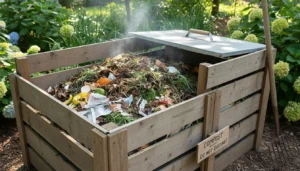
Start with the right container and location. A simple bin or pile in a partly shaded area works well for most homes.
Follow this basic setup routine to get consistent results.
- Choose a bin: plastic, wooden, or wire bin, or a simple heap.
- Pick a location: level ground with good drainage and partial shade.
- Add a base layer: straw or coarse twigs to promote airflow.
- Alternate layers: green (nitrogen) and brown (carbon) materials.
- Keep moisture like a wrung-out sponge and turn occasionally.
Materials for Home Composting for Beginners
Knowing green and brown materials helps balance the pile. Aim for roughly 3 parts brown to 1 part green by volume.
- Green materials: vegetable scraps, fruit peels, coffee grounds, grass clippings.
- Brown materials: dry leaves, shredded paper, cardboard, straw, sawdust.
- Avoid: meat, dairy, pet waste, and oily foods to prevent pests and odors.
How to Build a Batch
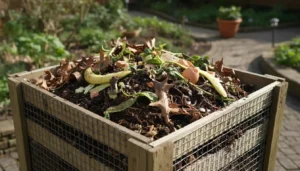
Create layers instead of mixing everything at once. Layering helps air circulate and speeds decomposition.
- Start with coarse browns for drainage.
- Add a 2–4 inch green layer, then 4–6 inches brown layer.
- Repeat layers until the bin is full or you reach desired size.
- Water lightly between layers if materials are dry.
Home Composting for Beginners: Maintenance and Troubleshooting
Basic maintenance ensures a healthy, odor-free compost pile. Regular checks take only a few minutes a week.
Home Composting for Beginners: Common Problems and Fixes
Problems are usually easy to fix once you know the signs. Use simple adjustments to rebalance your pile.
- Bad smell: add more brown materials and turn the pile to increase airflow.
- Too dry: moisten materials to the consistency of a wrung-out sponge.
- Too wet or slimy: add coarse browns and mix to improve drainage.
- Pests: avoid meat/dairy and use a closed bin or fine mesh cover.
- Slow decomposition: chop materials smaller and maintain heat by adding fresh greens.
How to Use Finished Compost

Finished compost looks dark, crumbly, and earthy-smelling. It may take 2–12 months depending on methods and climate.
- Top-dress lawns with a thin layer of compost in spring or fall.
- Mix compost into potting soil or garden beds at 10–30% by volume.
- Use as mulch around shrubs and vegetables to retain moisture and add nutrients.
Quick Tips for Success
Follow these rules to keep composting simple and effective.
- Chop or shred large pieces to speed decomposition.
- Aim for a balance of carbon and nitrogen (3:1 common guideline).
- Turn the pile every 1–4 weeks to aerate and redistribute moisture.
- Monitor temperature; active piles are warm inside and break down faster.
Composting at home can reduce household waste by up to 30 percent. Even small households can compost most food scraps and yard trimmings.
Small Real-World Case Study
Case: A two-person household in a small city apartment used a 60-liter countertop bin and a 200-liter outdoor tumbler.
Over 12 months they diverted about 240 kilograms (530 pounds) of organic waste from landfill. They produced roughly 80 liters of finished compost to enrich balcony planters and a community garden plot.
Benefits observed:
- Reduced trash volume and lower disposal costs.
- Sustainable fertilizer for vegetables, improving yield by about 15 percent in two seasons.
- Increased satisfaction from making less waste and growing healthier plants.
Advanced Options for Home Composting for Beginners
Once comfortable, consider faster or smaller-scale systems. Bokashi and worm bins work well in tight spaces.
- Worm bins (vermicomposting): great for apartment kitchens and produce fine compost tea.
- Bokashi: a fermented collection system that handles meat and dairy when followed by burial or composting.
- Tumblers: speed up turning and reduce pests but may need more frequent management.
Final Checklist for Home Composting for Beginners
- Select a suitable bin and location.
- Balance greens and browns and monitor moisture.
- Turn regularly and watch for pests or odors.
- Harvest finished compost and apply to soil or plants.
Start small and adjust as you learn. Composting is forgiving, and even modest efforts help the environment while improving your garden.