
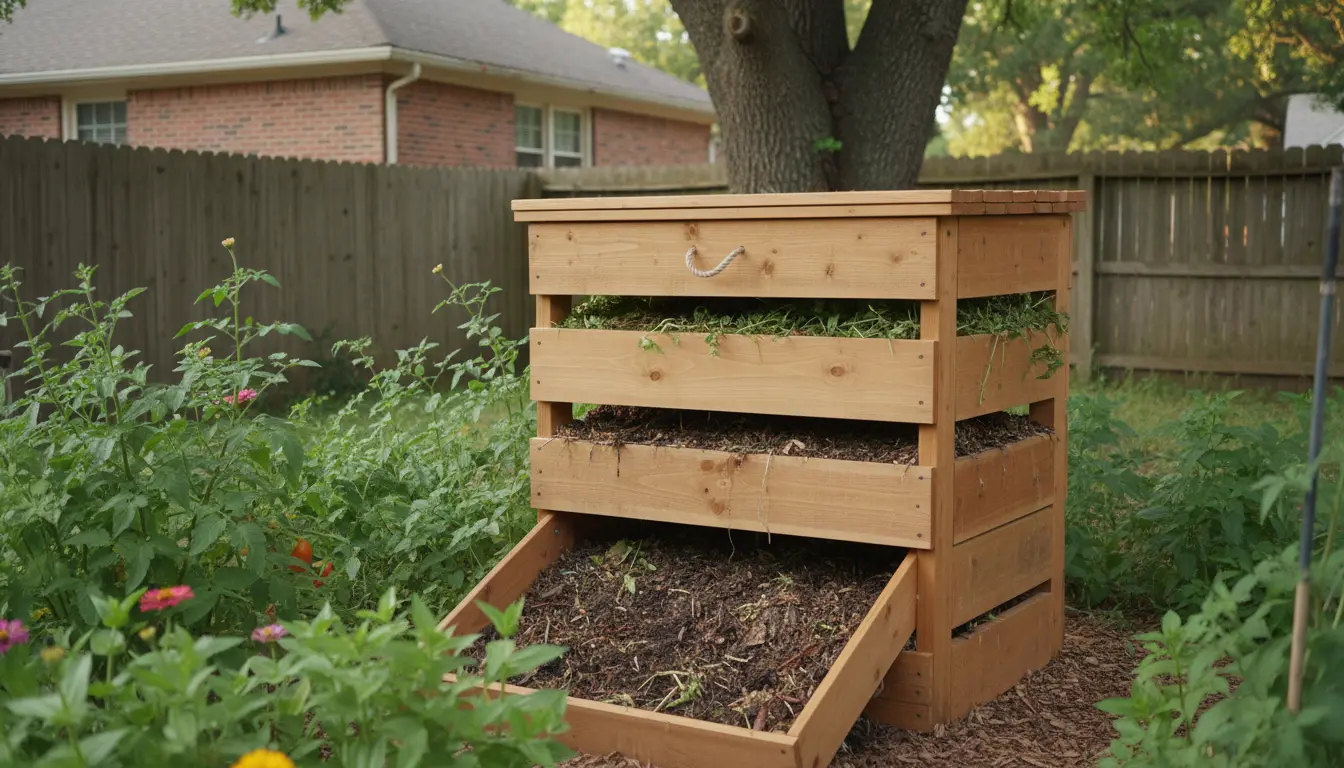
Start Home Composting for Beginners: What It Is and Why It Helps
Home composting turns kitchen scraps and yard waste into rich soil amendment. It reduces landfill waste, lowers your carbon footprint, and supplies free nutrients for your garden.
This guide gives clear, practical steps for beginners to set up and maintain a basic compost system at home.
Choose the Right Compost System for Your Home Composting for Beginners
Select a method that fits your space, budget, and time. Common options include backyard bins, tumblers, and worm composting (vermicomposting).
- Backyard bin – Simple and low-cost, fits larger volumes.
- Tumbling bin – Easier turning, faster decomposition but pricier.
- Worm bin – Ideal for small spaces and kitchen scraps, produces worm castings.
Materials and Location for Home Composting for Beginners
Place the bin on soil in a partly shaded area to allow drainage and access for microbes and worms. Avoid full sun to prevent drying.
Gather raw materials before starting: a mix of browns and greens works best.
- Browns: dry leaves, shredded paper, cardboard, straw.
- Greens: vegetable scraps, coffee grounds, fresh grass clippings.
How to Build a Compost Pile Step by Step
Start by layering materials: a base layer of coarse browns, then alternate greens and browns. Aim for a ratio near 3 parts browns to 1 part greens by volume.
Keep pieces small by chopping or shredding. Smaller pieces break down faster and make a more uniform compost.
Moisture, Airflow, and Turning
Maintain moisture like a wrung-out sponge; squeeze a handful and see a few drops. Too dry and decomposition slows; too wet and it smells.

Turn the pile every 1–2 weeks to add oxygen. For tumblers, rotate per manufacturer guidance. Aeration prevents odors and speeds breakdown.
What to Compost and What to Avoid
Good items to compost include fruit and vegetable scraps, coffee grounds, eggshells, yard trimmings, and paper products.
Avoid meat, dairy, oils, diseased plants, and pet waste to reduce pests, odors, and pathogens.
Quick Reference List
- Compost: fruit and veg scraps, coffee grounds, eggshells, leaves, grass.
- Do not compost: meat, dairy, bones, oils, diseased plants, pet feces.
Troubleshooting Common Problems for Home Composting for Beginners
If the pile smells sour or rotten, add dry browns and turn it to increase airflow. Bad odors usually mean it is too wet or anaerobic.
If decomposition is slow, add greens and increase turning frequency, or chop materials smaller to increase surface area.
Pests and Temperature
To deter pests use enclosed bins and bury food scraps under a layer of browns. Avoid inviting animals by not composting meat or oily foods.
Compost that heats up to 120–160°F (49–71°C) indicates active microbial breakdown. In small home piles, aim for steady warm temperatures but not continuous high heat.
Using Finished Compost and Timelines
Finished compost is dark, crumbly, and earthy-smelling. It typically takes 2–12 months depending on method and management.
Use finished compost as a top dressing, soil amendment, or potting mix ingredient. Apply 1–3 inches to garden beds and work it into the topsoil.
Practical Tips for Success
- Keep a small container in the kitchen with a lid for daily scraps to avoid trips outside.
- Chop or shred yard waste when possible to speed decomposition.
- Monitor moisture regularly and keep a balance of greens and browns on hand.
- Start small and scale up after you learn how your system behaves.
Small Real-World Example: A Simple Home Compost Case Study
Case: Maria, a renter with a small yard, started a 65-gallon tumbling bin. She collected kitchen scraps in a sealed container and added them weekly with shredded leaves.
Within four months she produced enough compost to refresh three raised beds. She reports less trash and healthier tomato plants the next season.
Final Checklist for Home Composting for Beginners
- Choose a bin type that fits your space.
- Balance browns and greens, keep material small.
- Maintain moisture like a wrung sponge.
- Turn regularly to aerate and speed breakdown.
- Avoid meat, dairy, and pet waste to prevent pests.
Home composting is accessible and rewarding for beginners. Start with a simple system, observe how it performs, and adjust the balance of materials and airflow. With basic care, you will convert waste into valuable compost and improve your garden soil.