
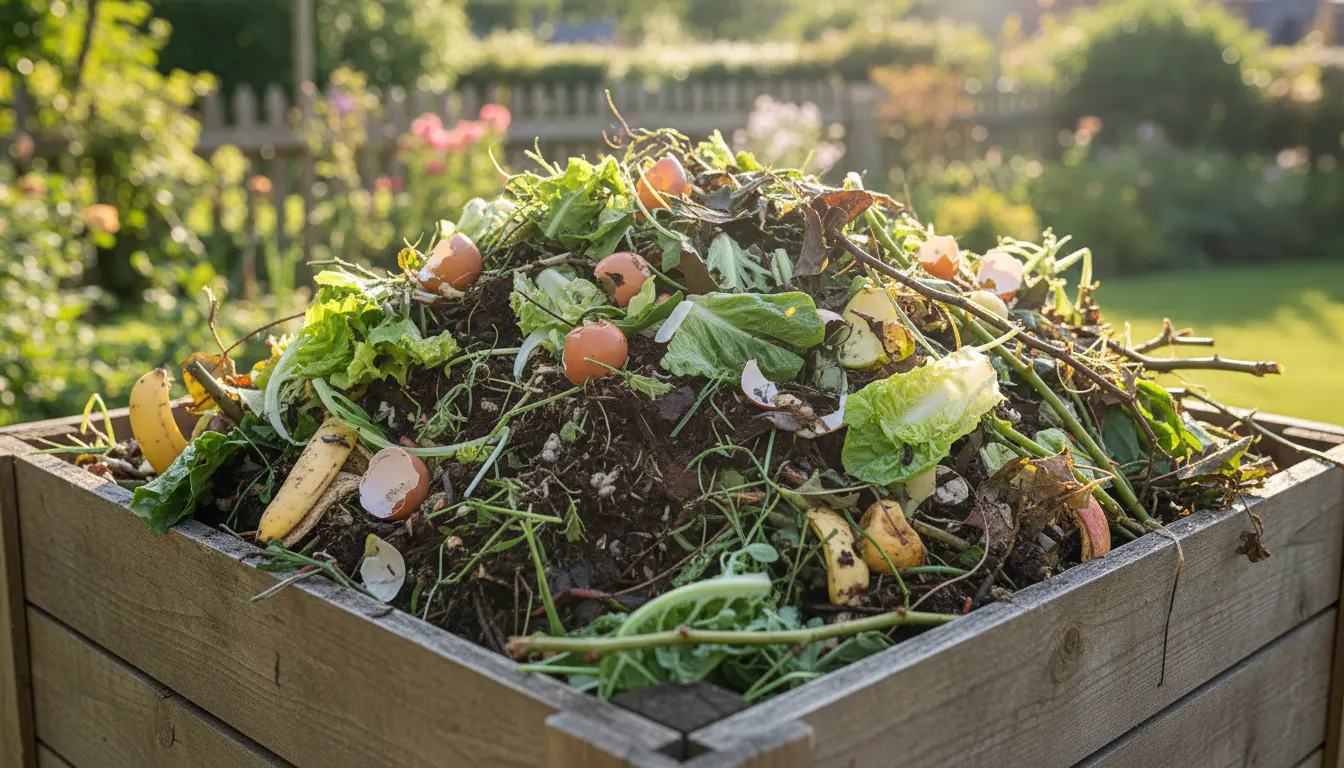
Why Home Composting for Beginners Matters
Home composting reduces household waste and produces rich soil for gardens. For beginners, it is an accessible way to cut trash volume and support healthy plants.
This guide gives clear steps, material lists, simple troubleshooting, and a short case study to help you start composting at home today.
Basic Principles of Home Composting for Beginners

Compost is the result of breaking down organic materials by microbes and small invertebrates. To keep the process active, manage three things: carbon (browns), nitrogen (greens), and air.
Balance and regular maintenance speed up decomposition and prevent odor.
What to Add: Greens and Browns
- Greens (Nitrogen): vegetable scraps, fruit peels, coffee grounds, fresh grass clippings.
- Browns (Carbon): dry leaves, shredded paper, cardboard, straw, sawdust.
- Aim for roughly 2–3 parts browns to 1 part greens by volume to keep the pile stable.
What to Avoid
- Meat, dairy, bones, and oily foods (can attract pests).
- Diseased plants, invasive weeds with seeds, and pet wastes from carnivores.
Choosing a Composting Method
Beginners should pick a method that fits space, budget, and time. Here are common options with pros and cons.
Compost Bin
- Good for small yards and neat appearance.
- Controls pests better than open piles.
Tumbler
- Faster mixing and less manual turning.
- Higher cost, limited volume for large gardens.
Cold Pile
- Simple: pile materials and wait. Low maintenance but slow.
- Best for large spaces and low-effort gardeners.
Step-by-Step Home Composting for Beginners
Follow these practical steps to create and maintain a successful compost pile.
- Pick a spot: Choose a well-drained, partially shaded area near water access.
- Layer materials: Start with coarse browns like twigs to aid drainage, then alternate greens and browns in 10–15 cm layers.
- Moisten: Keep the pile damp like a wrung-out sponge. Too dry slows microbes; too wet causes odors.
- Turn regularly: Every 1–2 weeks for hot compost; monthly for slower systems. Turning adds oxygen and speeds decomposition.
- Monitor temperature: A hot pile (55–65°C or 130–150°F) breaks down material quickly and kills weed seeds. Use a thermometer if you want accuracy.
- Harvest: After 2–12 months, finished compost will be dark, crumbly, and earthy-smelling. Sift and use in garden beds or potting mixes.
Troubleshooting Common Problems
New composters often face a few familiar issues. Here are quick fixes.
- Smelly pile: Add more browns and turn the pile to introduce air.
- Too dry: Add water and more greens; cover to retain moisture.
- Slow breakdown: Chop materials smaller, increase surface area, and ensure proper moisture and air.
- Pests: Avoid meat and dairy, use a closed bin, or bury food scraps in the pile center.
Composting can cut household organic waste by up to 30 percent. Finished compost improves soil structure, water retention, and nutrient content for plants.
Small Real-World Case Study

Maria, a city apartment gardener, started a 60-liter compost bin on her balcony. She collected kitchen scraps and mixed them with shredded cardboard from online orders.
After six months of turning every two weeks and maintaining moisture, she harvested dark, crumbly compost. She mixed it into container soil and observed stronger tomato growth and fewer watering needs.
Tips to Speed Up Results
To accelerate composting and get finished compost faster, try these small changes.
- Chop or shred materials before adding them.
- Maintain a balanced mix of greens and browns.
- Use compost activators like finished compost or finished soil to introduce microbes.
- Turn the pile more frequently to add oxygen.
Using Finished Compost
Apply finished compost as a top dressing, mix it into planting beds, or blend with potting soil. Use it year-round to improve soil health and plant vigor.
Start with a 1–2 inch layer or mix 10–30 percent compost by volume into garden soil for best results.
Final Checklist for Home Composting for Beginners
- Choose the right container for your space.
- Collect and store scraps in a small kitchen caddy.
- Balance greens and browns and keep the pile moist.
- Turn occasionally and monitor for pests or odors.
- Harvest and use compost to improve your garden soil.
With a little attention and the right balance, home composting for beginners quickly becomes an easy, rewarding habit. Start small, observe the process, and scale up as you gain confidence.