
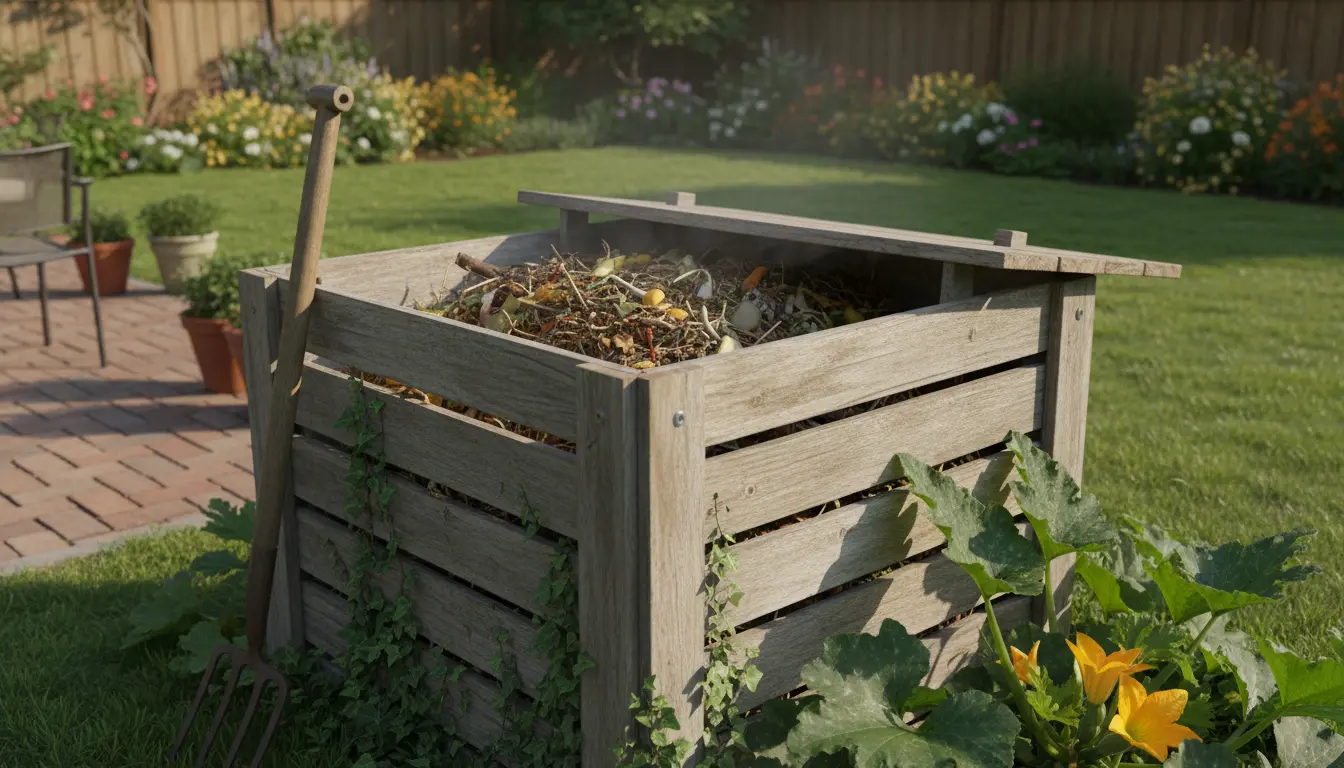
Composting at home is an efficient way to cut kitchen and yard waste while producing rich soil for gardens and containers. This guide explains simple, actionable steps so beginners can start composting with confidence.
Home Composting for Beginners: Getting Started
Decide where you will compost and what system fits your space. Even a small balcony can accommodate a worm bin, while yards are suitable for tumblers or open piles.
Set realistic goals: reduce household waste, improve garden soil, or both. Clear objectives help you choose the right method and stick with routine maintenance.
Choose a composting method
- Open pile: Low cost, best for larger yards, needs turning.
- Tumbler: Enclosed, easier to turn, faster decomposition.
- Bin system: Neat and contained, many DIY and commercial options.
- Vermicomposting: Uses worms, ideal for small spaces and kitchen scraps.
What to Compost: Greens and Browns
Compost works best when you balance nitrogen-rich ‘greens’ and carbon-rich ‘browns’. Aim for a mix to keep decomposition active and odor-free.
- Greens: Vegetable peels, fruit scraps, coffee grounds, fresh grass clippings.
- Browns: Dry leaves, shredded paper, cardboard, straw, wood chips.
Avoid meat, dairy, oily foods, diseased plants, and pet waste unless you use a system designed to handle them.
Suggested ratio

Start with approximately 2–3 parts brown to 1 part green by volume. This ratio is a starting point—adjust based on moisture and odor.
How to Build and Maintain a Compost Pile
Follow a few basic steps to create and maintain a healthy compost pile. Regular attention reduces problems like bad smells or slow breakdown.
- Layer materials: Begin with coarse browns to encourage airflow, then add alternating layers of greens and browns.
- Keep it moist: The pile should feel like a wrung-out sponge. Add water during dry spells and dry browns if it gets soggy.
- Turn occasionally: Aerate the pile every 1–3 weeks for faster decomposition. Tumblers make turning easier.
Temperature is a useful indicator: a hot pile (130–160°F or 54–71°C) breaks down materials quickly and kills weed seeds. Cold composting takes longer but still works.
Troubleshooting Common Problems
Beginner composters often encounter the same issues. Here are quick fixes to keep your system on track.
- Odor: Too wet or too many greens. Add dry browns and turn the pile to introduce air.
- Slow breakdown: Insufficient nitrogen, moisture, or aeration. Add greens, water, and turn.
- Pests: Secure the bin, bury food scraps under browns, or use a closed tumbler.
- Fruit flies: Cover fresh scraps with a layer of browns or use a kitchen caddy with a tight lid for scraps.
Using Finished Compost
Compost is ready when it looks dark, crumbly, and smells like earth—usually after a few months to a year, depending on method and maintenance.
Use finished compost to:
- Top-dress lawns and garden beds.
- Mix with potting soil or native soil to improve structure and water retention.
- Make a compost tea for a mild, nutrient-rich liquid feed.
Application rates
For soil improvement, mix 1–3 inches of compost into the top 6–8 inches of soil. For potting mixes, replace up to 30% of the mix with compost for nutrient boost and structure.
Small Case Study: A Family Starts Composting
One suburban family began composting with a 50-gallon tumbler and a small worm bin for kitchen scraps. They collected fruit and vegetable peelings in a countertop caddy and emptied it into the worm bin three times a week.
After six months the family produced about two cubic feet of finished compost. They used it to top-dress container plants and a raised vegetable bed, and the garden showed improved growth and moisture retention the following season.
This approach required about 10 minutes of maintenance per week and reduced their weekly trash by at least one small bag.
Quick Practical Tips for Home Composting
- Chop or shred materials to speed decomposition.
- Keep a balance of browns and greens and monitor moisture.
- Use a kitchen caddy to collect scraps and prevent spills.
- Start small—scale your system as you learn what works for your household.
Home composting is adaptable and forgiving. With a straightforward setup and a little routine, beginners can turn everyday waste into valuable compost that benefits both plants and the planet.