
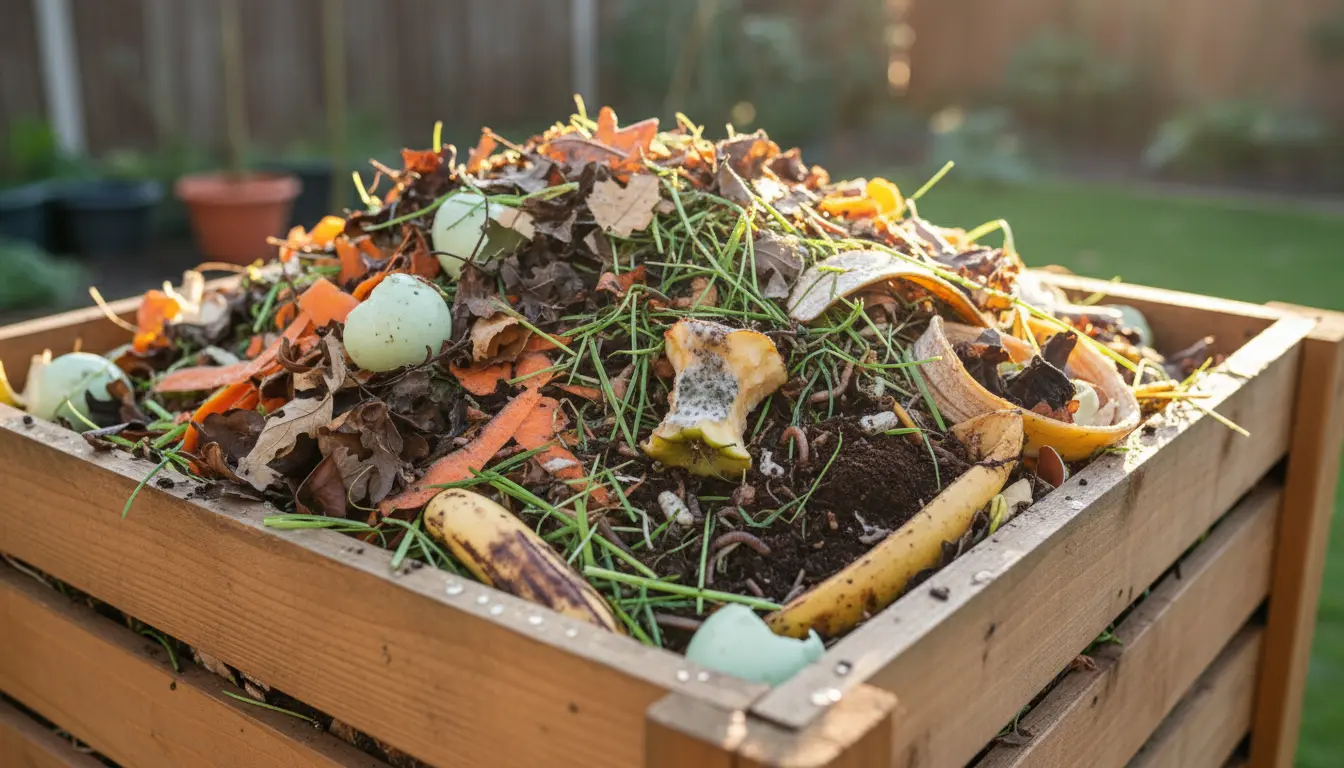
Start Home Composting with Simple Steps
Home composting is a practical way to turn kitchen scraps and yard waste into nutrient-rich soil. This guide gives clear, step-by-step instructions for beginners to start composting successfully.
Why Home Composting Works

Composting is a natural decomposition process where microbes break down organic matter into compost. It reduces household waste and improves soil structure and plant health.
With a small effort, composting can cut landfill waste and provide free fertilizer for your garden.
Choose a Composting Method
Select a method that fits your space and lifestyle. Common options include a simple pile, a tumbling bin, and vermicomposting (worm composting).
- Compost pile: Low cost, flexible size, good for yards with space.
- Tumbling bin: Easier turning, faster results, tidy appearance.
- Vermicomposting: Ideal for small spaces and apartments; uses worms to process food scraps.
What to Compost: Basic Rules
Balance green and brown materials for an effective compost. Greens supply nitrogen, while browns add carbon and structure.
Green materials (high nitrogen)
- Kitchen vegetable scraps
- Fresh grass clippings
- Coffee grounds and tea leaves
Brown materials (high carbon)
- Dry leaves
- Shredded paper and cardboard
- Straw and small wood chips
Step-by-Step: How to Build Your First Compost
Follow these straightforward steps to set up a compost that works efficiently.
- Choose a dry, shaded spot near a water source.
- Start with a layer of coarse browns (twigs or straw) for drainage.
- Add alternating layers of greens and browns, roughly 2:1 by volume of browns to greens for most systems.
- Keep the pile moist—like a wrung-out sponge—and turn it every 1–2 weeks to add oxygen.
- When material looks dark and crumbly, the compost is ready to use in 2–6 months depending on method and conditions.
Troubleshooting Common Compost Problems
Problems usually come from incorrect moisture, poor aeration, or unbalanced materials. Fixes are simple and fast.
- Smelly compost: Add more browns and turn to introduce air.
- Pile too dry: Water lightly and mix, or add more greens.
- Pile not heating: Increase size (aim for at least 3x3x3 feet for hot composting) and add fresh greens.
Compost can reduce household waste by up to 30 percent. Properly maintained compost also sequesters carbon and improves soil water retention.
Fast Tips for Apartment Composting
If you live in an apartment, vermicomposting or a sealed bokashi system can manage food waste indoors. Use a small worm bin under the sink or on a balcony.
Keep the container out of direct heat, and follow simple care: feed worms small pieces, maintain moisture, and harvest castings every few months.
How to Use Finished Compost
Finished compost is dark, earthy, and crumbly. Use it in these ways:
- Mix 1–3 inches into garden beds to improve soil fertility.
- Use as a top dressing around trees and shrubs.
- Blend into potting mixes at about 10–30 percent by volume for container plants.
Small Case Study: A Neighborhood Starter
In a small suburban street, a family of four began home composting with a tumbling bin. They separated food scraps into a small countertop caddy and added yard waste weekly.
Within six months their bin produced enough compost to feed two raised beds. They reduced weekly trash volume and reported healthier tomato plants and deeper soil structure.
Tools and Materials Checklist
Gather a few basic items to make composting easier and cleaner.
- Compost bin or dedicated space
- Garden fork or shovel for turning
- Kitchen caddy with a lid for scraps
- Optional: thermometer for hot composters and a shredder for large browns
Common Questions About Home Composting
How long does compost take?
Compost can be ready in as little as two months for hot systems and six months to a year for slow piles. Turning and correct moisture speed the process.
Will compost attract pests?
Keep meat, dairy, and oily foods out of typical home compost. Use a closed bin if pests are a concern and bury food scraps in the pile to limit odors.
Final Practical Advice
Start small and be consistent. Monitor moisture and mix materials regularly for best results. Composting is forgiving—small adjustments solve most issues.
With the basics in place, any household can convert organic waste into a valuable soil amendment and support healthier gardens.