
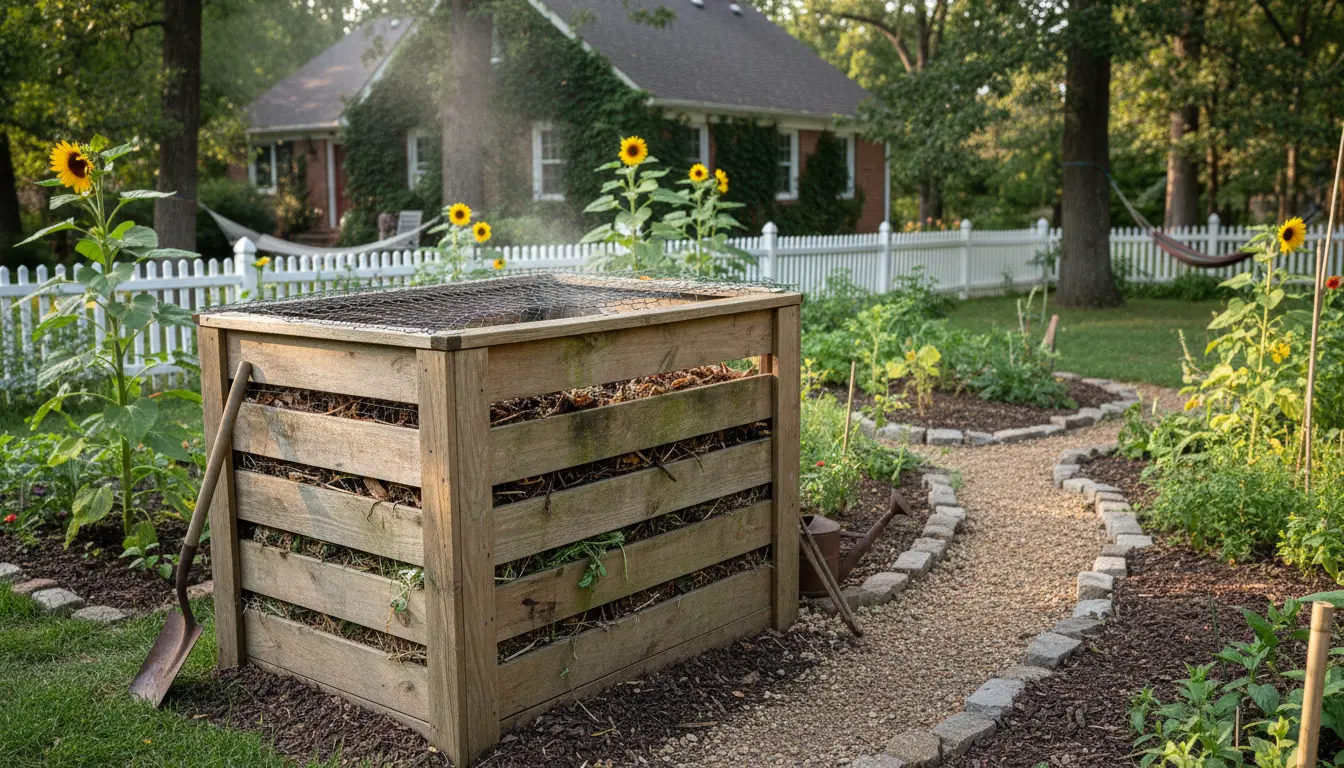
Why home composting matters
Home composting reduces kitchen and yard waste while producing rich soil for gardens and potted plants. It cuts waste sent to landfills and returns nutrients to the soil in a simple, low-cost process.
This guide explains how to start home composting, choose a bin, manage materials, and fix common problems. Follow these steps to build a reliable compost routine.
Choosing a compost bin for home composting
Choosing the right compost bin sets the tone for success. Consider space, odor control, and how often you will turn the pile.
Common options work well for home composting and fit different needs and budgets.
Types of compost bins for home composting
- Tumbler bins — Good for fast decomposition and easy turning, ideal for small yards.
- Stationary bins — Simple, affordable, and space-efficient for larger piles.
- Worm bins (vermicompost) — Best for apartments or small indoor spaces and kitchen scraps.
- Open pile — Low cost and flexible but needs space and occasional aeration.
How to start home composting: step-by-step
Begin with a clear location and the right mix of materials. A balanced pile breaks down faster and smells better.
Step 1: Pick a location and container
Choose a flat, partially shaded spot near water access if possible. For apartments, place a worm bin or compact tumbler on a balcony or in a garage.
Step 2: Gather the right materials
Compost materials are grouped as greens and browns. Aim for a varied mix to keep microbes active.
- Greens (nitrogen): fruit and vegetable scraps, coffee grounds, fresh grass clippings.
- Browns (carbon): dry leaves, shredded paper, cardboard, straw, sawdust in small amounts.
- Avoid: meat, dairy, oils, diseased plants, and pet waste to prevent pests and odors.
Step 3: Build and maintain the pile
Start with a layer of coarse browns for drainage, then alternate greens and browns in 4–6 inch layers. Keep the pile moist but not soggy — like a wrung-out sponge.

Turn or mix the pile every 1–2 weeks for aerobic decomposition. For worm bins, avoid frequent turning; the worms will process the material without much agitation.
Home composting maintenance and tips
Regular checks prevent problems and speed up composting. Small habits make a big difference in results.
- Moisture: Add water if dry, add dry browns if too wet.
- Airflow: Turn the pile to introduce oxygen and reduce odors.
- Temperature: A hot pile (100–140°F/38–60°C) breaks down faster; insulate if needed.
- Particle size: Shred or chop materials to speed decomposition.
Troubleshooting common problems in home composting
Most compost issues stem from imbalance. Use these fixes to get the pile back on track.
- Bad smell: Add more browns and turn the pile to introduce air.
- Pests: Avoid meat/dairy and use a closed bin or fine mesh; bury food scraps in the center.
- Too dry: Sprinkle water and cover to retain moisture.
- Slow breakdown: Chop materials smaller and check the carbon to nitrogen mix.
Small real-world example: balcony compost case study
Maria, an apartment gardener, started a 25-liter worm bin on her balcony. She added shredded paper and kitchen scraps in small batches and fed the bin 2–3 times per week.
Within four months Maria harvested dark crumbly compost and liquid fertilizer (worm tea) for her potted herbs. She solved excess moisture by adding dry leaves and rotating bedding material every month.
Key takeaways from this example: choose the right container, maintain moisture balance, and be consistent with feeding and occasional maintenance.
Final tips for home composting beginners
Start small and learn by doing. Consistency matters more than speed, and minor adjustments will resolve most problems.
Keep a small kitchen scrap container to reduce trips, label compostable vs non-compostable items, and monitor the pile weekly. Over time you will learn the balance that works for your climate and space.
Home composting is a practical step toward sustainable living. With the right bin, balanced materials, and simple maintenance you can turn everyday waste into valuable soil for plants and gardens.