
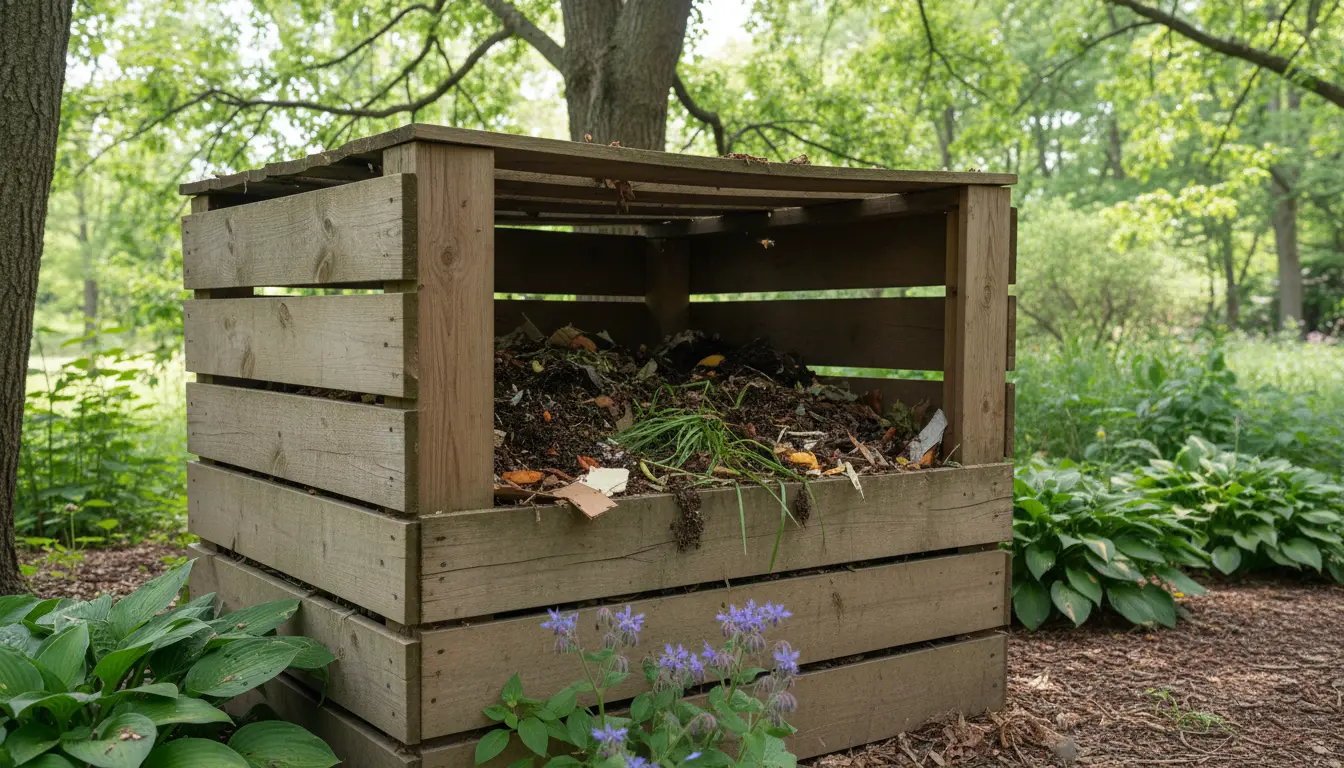
Why Home Composting for Beginners Matters
Home composting turns kitchen scraps and yard waste into useful soil amendment. It reduces household waste, lowers landfill methane output, and improves garden soil health.
This guide gives clear, practical steps for beginners to start composting at home and avoid common mistakes.
Choose a Composting Method for Home Composting for Beginners
Pick a method that fits your space, time, and effort level. The three common options are backyard bins, tumblers, and worm composting.
Backyard Compost Bin
A simple open or enclosed bin works well for yards. It is low-cost and can handle both yard waste and kitchen scraps.
Pros: Large capacity and low maintenance. Cons: Slower decomposition and potential pests if not managed.
Compost Tumbler
Tumblers are enclosed containers that you rotate to aerate the pile. They speed up decomposition and reduce pest issues.
Pros: Faster results and tidy. Cons: Smaller capacity and initial cost.
Worm Composting (Vermicomposting)
Worm bins use red wigglers to convert food waste to high-quality castings. This method is ideal for small spaces or apartments.
Pros: Produces rich compost quickly and works indoors. Cons: Requires attention to moisture and feed balance.
What to Compost: Essentials for Home Composting for Beginners
Balance green (nitrogen) and brown (carbon) materials for a healthy compost pile. Aim for roughly 3 parts brown to 1 part green by volume.
- Greens: Kitchen vegetable scraps, coffee grounds, fresh grass clippings, and garden trimmings.
- Browns: Dry leaves, shredded paper, cardboard, straw, and small wood chips.
- Do Not Compost: Meat, dairy, oily foods, diseased plants, weeds with seeds, and pet waste.
Step-by-Step Start for Home Composting for Beginners
Follow these steps to set up and maintain your compost system. Keep tasks simple and repeatable.
- Choose a container or spot in your yard with some shade and good drainage.
- Layer a base of coarse browns like small branches or straw to help airflow.
- Add kitchen greens and yard browns in alternating layers, chopping larger items to speed breakdown.
- Keep the pile moist like a wrung-out sponge; water occasionally if it dries out.
- Turn or mix the pile every 1–3 weeks for aerobic composting; tumblers may need less effort.
- Harvest finished compost when material is dark, crumbly, and earthy-smelling, usually 2–6 months depending on method.
Troubleshooting Home Composting for Beginners
Common issues are easy to fix with small adjustments to moisture, aeration, or ingredient balance.
- Bad odor: Add more brown materials and turn the pile to introduce air.
- Pests: Bury food scraps deeper, use a closed bin, and avoid meat and dairy.
- Slow decomposition: Chop ingredients smaller, add nitrogen-rich greens, and maintain moisture.
- Too wet: Mix in dry browns and increase turning; ensure proper drainage.
How to Use Finished Compost from Home Composting for Beginners
Finished compost can be used in potting mixes, top-dressed around plants, or worked into garden beds. It improves soil structure, water retention, and nutrient levels.
Suggested uses:
- Mix 1 part compost with 3 parts garden soil for new beds or raised boxes.
- Top-dress lawns with a thin layer to improve soil over time.
- Blend compost into potting mix for container plants to boost fertility.
Small Real-World Example
Case study: A small urban household started a 60-liter worm bin using coffee grounds and vegetable scraps. Within three months they reduced weekly garbage by half and produced about 10 liters of worm castings.
They used castings as a top-dress for balcony tomatoes, which showed stronger growth and earlier fruiting compared with the previous season.
Composting can reduce household waste volume by up to 30 percent and returns nutrients to the soil instead of sending them to landfill.
Maintenance Tips for Home Composting for Beginners
Stay consistent with small weekly habits. Regular feeding and occasional turning prevent most problems.
- Chop or shred large items to speed decomposition.
- Keep a small countertop container with a lid for kitchen scraps and empty it into the compost bin every few days.
- Monitor moisture and aerate when the pile compacts or smells sour.
Final Checklist for Home Composting for Beginners
Before you start, make sure you have the basics: a container, a balance of greens and browns, a way to aerate, and patience.
- Choose the right system: bin, tumbler, or worm farm.
- Source brown materials like dry leaves or shredded paper.
- Maintain moisture and turn regularly.
- Harvest and use finished compost in your garden.
With simple routines and the right balance of materials, home composting is an accessible way for beginners to reduce waste and improve soil health. Start small, observe the process, and adjust as you learn.