
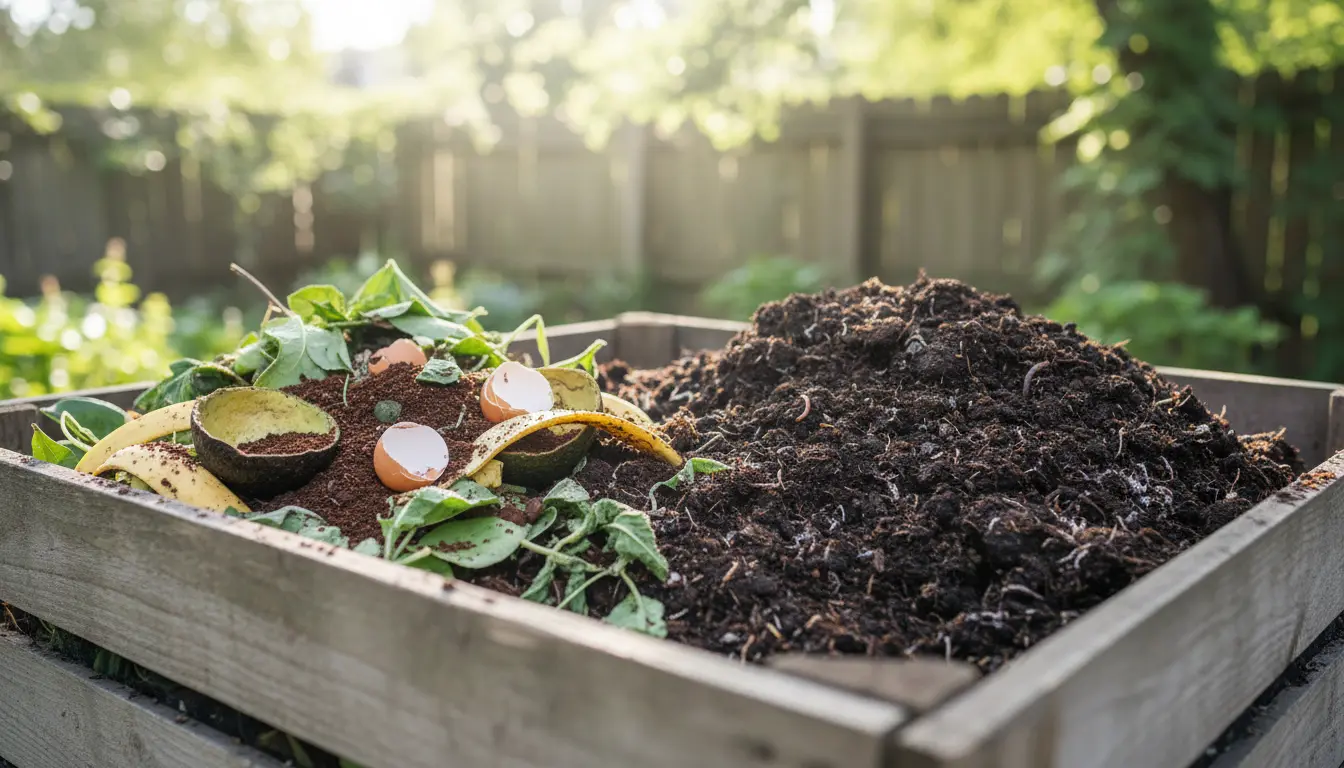
Home Composting Basics
Home composting turns kitchen scraps and yard waste into nutrient-rich soil. It reduces landfill waste and supplies free compost for gardens and potted plants.
This guide explains practical steps for home composting for beginners, what to add, how to maintain a bin, and how to fix common problems.
Why Start Home Composting
Composting lowers household waste and improves soil structure and fertility. It also reduces the need for chemical fertilizers and supports healthy plant growth.
For beginners, composting is a small regular activity that yields long-term benefits for gardens and the environment.
How to Start Home Composting
Starting composting requires a container, the right materials, and basic maintenance. You can compost in a bin, pile, tumbler, or a small worm composting setup.
Follow these practical steps to begin:
- Choose a container suitable for your space and volume of waste.
- Collect a mix of greens and browns.
- Maintain moisture and aeration by turning or mixing periodically.
Choosing a Bin for Home Composting
Select a bin based on space and how fast you want compost. A closed tumbler speeds up decomposition but costs more, while a simple open bin is low cost and effective.
For small balconies, consider a worm bin. For backyards, a 3-bin system or single large bin works well.
What to Compost
Compostable items are separated into greens and browns. Balancing both is essential for an efficient process.
- Greens: vegetable and fruit scraps, coffee grounds, fresh grass clippings.
- Browns: dry leaves, shredded paper, cardboard, straw, small wood chips.
Aim for roughly a 2 to 3 parts browns to 1 part greens by volume. This ratio reduces odors and helps decomposition.
Maintaining Your Home Composting System
Good maintenance keeps compost active and odor-free. Key tasks include turning, monitoring moisture, and adding the right materials.
- Turn the pile every 1 to 2 weeks to add oxygen.
- Keep the pile moist like a wrung-out sponge; add water or dry materials as needed.
- Chop large items to speed breakdown.
Speeding Up Composting
To accelerate decomposition, increase surface area and maintain heat. Shredded materials, regular turning, and a larger volume produce heat that speeds the process.
Adding a scoop of mature compost or a commercial starter introduces beneficial microbes and can shorten composting time.
Troubleshooting Common Problems in Home Composting
Beginners often encounter slow breakdown, bad smells, or pests. Each has simple fixes.
- Smelly compost: Add more browns and turn the pile to improve aeration.
- Pests: Use a closed bin or bury food scraps under a layer of brown material.
- Slow decomposition: Chop materials smaller, maintain moisture, and check the green to brown ratio.
When Is Compost Ready to Use
Finished compost looks dark, crumbly, and earthy. Most food scraps and yard waste will break down in 2 to 6 months depending on methods and conditions.
Sift or screen compost if you want uniform texture before using it in pots or garden beds.
Real World Example: A Small Backyard Case Study
Case study: A homeowner named Maria started a 100 liter compost bin in spring. She added kitchen scraps, shredded newspaper, and garden trimmings in alternating layers.
Maria turned the bin weekly and kept the mix damp. After four months she harvested dark, crumbly compost to top-dress vegetable beds. Yield covered two raised beds and reduced her garbage output noticeably.
Practical Tips for Success in Home Composting
Follow these simple tips to keep your compost system productive and low-maintenance.
- Collect kitchen scraps in a small counter pail with a lid to make transfers easy.
- Keep a supply of dry browns near the bin, such as shredded cardboard or leaves.
- Record when you add large volumes to track decomposition time and manage turning.
- Use finished compost sparingly at first, mixing with soil to avoid shocking plants.
Final Checklist for Home Composting Beginners
- Choose a bin that fits your space and waste volume.
- Maintain a 2 to 3 to 1 brown to green ratio.
- Turn regularly and monitor moisture levels.
- Troubleshoot odors and pests by adding browns and securing the bin.
Home composting is a simple, practical step for beginners to reduce waste and produce valuable soil amendment. With consistent small efforts, a productive compost system is achievable for any household.