
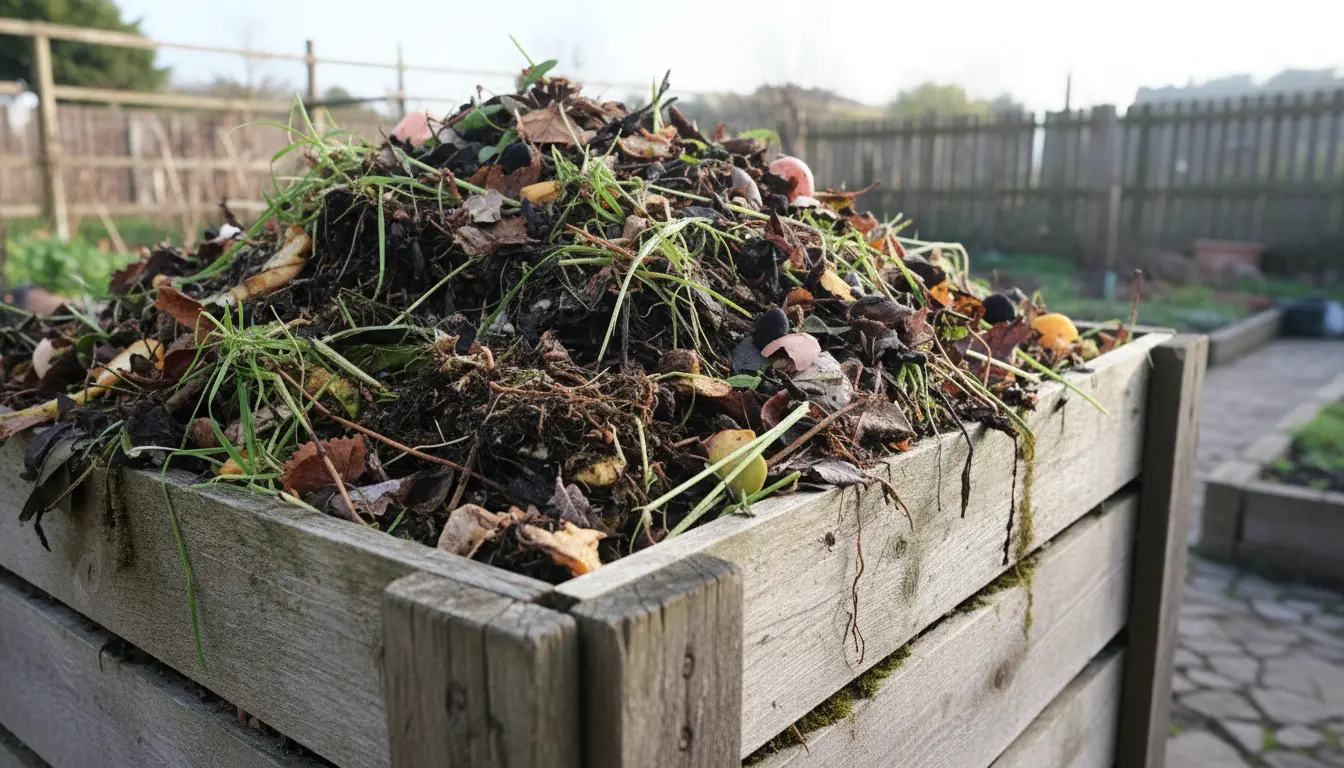
Why start home composting
Home composting turns kitchen and garden waste into a useful soil amendment. It reduces household trash and feeds plants naturally without chemical fertilizers.
This guide explains practical steps, materials, and troubleshooting so beginners can start composting with confidence.
Home composting basics

Composting relies on a balance of carbon and nitrogen, moisture, air, and time. You can compost in a bin, tumbler, or a simple pile in the backyard.
Understanding the basic inputs and the process helps you avoid common mistakes and produce healthy compost faster.
Key components for home composting
- Greens (nitrogen): vegetable scraps, coffee grounds, fresh grass clippings
- Browns (carbon): dry leaves, cardboard, shredded paper, straw
- Air: turn the pile to introduce oxygen
- Moisture: keep it damp like a wrung-out sponge
Setting up a home composting system
Choose a container based on space and effort. Small yards do well with a bin or tumbler, while larger spaces can use a three-bin system or a pile.
Place the compost in a well-drained, partly shaded spot to maintain moisture and microbial activity.
Materials and tools
- Compost bin or tumbler, or a simple wire enclosure
- Pitchfork or compost aerator for turning
- Kitchen collection container with a lid or compost caddy
- Thermometer (optional) to monitor internal temperature
Step-by-step home composting process
Follow these steps for a steady, managed composting process that minimizes odors and pests.
- Start with a layer of coarse browns (twigs or straw) for drainage.
- Add alternating layers of greens and browns to maintain balance.
- Moisten each layer as you add it so the pile stays damp but not soggy.
- Turn the pile every 1–2 weeks to supply oxygen and mix material.
- Monitor temperature and moisture; adjust with more browns if too wet or more greens if dry.
How long does home composting take
Compost can be ready in 2–6 months for a well-managed hot pile, or 6–12 months for a slower cold compost. The final product is dark, crumbly, and earthy-smelling.

Adding small amounts of soil or finished compost to a new pile introduces beneficial microbes and speeds decomposition.
Troubleshooting common home composting problems
Most issues are easy to fix with small adjustments to balance, moisture, or aeration.
Bad smell
A strong ammonia or rotten smell means too much nitrogen and not enough air. Add dry browns and turn the pile to introduce oxygen.
Flies or pests
Cover food scraps with a layer of browns each time or bury them under 6 inches of material. Use a closed bin or fine mesh to deter pests.
Pile too dry or too wet
If the pile is dry, add greens and water lightly. If it’s soggy, mix in more dry browns and turn to improve drainage.
What to compost and what to avoid
Knowing acceptable items keeps your compost healthy and productive.
- Compost: fruit and vegetable scraps, coffee grounds, eggshells (crushed), yard trimmings, shredded paper
- Avoid: meat, dairy, oils, diseased plants, pet waste, and invasive weeds that can re-root
Small real-world case study
Case: A two-person household in Portland started a 50-gallon tumbling bin. They collected kitchen scraps in a small caddy and added household paper and yard trimmings as browns.
After three months of weekly turning and keeping the bin damp, they produced about 30 liters of rich compost. They used it to top-dress potted herbs and saw improved growth and less need for store-bought fertilizer.
Tips to speed up home composting
- Chop or shred materials to increase surface area.
- Maintain a 2:1 or 3:1 ratio of browns to greens by volume for balanced decomposition.
- Turn frequently to maintain heat and oxygen in the pile.
- Add a compost starter or finished compost to introduce microbes.
Using finished compost
Finished compost is versatile: mix it into garden beds, use as potting mix amendment, or apply as a mulch. It improves soil structure, water retention, and nutrient content.
Apply a 1–3 inch layer to lawns or garden beds, or blend with potting soil at a ratio of 1:3 for container plants.
Final advice for home composting beginners
Start small and be consistent. Composting is forgiving; small adjustments usually fix problems quickly.
With simple tools and regular attention, home composting converts waste into a valuable resource that benefits both your plants and the environment.