
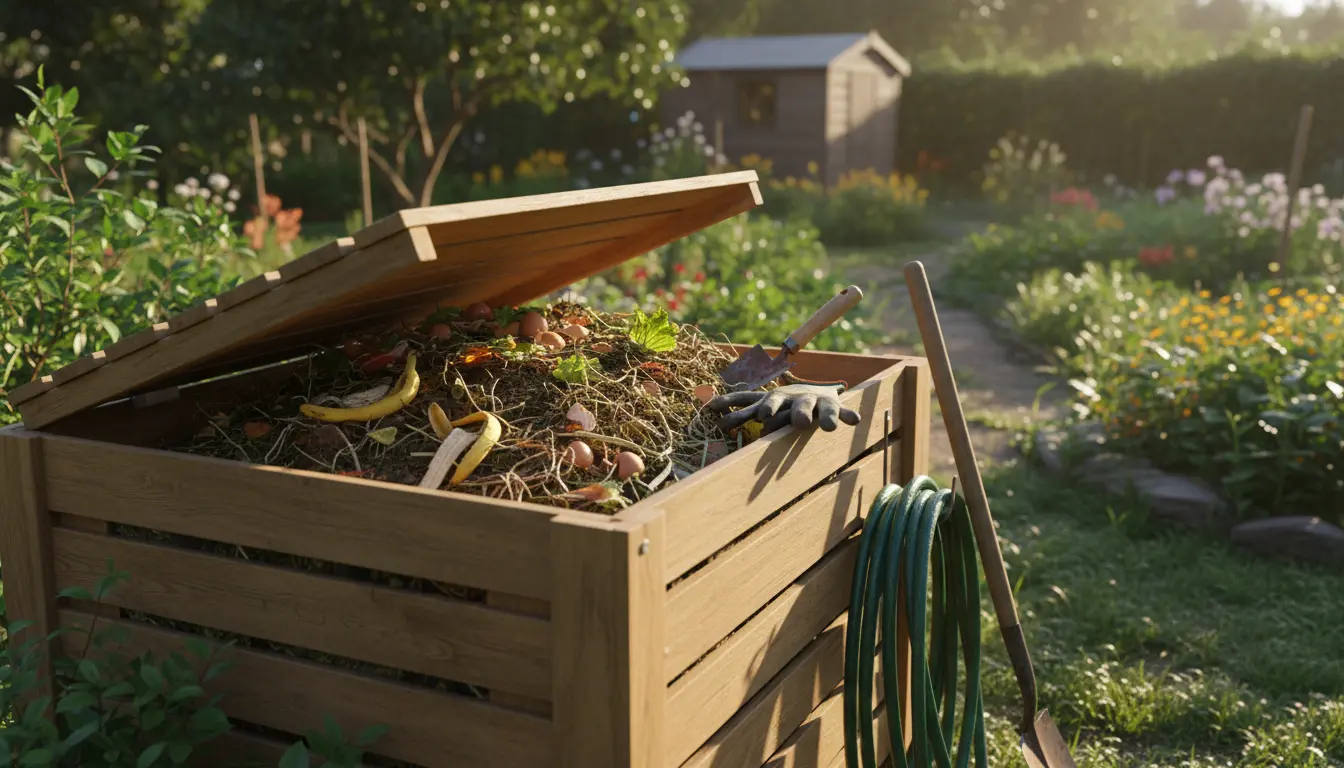
Home Composting for Beginners: Overview
Home composting for beginners turns kitchen scraps and yard waste into nutrient-rich soil. This process reduces landfill waste and improves garden health.
The goal of this guide is to give clear, practical steps to start composting at home with minimal tools and effort.
Why Choose Home Composting for Beginners
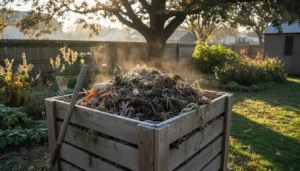
Composting lowers household waste volume and returns organic matter to the soil. It saves money on fertilizers and supports healthier plants.
For beginners, the method can be simple: collect, balance, and wait. Understanding basic principles helps avoid common problems like odor or pests.
Benefits of Home Composting for Beginners
- Reduces kitchen and yard waste by up to 30 percent.
- Creates free, rich soil amendment for gardens and potted plants.
- Improves soil structure and water retention.
- Teaches sustainable habits for the household.
How to Start Home Composting for Beginners
Start with a simple container or pile in a corner of your yard. You can use a commercial bin, a DIY wooden bin, or an open pile depending on space and local rules.
Follow these core steps to build and maintain a balanced compost.
1. Choose a Location and Container
Select a dry, shady spot near a water source. A flat area with good drainage is best.
Containers options:
- Plastic or metal compost bin with a lid.
- Wooden pallet or frame for an inexpensive bin.
- Compost tumbler for faster turning and less digging.
2. Add the Right Materials
Balance “greens” and “browns”. Greens are nitrogen-rich; browns are carbon-rich. A good rule is roughly 1 part greens to 3 parts browns by volume.
- Greens: vegetable scraps, coffee grounds, fresh grass clippings.
- Browns: dry leaves, shredded paper, straw, small twigs.
Avoid meat, dairy, diseased plants, and pet waste to reduce pests and odors.
3. Maintain Moisture and Air
The compost should feel like a wrung-out sponge — moist but not soggy. Water occasionally during dry spells.
Turn the pile every 1–2 weeks to add oxygen and speed decomposition. Tumblers make this step easier for beginners.
Troubleshooting for Home Composting for Beginners
Common issues are simple to fix. Address them early to keep the process smooth.
Common Problems and Solutions
- Bad smell: Add more browns and turn the pile to increase airflow.
- Too dry: Water the pile and add green materials.
- Slow breakdown: Chop materials into smaller pieces and turn more often.
- Pests: Remove food scraps like fruit peels from the surface and use a closed bin or secure lid.
Compost can reach temperatures above 130°F during the active phase. That heat helps kill weed seeds and some pathogens when managed properly.
How Long Until Compost Is Ready
Compost readiness depends on method and maintenance. With active hot composting, you may get finished compost in 2–3 months.
Cold composting can take 6–12 months. Finished compost looks dark, crumbly, and smells earthy.
Using Finished Compost
Use finished compost as a soil amendment or mulch. Mix into garden beds, top-dress lawns, or blend with potting mixes for container plants.
A little goes a long way: apply a 1–2 inch layer to beds and work it into the topsoil before planting.
Simple Checklist for Home Composting for Beginners
- Choose a bin and location.
- Collect greens and browns separately.
- Layer materials and monitor moisture.
- Turn regularly for faster results.
- Use finished compost in your garden.
Small Case Study: A Backyard Transition
Maria, a homeowner with a small vegetable garden, started composting with a 50-gallon tumbler. She collected kitchen scraps and dry leaves for two months.
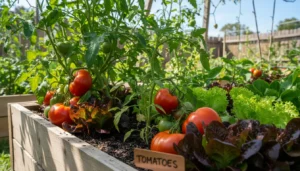
By following a 1:3 greens-to-browns ratio and turning the tumbler weekly, Maria produced usable compost in about three months. Her tomato plants responded with fuller foliage and increased yields.
This small change reduced her kitchen waste and lowered her need for store-bought fertilizers.
Final Tips for Home Composting for Beginners
Start small and learn by doing. Composting is forgiving and scalable to any household size.
Keep notes on what you add and how often you turn the pile. Adjust materials and frequency based on results.
With basic tools and regular attention, home composting for beginners can become a reliable part of your household routine and a big win for the garden and the planet.