
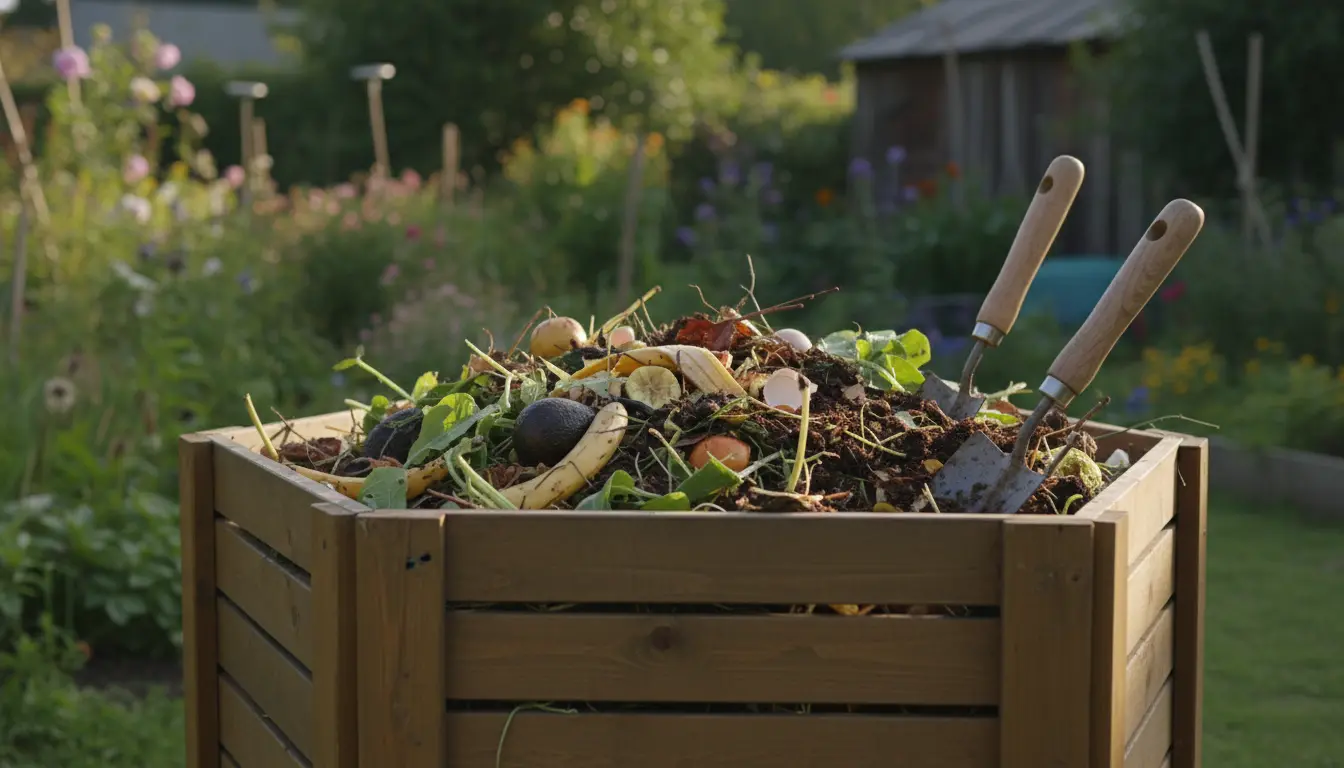
Home composting converts kitchen and yard waste into rich soil amendment while cutting landfill waste. This practical guide for home composting for beginners covers setup, materials, maintenance, and uses. Follow these steps to start composting with confidence.
Why Choose Home Composting
Home composting reduces trash, lowers methane emissions, and saves money on soil amendments. It also improves garden soil structure, water retention, and plant health.
For beginners, composting is a small weekly habit that produces big long-term benefits. You do not need a large yard or special equipment to get started.
Food scraps and yard trimmings make up nearly 30% of household waste. Composting those materials at home can cut that portion by over half.
Getting Started with Home Composting for Beginners
Begin by choosing a system that fits your space, budget, and time. Popular options include bins, tumblers, and open piles. Each has pros and cons for beginners.
Choosing a Bin or Pile
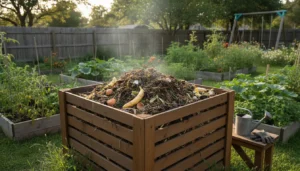
Consider these options when planning home composting:
- Closed bin: Neat and pest-resistant, good for small yards and patios.
- Tumbler: Easy to turn and faster composting, ideal for busy users.
- Open pile: Low cost, scalable for large gardens, needs more management.
Place the bin on bare soil if possible to let worms and microbes join the process. If on concrete, add a layer of coarse material to improve drainage.
What to Compost and What to Avoid
Good materials balance carbon (brown) and nitrogen (green). A roughly 3:1 brown-to-green ratio is a simple guideline for beginners.
- Greens (nitrogen): Vegetable scraps, fruit peels, coffee grounds, fresh grass clippings.
- Browns (carbon): Dry leaves, shredded paper, cardboard, straw, sawdust (untreated).
- Avoid: Meat, dairy, oils, diseased plants, pet waste, and invasive weeds with seeds.
Chop or shred larger items to speed decomposition. Layering greens and browns helps control moisture and odor.
How to Maintain Your Compost
Active maintenance keeps the pile healthy and accelerates composting. Focus on turning, moisture, and particle size.
Turning and Aeration
Oxygen is essential for aerobic decomposition. Turn a bin or tumbler every 1–2 weeks for faster results. For open piles, use a pitchfork to mix materials periodically.
Moisture and Temperature
The pile should feel like a wrung-out sponge: moist but not dripping. Too wet slows decomposition and causes odors; too dry halts microbial activity.
Temperatures between 120–160°F (49–71°C) indicate active composting in large piles. Small home bins may not reach those temperatures but still produce quality compost over time.
Speeding Up Composting
- Shred materials to increase surface area.
- Maintain a balanced brown-to-green ratio.
- Turn regularly to supply oxygen.
- Add a handful of garden soil or finished compost to introduce microbes.
Using Finished Compost in Your Garden
Finished compost is dark, crumbly, and earthy-smelling. Use it to improve soil structure, supply nutrients, and support beneficial organisms.
- Top-dress lawns with a thin layer to improve soil over time.
- Mix into planting holes for vegetables and flowers.
- Create potting mixes by blending compost with sand or perlite.
Compost can replace some or all commercial fertilizers, depending on soil tests and crop needs.
Simple Troubleshooting for Home Composting
Beginners often encounter the same issues. Quick fixes keep the system working smoothly.
- Bad smells: Add more browns and turn the pile to introduce oxygen.
- Slow decomposition: Chop materials finer and increase green components.
- Pests: Use a closed bin, bury food scraps, or add a layer of browns on top.
Small Case Study: Apartment Rooftop Composting
Maria runs a 3-bin system on her rooftop garden in a city apartment. She collects kitchen scraps in a sealed container and empties them into a tumbling bin twice a week.
Within six months she produced enough compost to top-dress six planter boxes, reduced weekly trash by one small bag, and saw healthier vegetable yields. Simple changes, like shredding corn stalks and adding dry leaves, cut composting time by nearly half.
Home composting for beginners is accessible, affordable, and effective. Start small, learn as you go, and adjust processes to your climate and space. Over a season you can convert common household waste into a valuable soil resource.
Quick Starter Checklist
- Choose a bin or tumbler suited to your space.
- Collect greens and browns separately.
- Maintain moisture and turn regularly.
- Use finished compost in garden beds and planters.
With simple habits and a little patience, home composting becomes a reliable part of home gardening and sustainable living.