
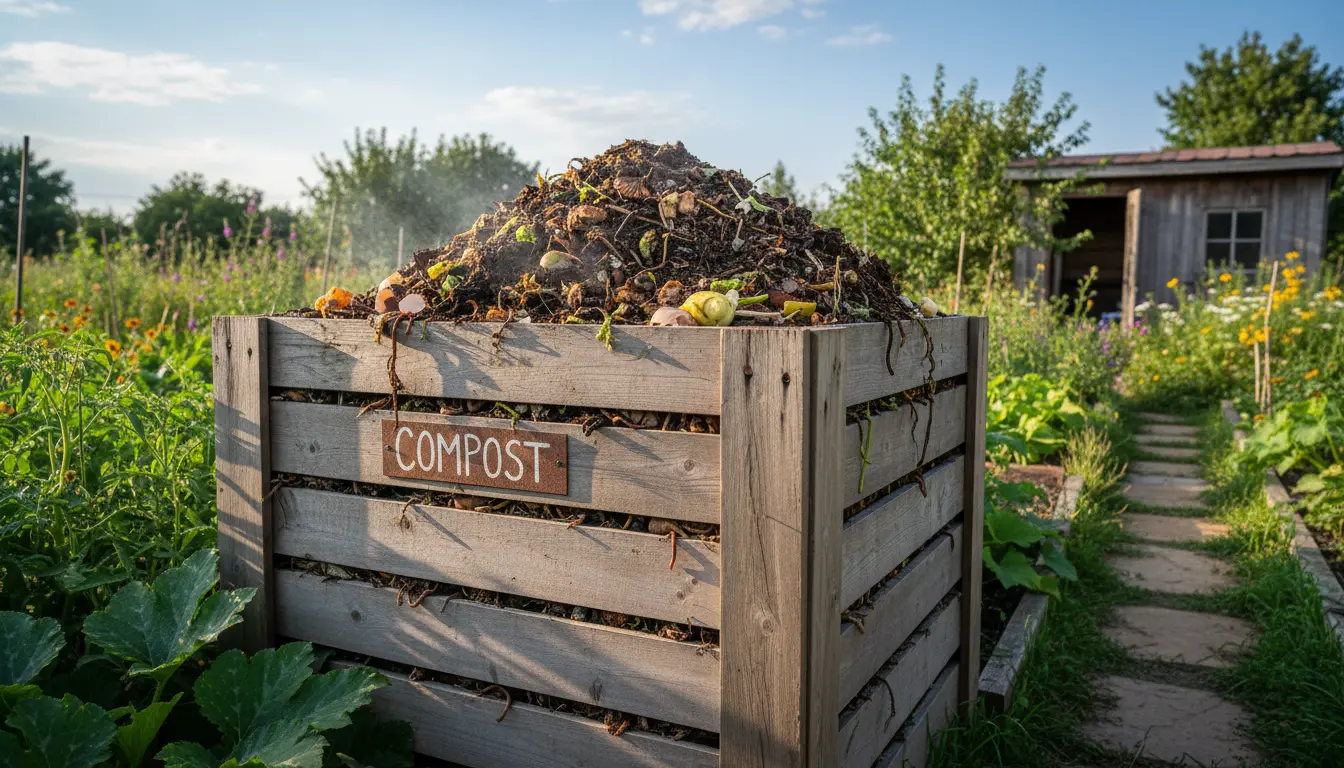
Why Home Composting for Beginners Matters
Home composting turns kitchen scraps and yard waste into nutrient-rich soil. It reduces household waste and supports healthier plants.
This guide gives clear, practical steps for beginners so you can set up a simple system and avoid common problems.
Basic Principles of Home Composting for Beginners

Compost is a mix of carbon rich materials (browns) and nitrogen rich materials (greens). Proper balance, moisture, and airflow create the conditions microbes need to break materials down.
Keep these three basics in mind: carbon:nitrogen ratio, moisture, and aeration. Adjusting those solves most issues.
Carbon and Nitrogen: What to Use
- Greens (nitrogen): fruit and vegetable scraps, coffee grounds, fresh grass clippings.
- Browns (carbon): dry leaves, shredded cardboard, straw, paper towels.
- Aim roughly for a 2–3:1 volume ratio of browns to greens for a balanced pile.
Moisture and Air
Compost should be as damp as a wrung-out sponge. Too dry stops decomposition; too wet creates odors.

Turn the pile every 1–2 weeks to introduce oxygen. Use a garden fork or a simple compost aerator tool.
Choosing a System for Home Composting for Beginners
Select a method that fits your space and effort level. Options include open piles, tumblers, and stationary bins.
- Open pile: Low cost, good for large yards, requires space and regular turning.
- Compost bin: Contained, tidier, can be built from pallets or wire mesh.
- Tumbler: Easy to turn and fast, ideal for small yards or patios, slightly more expensive.
Where to Place Your Compost
Put your compost on bare soil if possible to allow worms and microbes to move in. Choose a partly shaded spot to avoid drying in hot sun.
Keep the bin accessible year-round to add materials and turn the pile.
Step-by-Step Setup for Home Composting for Beginners
Follow these steps to start a batch that will decompose steadily.
- Choose a bin or build a simple enclosure from pallets or wire.
- Start with a 4–6 inch layer of coarse browns like small branches for airflow.
- Add alternate layers of greens and browns, keeping the pile moist.
- Turn the pile every 1–2 weeks to maintain oxygen flow.
- Harvest finished compost after 3–6 months depending on conditions and method.
What Not to Compost
- Avoid meat, dairy, oils, and diseased plants—these attract pests or spread disease.
- Limit oily or very citrusy kitchen waste; they break down slowly and can upset the balance.
- Do not add synthetic chemicals or treated wood scraps.
Worms and microbes can reduce kitchen waste by up to 50% within a month in an active compost pile. Vermicomposting is a compact option for small spaces.
Troubleshooting Common Problems in Home Composting for Beginners
Most issues stem from imbalance. Use these quick fixes to keep your pile healthy.
- Bad smell: Add more browns and turn the pile to add air.
- Pile too dry: Add water and more greens; cover during hot weather.
- Pile not heating: Add fresh greens and turn; smaller pieces decompose faster.
- Pests: Avoid meat/dairy and bury kitchen scraps within the pile.
Monitoring Progress
Heat is a sign of activity—internal temperatures of 120–160°F (50–71°C) indicate active decomposition in a hot compost system.
If you prefer low maintenance, cold composting still works but takes longer—often 6–12 months.
Real-World Example: Small Backyard Bin Case Study
Jane, a homeowner with a small yard, started a 3-foot tumbler and followed a simple routine: layer kitchen scraps with shredded cardboard, keep the drum rotated weekly, and monitor moisture.
Within four months she harvested rich compost and cut her weekly trash by 40%. Her plants showed improved vigor and soil structure the following season.
Practical Tips to Keep Composting Simple
- Shred or chop materials to speed decomposition.
- Keep a sealed kitchen pail for scraps and empty it into the bin daily.
- Use finished compost as a soil amendment: mix 1–3 inches into garden beds or top-dress potted plants.
Seasonal Considerations
In winter, decomposition slows. Insulate your bin with straw bales or move a tumbler to a protected spot. Continue adding materials; activity resumes in spring.
Start Composting Today
Home composting for beginners is achievable with minimal tools and regular, small actions. Begin with a simple bin, balance browns and greens, and check moisture and aeration weekly.
Over time you will refine the process and gain a steady supply of nutrient-rich compost for healthier soil and plants.