
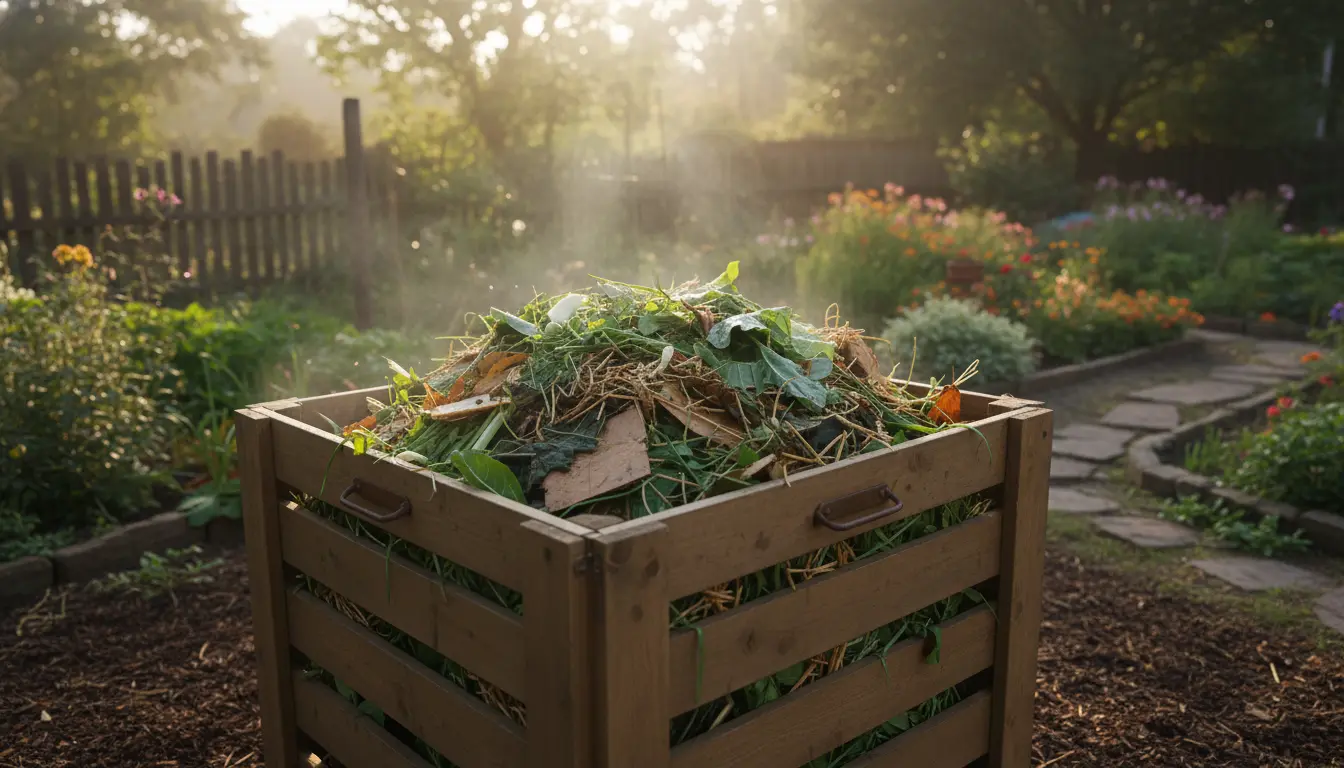
Home Composting Basics
Home composting turns kitchen and yard waste into a nutrient-rich soil amendment. It reduces landfill waste and improves garden soil structure.
This guide explains simple, practical steps for home composting for beginners. You’ll learn what to compost, how to balance materials, and basic maintenance tips.
Choosing a Home Composting System
Select a composting method that fits your living situation. Options include a simple backyard pile, a tumbling bin, or a small indoor worm bin.
Consider space, smell control, and the amount of waste you produce when choosing a system.
Backyard Bin Options for Home Composting
Backyard bins are low-cost and low maintenance. A closed bin keeps pests out and moisture in.
Tumbling composters speed up the process by making turning easy. They are good for homeowners who want faster results.
Indoor and Small-Space Home Composting
Worm bins (vermicomposting) work well for apartments. They handle fruit and vegetable scraps with minimal odor.
Bokashi systems are another indoor option for fermenting food scraps before burying them or adding to a backyard bin.
What to Compost: Greens and Browns
Successful home composting uses a balance of green and brown materials. Greens provide nitrogen, and browns provide carbon.
Balance prevents bad smells and speeds decomposition.
- Greens (Nitrogen-rich): fruit and vegetable scraps, coffee grounds, fresh grass clippings.
- Browns (Carbon-rich): dry leaves, shredded cardboard, paper, small branches, straw.
Materials to Avoid in Home Composting
Do not add meat, dairy, oily foods, or diseased plants to an open compost system. These items attract pests and slow the process.
Avoid pet waste from carnivores and chemically treated wood, which can introduce pathogens or toxins.
Basic Steps to Start Home Composting
Follow a few simple steps to begin composting at home. These will keep your pile active and odor-free.
- Choose a container or area and set the bin on soil to allow worms and microbes access.
- Start with a layer of browns for drainage and aeration.
- Add greens and then cover with more browns. Aim for roughly a 1:2 green to brown volume ratio.
- Keep the pile moist like a wrung-out sponge; add water if too dry or more browns if too wet.
- Turn or aerate the pile every 1–2 weeks to introduce oxygen and speed decomposition.
Maintaining Your Home Composting System
Regular maintenance prevents common problems and produces usable compost faster. Monitor moisture, temperature, and odor.
If the pile smells, add more browns and turn it. If decomposition slows, check moisture and particle size.
Quick Troubleshooting for Home Composting
- No smell but slow decomposition: Chop materials into smaller pieces and increase surface area.
- Bad odor: Add dry leaves or shredded paper and turn the pile to introduce oxygen.
- Pests: Use a secure bin and avoid adding meat or oily foods.
Composting can reduce household waste by up to 30 percent and return valuable nutrients to your garden. A balanced compost pile can reach temperatures above 130°F, which helps kill weed seeds and pathogens.
How to Tell When Compost Is Ready
Mature compost is dark, crumbly, and smells earthy. Most home systems produce usable compost in 3–12 months, depending on method and maintenance.
Use finished compost as a top dressing, soil amendment, or mixed into potting soil for seedlings.
Using Finished Home Compost
- Mix into garden beds to improve soil structure and water retention.
- Top-dress lawns or use as mulch around shrubs and trees.
- Blend with potting mix at 10–20 percent for healthier potted plants.
Small Real-World Example: Apartment Worm Bin Case Study
Maria, a two-bedroom apartment resident, started a 20-liter worm bin beneath her kitchen counter. She collected fruit and vegetable scraps and added shredded cardboard every few days.
Within four months she produced enough vermicompost to top-dress her balcony planters. Her food waste dropped from one kitchen bag per week to one bag every three weeks.
This simple system reduced landfill waste, improved her plants, and required under 15 minutes of weekly maintenance.
Tips for Long-Term Success with Home Composting
- Keep a small counter bucket for scraps to make regular composting easy.
- Chop or shred materials to speed decomposition.
- Record additions and turning schedule to optimize results over time.
Home composting is a practical, low-cost way to manage organic waste and build healthier soil. Start small, monitor progress, and adjust the mix as you learn what works best for your space.