
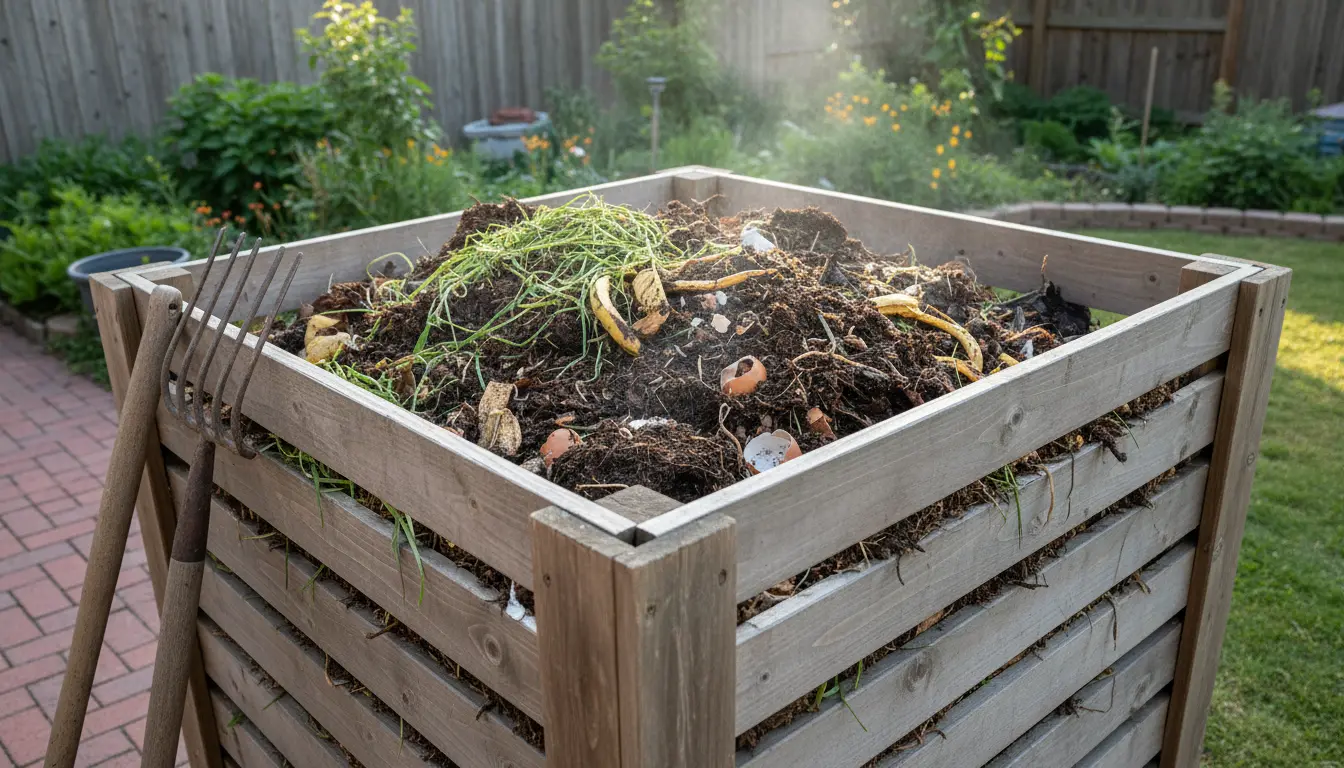
Composting at home turns kitchen scraps and yard waste into a useful soil amendment. This guide explains simple, practical steps so beginners can start composting successfully and avoid common mistakes.
What is home composting and why it matters
Home composting is the controlled decomposition of organic materials in a backyard or small space. It reduces landfill waste and produces nutrient-rich compost to improve soil structure and plant health.
Compost helps retain moisture, feeds microbes, and can reduce the need for synthetic fertilizers. Learning a few basic practices makes the process fast and low-effort.
Choosing a compost system for home composting
Pick a system that matches your space, budget, and time. Common options include open piles, tumbler bins, and stationary closed bins.
Open pile
An open pile is the cheapest and most flexible choice. It works well if you have yard space and don’t mind periodic turning.
Tumbler bin
Tumbler bins are sealed containers that rotate to mix materials. They speed up decomposition and reduce pests, but cost more upfront.
Stationary closed bin
Closed bins are stable and compact, making them good for smaller yards. They balance ease of use and odor control without frequent turning.
How to start home composting: step-by-step
Start small, then scale up as you learn what materials and ratios work in your setup. Follow these straightforward steps to begin home composting.
1. Select a location
Choose a level spot with partial sun and good drainage. Close enough to the house for convenience but not so close that any odors or pests become an issue.
2. Gather materials: greens and browns
Compost needs a balance of nitrogen-rich ‘greens’ and carbon-rich ‘browns’.
- Greens: fruit and vegetable scraps, coffee grounds, fresh grass clippings.
- Browns: dry leaves, shredded paper, straw, small wood chips.
A simple target is roughly 3 parts browns to 1 part greens by volume. Adjust if your pile is too wet or dry.
3. Build your first pile
Start with a 6–12 inch base of coarse browns to help airflow. Add alternating layers of greens and browns, keeping layers thin to aid decomposition.
Moisten materials so they feel like a wrung-out sponge. Too dry slows decomposition; too wet causes odors.
4. Maintain and monitor
Turn the pile every 1–2 weeks to introduce oxygen and speed up breakdown. If using a tumbler, rotate it according to the manufacturer’s guidance.
Check temperature with a compost thermometer or by touch; a warm center indicates active decomposition. Aim for a dark, crumbly final product after several months.
Maintaining your compost: practical tips
Good maintenance makes composting low-effort and reliable. Address moisture, airflow, and ingredient balance regularly.
- If the pile smells sour, add more browns and turn it to improve aeration.
- If the pile is dry and slow, add water and greens to rehydrate and boost microbes.
- Chop or shred large pieces to increase surface area and speed decomposition.
Troubleshooting home composting problems
Common issues are usually easy to fix with a quick change in routine. Here are simple diagnostics and remedies.
- Bad odor: Sign of anaerobic conditions. Turn the pile, add dry browns, and check drainage.
- Pests: Avoid adding meat, dairy, or oily foods. Use a closed bin or bury scraps deeper in the pile.
- Slow decomposition: Increase greens, ensure moisture, or chop materials smaller.
Small case study: A city balcony composting setup
Maria, living in a two-bedroom apartment, started with a 20-gallon countertop bin for kitchen scraps and a compact tumbling bin on her balcony. She used coffee grounds as greens and shredded paper as browns.
By rotating the tumbler twice a week and occasionally adding water, she produced usable compost in about four months. Her container garden showed better flowering and less watering after application.
Composting can divert up to 30% of household waste from landfills and cut methane emissions from organic material decomposition in anaerobic landfill conditions.
Final tips for successful home composting
Start with realistic expectations and learn by doing. Small adjustments to material balance and moisture usually fix most problems quickly.
Keep a small kitchen caddy to collect scraps and empty it into your main bin regularly. Over time you’ll develop a routine that fits your lifestyle and garden needs.
Home composting is a practical way to reduce waste and improve your soil. With the right system and simple maintenance, anyone can turn scraps into a valuable resource.